Affiliate Disclosure: This article contains affiliate links. NonToxicFinder (Solved Labs LLC) may earn commissions on qualifying purchases at no extra cost to you. We are not affiliated with, endorsed by, or partnered with the Environmental Working Group.
Propylene glycol (1,2-propanediol) is a synthetic, clear, nearly odorless liquid that holds moisture and dissolves colors and flavors. It is in many foods, medicines and cosmetics such as lotion, in some cleaners, and it is also used to make antifreeze. It is not the antifreeze poison: that is ethylene glycol, a different chemical that forms kidney-damaging crystals in the body. The FDA lists propylene glycol as generally recognized as safe for food, and ATSDR says large amounts are needed to raise the body's acid level. The real issues are narrower: skin irritation or allergy in some people, cats (FDA prohibits it in cat food), and heavy doses in medicines for newborns.
Propylene glycol vs ethylene glycol: why the antifreeze name scares people
Both chemicals are used to make antifreeze and de-icers for cars, planes and boats, according to the U.S. Agency for Toxic Substances and Disease Registry (ATSDR), which is part of CDC. That shared job is where the overlap ends. Here is how ATSDR's two fact sheets, the ToxFAQs for propylene glycol and the ToxFAQs for ethylene glycol, and two federal rules compare them:
| Propylene glycol | Ethylene glycol | |
|---|---|---|
| Other names | 1,2-propanediol, propane-1,2-diol; CAS 57-55-6 | CAS 107-21-1 |
| Uses ATSDR lists | Antifreeze and de-icers, polyester, paints and plastics; also food, medicines and cosmetics | Antifreeze and de-icers, brake fluid, inks for stamp pads, ballpoint pens and print shops. ATSDR lists no food, medicine or cosmetic use. |
| Food status | FDA: generally recognized as safe as a direct food substance (21 CFR 184.1666) | Not a food ingredient |
| What happens in the body | Breaks down at the same rate as ethylene glycol "although it does not form harmful crystals." Raises body acid, but "large amounts" are needed. | Breaks down into chemicals that crystallize and "can collect in your kidneys," plus acids that can affect the nervous system, lungs and heart |
| Swallowed by accident | ATSDR names no poisoning risk from everyday products | Small tastes are "not likely" to cause serious harm; larger amounts "can cause serious illness or death" |
| Child-resistant packaging | Not on CPSC's list | Required for household liquids with 10% or more ethylene glycol (16 CFR 1700.14) |
| Cancer classification | Not classified by DHHS, IARC or EPA | Not classified by DHHS, IARC or EPA |
ATSDR's fuller toxicological profile for propylene glycol sums it up the same way: it "exhibits few of the toxic properties of ethylene glycol," though it can still cause metabolic acidosis at high doses, "albeit to a lesser extent."
Antifreeze in the garage. Whichever glycol it is made with, antifreeze is not food. ATSDR warns that ethylene glycol antifreeze is "a sweet tasting, brightly colored liquid," so it advises keeping antifreeze out of children's reach, not leaving open bottles on or near the ground, and not spilling or draining it where children can play in the puddle. It says to get medical attention "as soon as possible" for known or suspected antifreeze swallowing, because early treatment works. The CPSC's advice for any household chemical a child swallows is to call Poison Help at 800-222-1222 right away. The same storage habits keep puddles away from dogs and cats.
Polyethylene glycol (PEG) is a third, separate thing: a family of larger molecules that appear on labels with a number, such as PEG-100 stearate. A PEG is not propylene glycol, and neither is propylene glycol a PEG.
Is propylene glycol dangerous?
At the amounts in food and personal care, the U.S. agencies that have assessed it do not treat it as a hazard. ATSDR says exposure from food, cosmetics or medicine is likely for most people, but "these amounts are not generally considered harmful." It notes the FDA's "generally recognized as safe" classification for flavorings, drugs, cosmetics and food, and cites a World Health Organization acceptable daily intake of 25 mg per kilogram of body weight. The FDA food rule caps how much can be used: as served, no more than 5% in alcoholic drinks, 24% in confections and frostings, 2.5% in frozen dairy, 97% in seasonings and flavorings, 5% in nuts and 2% in all other foods.
The harms ATSDR describes come from large doses, mostly in hospitals. Its profile reviews cases of acidosis and raised blood osmolality in patients given intravenous or skin medicines that used propylene glycol as the carrier, including an infant with severe burns treated with a cream that delivered very high doses. It concludes that these effects "may develop in humans in the event high levels of propylene glycol are absorbed into the blood stream."
Medicines for babies and young children. The European Medicines Agency (EMA) has set the clearest numbers. In its 2017 questions and answers on propylene glycol in medicines, it says up to 500 mg per kg per day "could generally be considered safe" for adults and children 5 and older, lowers that threshold to 50 mg per kg for children under 5, and to 1 mg per kg for newborns, because babies clear it slowly. Above those thresholds, EMA's leaflet wording tells parents to talk to a doctor or pharmacist before giving the medicine, for example to a baby under 4 weeks old. EMA adds that amounts below 1 mg per kg per day, such as traces from flavors or colorings, "are not of concern."
Why it is in your food, lotion and deodorant
ATSDR says propylene glycol is used "to absorb extra water and maintain moisture in certain medicines, cosmetics, or food products," and that "it is a solvent for food colors and flavors." Those two jobs explain most of where you meet it.
- Food. FDA's rule lists its functions as anticaking agent, antioxidant, dough strengthener, emulsifier, flavor agent, formulation aid, humectant, processing aid, solvent and vehicle, stabilizer and thickener, surface-active agent and texturizer. In seasonings and flavorings it may make up as much as 97% of the product, which fits ATSDR's description of it as a solvent for flavors.
- Lotion and skin care. It is there to hold moisture, in ATSDR's words. ATSDR's profile adds that on skin it hydrates the cells of the outer layer.
- Deodorant. It is used in some deodorants, and some brands advertise leaving it out. Schmidt's, for example, says every stick is formulated without it; our look at Schmidt's deodorant covers what else is and is not in those sticks, and our explainer on aluminum in deodorant covers the antiperspirant side of the label.
- Medicines. It carries active drugs in oral liquids, injections and creams, per ATSDR and EMA.
- Stage fog and smoke machines. ATSDR notes it is used to make artificial smoke and mists for fire training, theater and concerts, often in enclosed spaces where exposure may be higher.
Is it in cleaning products?
Yes, in some. It works there as a solvent and as a stabilizer for the enzymes in some detergents. Two examples:
- The EPA's own list of preferred ingredients includes it. EPA's Safer Chemical Ingredients List, the ingredients its Safer Choice program has evaluated to help makers meet its criteria, lists 1,2-propanediol (CAS 57-55-6) as a solvent and an enzyme stabilizer, with a green half-circle. EPA defines that mark as "expected to be of low concern based on experimental and modeled data," with more data able to "strengthen our confidence." So a Safer Choice label does not mean a cleaner is free of propylene glycol.
- Dish soap. The safety data sheet for Joy Ultra lists propylene glycol at under 2%, alongside two sulfate surfactants, salt, citric acid, fragrance and a preservative. Our review of Joy dish soap goes through that formula.
Cleaners are where labels tell you least. FDA's ingredient-list rule covers cosmetics, not household cleaners, so the maker's ingredient page or safety data sheet is the reliable place to find it. Watch the near-misses too: "dipropylene glycol butyl ether" and "propylene glycol butyl ether," common in floor and surface sprays, are different solvents.
Can it irritate skin or cause an allergy?
It can, in a minority of people, and irritation is far more common than true allergy. ATSDR's profile calls its irritant properties "marginal" and summarizes the patch-test research:
- Mostly irritation. In a study of 1,226 patients patch-tested with propylene glycol at various strengths, about 208 reacted. Of those, 195 had irritation and 13 had an allergic reaction (Aberer et al., 1993).
- Eczema raises the odds. Of 1,556 patients with eczema tested with undiluted propylene glycol, 12.5% reacted; about 70% of those reactions were irritation and 30% looked allergic (Hannuksela et al., 1975).
- Strength and season matter. In a 1950s study of 866 patients, reactions fell as the concentration dropped, and were more common in cooler, drier months (Warshaw and Herrmann, 1952). In a 22-day test on 203 healthy men, 19 reacted at the challenge, which ATSDR reads as a sign it "might be a sensitizer."
- Single cases happen. ATSDR describes a woman who developed an itchy, blistering rash on her lip and cheek from a cream with 10% propylene glycol, confirmed by patch test.
Broken skin is the other factor. EMA says propylene glycol "does not penetrate intact skin but well injured skin," and its leaflet wording for skin medicines is "Propylene glycol may cause skin irritation," with a warning against use on babies under 4 weeks old with open wounds or burns.
Testing a product. The American Academy of Dermatology's advice for testing skin care is to apply the product twice a day for seven to 10 days to a quarter-sized spot, such as the inside of the arm or the bend of the elbow; if there is no red, itchy or swollen skin by then, the product can be used. If rashes keep coming back across products, a dermatologist's patch test is how propylene glycol is confirmed or ruled out as the cause. Our guide to fragrance-free products for sensitive skin covers the other common triggers.
Is it safe for my pets?
For cats, the FDA says no. Its rule on propylene glycol in or on cat food (21 CFR 589.1001) states that it "has not been shown by adequate scientific data to be safe for use," and that its use makes cat food adulterated under federal law. ATSDR's profile explains the concern: in feeding studies, cats given propylene glycol developed Heinz bodies, a sign of damaged red blood cells, at doses from 1,200 mg per kg, and kittens and adult cats had shorter red blood cell survival.
For other animals, FDA's animal feed rule (21 CFR 582.1666) lists propylene glycol as generally recognized as safe "(except in cat food)" when used under good manufacturing or feeding practice, so it is allowed in dog food and treats. If you share a home with a cat and a dog, keep the cat out of the dog's food and treats. The bigger danger for any pet is a puddle of antifreeze, covered above.
How to spot it, and how to avoid it if you want to
| Where | Does the label have to show it? | Where to look |
|---|---|---|
| Cosmetics: lotion, deodorant, shampoo, makeup | Yes. FDA requires every ingredient, in descending order (21 CFR 701.3) | The ingredient list on the package |
| Over-the-counter medicines | Yes, under "Inactive ingredients" on the Drug Facts label (21 CFR 201.66) | Drug Facts panel; ask the pharmacist for prescription liquids |
| Packaged food | Usually, by common name (21 CFR 101.4), but not always | The ingredient list. FDA exempts incidental additives, including a substance that came in with another ingredient and has no function in the finished food (21 CFR 101.100), so its absence from a food label is not proof it is absent. |
| Household cleaners | Not under FDA's cosmetic ingredient rule | The maker's ingredient page or safety data sheet |
| Cat food | It is not allowed in or on cat food | FDA treats any use as adulteration (21 CFR 589.1001) |
| Antifreeze | Ethylene glycol versions need child-resistant packaging (16 CFR 1700.14) | Store any antifreeze out of reach of children and pets |
- Look for the names. Propylene glycol, 1,2-propanediol or propane-1,2-diol.
- Do not stop at the word glycol. Butylene glycol, pentylene glycol, caprylyl glycol, dipropylene glycol and the PEGs are different ingredients. A propylene glycol allergy does not automatically carry over: in one study ATSDR summarizes, of 16 patients who reacted to propylene glycol, one reacted to a PEG (Carbowax 1500) and one gave a questionable reaction to glycerin.
- Read the full list, not the front claim. A "propylene glycol free" banner is the maker's wording. The ingredient list on the package is what FDA regulates for cosmetics.
- Remember that position matters. Cosmetic ingredients are listed from most to least, so propylene glycol near the top means more of it than one near the end.
Who should avoid it, and two picks without it
ATSDR describes everyday amounts as not generally considered harmful, so skipping propylene glycol mostly makes sense in a few cases: if a dermatologist's patch test has confirmed an allergy to it, if you have eczema and a product with it near the top of the list stings or itches, and in anything a cat eats. Parents of newborns can ask the pharmacist whether a liquid medicine contains it, which is the question EMA's leaflet wording asks them to raise.
If you want lotion or deodorant without it, these two are EWG VERIFIED® according to each maker's own product page, and each maker's full ingredient list names no propylene glycol:
- Lotion: ATTITUDE Sensitive Skin Body Lotion with Oat, Unscented (16 fl oz). ATTITUDE's product page lists glycerin as the humectant instead, with oat flour, shea butter and coconut oil, and no added fragrance. It does contain caprylyl glycol, a different ingredient. For more options, see our EWG VERIFIED® body lotion guide.
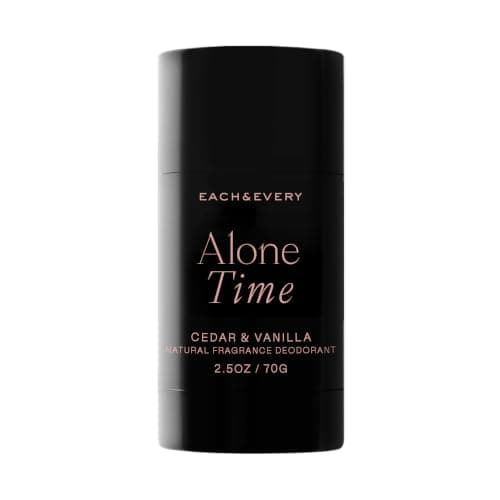
- Deodorant: Each & Every Natural Deodorant, Alone Time (Cedar & Vanilla). Each & Every's product page lists a short formula built on caprylic/capric triglyceride, tapioca starch, ozokerite wax and magnesium hydroxide, scented with cedarwood oil and vanilla extract; it is also baking soda-free. Our deodorant guide compares it with other EWG VERIFIED® sticks.
Makers change formulas, so the ingredient list on the package you buy is the one that counts.
Related guides on NonToxicFinder
- What is synthetic fragrance, and where it hides
- What are parabens, and where they hide
- Sulfates in shampoo and body wash
- Is CeraVe safe? Its ingredients, including propylene glycol
- Fragrance-free cleaning products
Frequently asked questions
Is propylene glycol the same as antifreeze?
No. Propylene glycol is one ingredient that can be used to make antifreeze, but the poisonous antifreeze chemical is ethylene glycol. ATSDR says ethylene glycol forms crystals that collect in the kidneys, while propylene glycol "does not form harmful crystals when it breaks down." FDA allows propylene glycol in food; ethylene glycol is not a food ingredient.
Is propylene glycol bad for you?
Not at the levels in food and personal care, according to ATSDR, which says those amounts "are not generally considered harmful." Problems reported in ATSDR's review came from large doses, mostly in hospital medicines. Some people get skin irritation, and fewer have a true allergy.
Why is propylene glycol in food?
It keeps food moist and dissolves flavors and colors. FDA lists 12 uses for it, including humectant, emulsifier, solvent and thickener, and caps the amount by food type, for example 2.5% in frozen dairy.
Can propylene glycol cause an allergic reaction?
Yes, in a small share of people. In one patch-test study of 1,226 patients that ATSDR summarizes, 13 had an allergic reaction and 195 had irritation. People with eczema or damaged skin react more often.
Is propylene glycol safe for cats and dogs?
FDA prohibits it in or on cat food, saying it "has not been shown by adequate scientific data to be safe for use" there; feeding studies found red blood cell damage in cats. FDA allows it in other animal feed, including dog food.
Is propylene glycol in cleaning products?
In some. EPA lists it on its Safer Chemical Ingredients List as a solvent and enzyme stabilizer, and Joy Ultra dish soap's safety data sheet lists it at under 2%.
What other names does propylene glycol go by?
1,2-propanediol and propane-1,2-diol (CAS 57-55-6). Butylene glycol, caprylyl glycol, dipropylene glycol and PEGs are different ingredients.
References
All sources were read on 2026-11-08. ATSDR's propylene glycol profile dates from 1997 and is still its current one; ATSDR updates the ToxFAQs only when a profile is revised.
- ATSDR. ToxFAQs for Propylene Glycol.
- ATSDR. Toxicological Profile for Propylene Glycol (1997), chapters 1 and 2.
- ATSDR. ToxFAQs for Ethylene Glycol.
- FDA. 21 CFR 184.1666, Propylene glycol.
- FDA. 21 CFR 589.1001, Propylene glycol in or on cat food, and 21 CFR 582.1666.
- European Medicines Agency. Questions and answers on propylene glycol used as an excipient in medicinal products for human use, EMA/CHMP/704195/2013, 9 October 2017.
- U.S. EPA. Safer Chemical Ingredients List, entry for 1,2-propanediol.
- CPSC. 16 CFR 1700.14, Substances requiring special packaging; CPSC poison prevention release 15-100.
- American Academy of Dermatology. How to test skin care products.
- FDA labeling rules: 21 CFR 701.3 (cosmetics), 21 CFR 201.66 (OTC drugs), 21 CFR 101.4 and 101.100 (food).
- JoySuds. Joy Ultra safety data sheet, prepared 01/02/2024.
Affiliate Disclosure: This article contains affiliate links. NonToxicFinder (Solved Labs LLC) may earn commissions on qualifying purchases at no extra cost to you. We are not affiliated with, endorsed by, or partnered with the Environmental Working Group.