This article contains affiliate links. NonToxicFinder (Solved Labs LLC) may earn commissions on qualifying purchases at no extra cost to you. We are not affiliated with, endorsed by, or partnered with the Environmental Working Group.
"Paraben-free" is one of the most common claims on shampoo, lotion and baby wash. Parabens are preservatives: they stop bacteria and mold from growing in products that sit in a warm bathroom for months. They are also among the most debated cosmetic ingredients of the last 25 years, because some of them act like a very weak version of estrogen. This guide explains what parabens are, how strongly they act on hormones, where people are exposed, what the breast tissue studies did and did not show, how the U.S. and Europe regulate them, and what tends to replace them. Every claim names its source, and the full reference list with the date we read each one is at the end.
NonToxicFinder does not make health claims of its own. Where this page describes a hazard, it says who said it and links to where they said it.
What parabens are
The FDA puts it simply: "Parabens are a family of related chemicals that are commonly used as preservatives in cosmetic products," and "the parabens used most commonly in cosmetics are methylparaben, propylparaben, butylparaben, and ethylparaben." Preservatives, it explains, are there "to prevent the growth of harmful bacteria and mold, in order to protect both the products and consumers."[1]
Parabens are also used in food. Methylparaben and propylparaben are listed in U.S. federal rules as substances "generally recognized as safe" for use as antimicrobial agents, with good manufacturing practice resulting in "a maximum level of 0.1 percent in food."[13, 14]
How parabens act on hormones
The concern started with lab tests. In 1998, researchers found that "the four most widely used parabens (namely methyl-, ethyl-, propyl-, and butylparaben) were all found to be weakly estrogenic with the most potent (butylparaben) being 10,000-fold less potent than 17 beta-estradiol," the body's main estrogen. Injected into young rats, butylparaben caused an estrogen-like response, but "when administered orally to immature rats, the parabens were inactive."[2]
A 2002 study in human breast cancer cells confirmed the pattern: at a millionfold excess, butylparaben blocked 86% of estradiol binding, propylparaben 77%, ethylparaben 54% and methylparaben 21%, and at higher concentrations parabens made the cells grow.[3] A 2008 review added that parabens can pass through skin intact and also show "androgen antagonist activity," among other effects in lab studies.[15]
Scientists disagree about what this means for people. A 2005 review that compared paraben doses and potency against the body's own estrogen concluded that "it is biologically implausible that parabens could increase the risk of any estrogen-mediated endpoint, including effects on the male reproductive tract or breast cancer," because "the parabens with activity are many orders of magnitude less active than estrogen."[16] The EU's scientific committee took a middle position on propylparaben in 2021: the data "provide some indications for potential endocrine effects. However, the current level of evidence is not sufficient to regard it as an endocrine disrupting substance."[17]
The breast tissue studies
Parabens became a household word after a 2004 study measured them in 20 human breast tumours, at an average of 20.6 nanograms per gram of tissue, mostly methylparaben. The authors concluded that "parabens can be found intact in the human breast."[5] The same journal ran a commentary alongside it on "what can be inferred from this type of data (and what can not, such as the cause of these tumours)."[6] The study had no comparison tissue from women without cancer.
A larger 2012 study took 160 samples from 40 women having mastectomies and found "one or more paraben esters were quantifiable in 158/160 (99%) of the tissue samples." Propylparaben was higher near the armpit, but the authors noted that "the source of the paraben cannot be identified, but paraben was measured in the 7/40 patients who reported never having used underarm cosmetics in their lifetime."[7]
Together, these studies show that parabens reach breast tissue. They do not show that parabens cause breast cancer, and none of the agencies cited on this page has concluded that they do. Parabens are not on California's Proposition 65 list of chemicals known to cause cancer or reproductive harm.[18]
Where exposure comes from
In the U.S. national survey of 2005-2006, CDC scientists "detected methyl paraben (MP) and propyl paraben (PP) in 99.1% and 92.7% of the samples," with ethyl- and butylparaben found less often. Women and girls had significantly higher levels than men and boys, which the authors said "likely reflect the use of personal care products containing these compounds."[4] CDC adds a general caution: "Finding an environmental chemical in a person's blood or urine does not mean that it causes health effects or disease."[19]
- Personal care products. Among 177 pregnant women, "women who used lotion had BP concentrations 111% higher" than non-users, with a "monotonic dose-response relationship between the total number of products used" and urinary parabens.[20]
- Switching products. When 100 teenage girls used products labeled free of these chemicals for three days, "methyl and propyl paraben concentrations decreased by 43.9% ... and 45.4%," though ethyl- and butylparaben unexpectedly rose from low levels.[21]
- Food. "The majority (>90%) of food samples contained measurable concentrations of parabens" in a study of 267 U.S. foods, with no significant difference between food types, including canned food. Estimated daily intake was highest for infants and toddlers.[22]
What studies in people have found
- Male fertility. In men at a fertility clinic, the researchers "found no evidence for a relationship between urinary parabens and hormone levels or semen quality," though butylparaben was linked to sperm DNA damage, which they said "warrants further investigation."[23]
- Pregnancy. In 922 pregnant women in Puerto Rico, higher methyl- and propylparaben were associated with slightly longer pregnancies, and "parabens were associated with a decrease in SGA" (babies small for their gestational age). The authors wrote that "further studies are required to substantiate these findings."[24]
These are associations from urine samples, which capture recent exposure and vary from day to day. They do not show cause and effect in either direction.
How regulators treat parabens
- FDA (U.S.). "At this time, we do not have information showing that parabens as they are used in cosmetics have an effect on human health." FDA says it continues to review published studies. It also notes that it "doesn't have special rules that apply only to preservatives in cosmetics."[1]
- EU limits. Since 2015, propyl- and butylparaben are capped at "0,14 % (as acid) for the sum of the individual concentrations" and are "not to be used in leave-on products designed for application on the nappy area of children under three years of age." Methyl- and ethylparaben are allowed up to 0.4% each and 0.8% in mixtures.[8]
- EU bans. Isopropyl-, isobutyl-, phenyl-, benzyl- and pentylparaben were banned in cosmetics because "limited or no information was submitted by industry" and "the human risk cannot be evaluated."[9]
- EU scientists on butylparaben. In 2023 the Scientific Committee on Consumer Safety found butylparaben "at concentrations of up to 0.14% (expressed as acid) is safe," but that for children "potential safety concerns cannot be excluded."[25] In 2025, looking at children specifically, it concluded that butylparaben at 0.14% in all the products assessed "is not safe for children between 0.5-1 years, 1-3 years, 3-6 years and 6-10 years when used in combination," and would need lower limits in some product types.[10]
- Denmark. Denmark banned propyl- and butylparaben in cosmetics for children up to three years old from 15 March 2011, taking "a precautionary approach" based on their "inherent endocrine properties."[26]
- California. Since January 1, 2025, cosmetics sold in California may not contain intentionally added isobutylparaben or isopropylparaben.[27]
- Food in the EU. The EU withdrew propylparaben as a food additive (E 216) in 2006 after EFSA found it, "contrary to methyl and ethyl paraben, had effects on sex hormones and the male reproductive organs in juvenile rats."[28]
The paraben paradox: what replaces them
Products still need preservatives, and "paraben-free" means something else is doing that job. Dermatologists have pointed out a trade-off. A 2019 review called parabens "one of the least allergenic preservatives available" and warned that "the unsubstantiated public perception of paraben safety has led to its replacement in many products with preservatives having far greater allergenic potential."[11]
The clearest example is methylisothiazolinone (MI). European dermatologists reported that its use in cosmetics "has caused an unprecedented epidemic of MI contact allergy": in 2015, 6.0% of patients patch-tested in eight countries reacted to it, mostly from cosmetics.[12] After regulators restricted MI, "the prevalence of MI contact allergy decreased by 50% from 2015 to 2017."[29]
That does not make parabens the right choice for everyone, and it does not settle the hormone question. It does mean "paraben-free" is not the same as "preservative-free," and the replacement is worth reading on the label. See our What Are Formaldehyde Releasers? Where They Hide on Ingredient Lists.
How to spot parabens on a label
- Read the full ingredient list, on the product or the maker's own page.
- Look for words ending in "paraben": methylparaben, ethylparaben, propylparaben, butylparaben, and the less common isobutyl- or isopropylparaben.
- If you avoid parabens, check what preserves the product instead, especially if you have sensitive skin.
- Treat "paraben-free" as the maker's claim. It is not a government standard; the ingredient list is the evidence.
What to Use Instead: Three Washes With No Paraben on the Ingredient List
How we chose: each product below rests on one basis, the maker’s own full ingredient list for the exact product, which we read on November 1, 2026. We checked that no ingredient name ends in “paraben.” That is all this basis shows. It is not a certification, it does not mean the product is safe, and it says nothing about other ingredients. We also checked that each Amazon listing was in stock the same day.
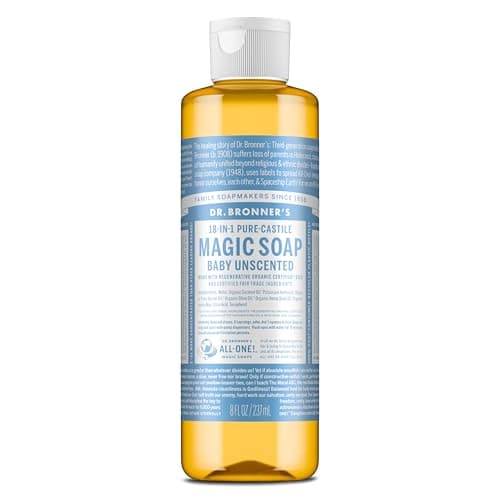
Dr. Bronner’s Unscented Castile Liquid Soap, 8 oz
Basis: the maker’s full ingredient list, 8 oz option, on the Dr. Bronner’s product page.
Ingredients as listed: Water, Organic Coconut Oil, Potassium Hydroxide, Organic Palm Oil, Organic Olive Oil, Organic Hemp Seed Oil, Organic Jojoba Wax, Citric Acid, Tocopherol.
A short list built on oils and a soap-making base. No ingredient on it ends in “paraben.” Dr. Bronner’s sells this as a multi-use castile soap, so one bottle can stand in for a body wash and a hand soap. Price when checked: $9.99.
Dr. Bronner’s Unscented Castile Liquid Soap, 8 oz, on Amazon →
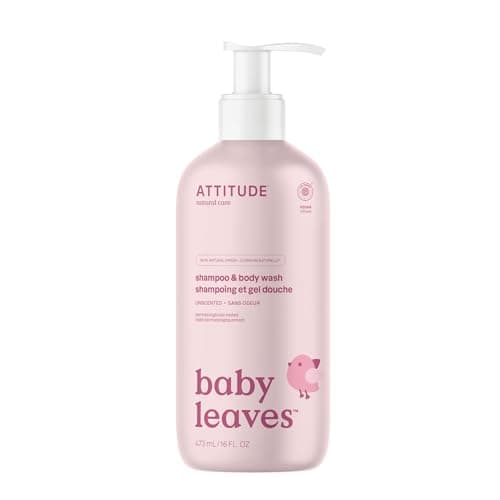
ATTITUDE Baby Shampoo, Body Wash & Soap 2-in-1, Unscented, 16 Fl Oz
Basis: the maker’s full ingredient list, 16 fl oz unscented, on the ATTITUDE product page.
Ingredients as listed: Aqua / Water / Eau, Sodium Coco-Sulfate, Coco-Glucoside, Glycerin, Sodium Cocoyl Isethionate, Lauryl Hydroxysultaine, Citric Acid, Sodium Chloride, Glyceryl Oleate, Sodium Benzoate, Potassium Sorbate, Guar Hydroxypropyltrimonium Chloride, Inulin, Vaccinium Myrtillus (Blueberry) Leaf Extract.
No paraben appears on the list; the preservatives are sodium benzoate and potassium sorbate. The list does include Sodium Coco-Sulfate, a sulfate, so this is a paraben-free pick, not a sulfate-free one. Price when checked: $11.36.
ATTITUDE Baby Shampoo, Body Wash & Soap 2-in-1, 16 oz, on Amazon →
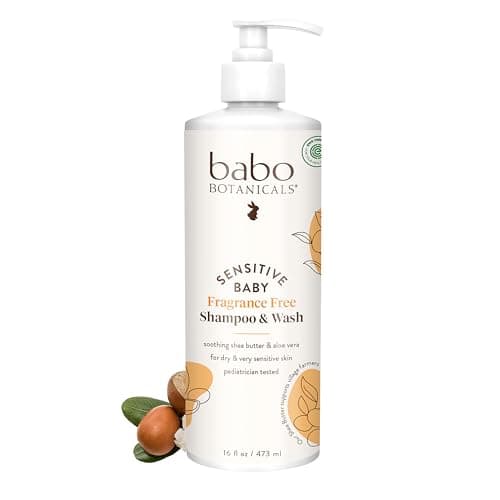
Babo Botanicals Fragrance-Free 2-in-1 Baby Shampoo & Wash, 16 Fl Oz
Basis: the maker’s full ingredient list on the Babo Botanicals product page, which lists the 16 fl oz size as an option.
Ingredients as listed: a long plant-extract list that includes shea butter, aloe, calendula and chamomile extracts, with Sodium Benzoate, Ethylhexylglycerin and Potassium Sorbate as the preservative-type ingredients. No ingredient name ends in “paraben.”
The list includes Sodium C14-16 Olefin Sulfonate, a sulfonate surfactant, so we do not call it sulfate-free. Price when checked: $20.00, with a low order limit of 8, so stock may move quickly.
Babo Botanicals Fragrance-Free 2-in-1 Baby Shampoo & Wash, 16 oz, on Amazon →
Prices and stock change, so look at the current listing before you order. For more baby bath options, see our baby shampoo guide.
More guides
- What are phthalates?
- What is BPA?
- What are PFAS?
- What is talc?
- EWG VERIFIED® shampoo and body lotion
- MADE SAFE certified shampoo and body lotion
- Baby shampoo and deodorant
Frequently asked questions
Q: What are parabens used for?
They are preservatives that stop bacteria and mold from growing in cosmetics, and methyl- and propylparaben are also allowed as food preservatives in the U.S.
Q: Are parabens estrogenic?
Weakly. In lab tests the strongest common paraben, butylparaben, was about 10,000 times less potent than estradiol, and longer-chain parabens bind the estrogen receptor more strongly than shorter ones.
Q: Do parabens cause breast cancer?
That has not been shown. Studies have measured parabens in breast tissue, including in women who never used underarm products, but they could not identify the cause of any tumour, and no agency cited here has concluded that parabens cause cancer.
Q: Are parabens banned?
Five less common parabens are banned in EU cosmetics, and California bans isobutyl- and isopropylparaben. Methyl-, ethyl-, propyl- and butylparaben are allowed in the EU within limits, and FDA has no paraben-specific rules for cosmetics.
Q: Is paraben-free better?
Not automatically. Parabens rarely cause skin allergies, and some replacement preservatives, such as methylisothiazolinone, caused far more. Check what preserves a paraben-free product.
References
Each source was read on 2026-11-03. Ingredient lists in the product section were read on the date given there.
- U.S. Food and Drug Administration. "Parabens in Cosmetics." Content current as of November 18, 2025. Source
- Routledge EJ, Parker J, Odum J, Ashby J, Sumpter JP. "Some alkyl hydroxy benzoate preservatives (parabens) are estrogenic." Toxicology and Applied Pharmacology, 1998;153(1):12-9. Source
- Byford JR, et al. "Oestrogenic activity of parabens in MCF7 human breast cancer cells." Journal of Steroid Biochemistry and Molecular Biology, 2002;80(1):49-60. Source
- Calafat AM, Ye X, Wong LY, Bishop AM, Needham LL. "Urinary concentrations of four parabens in the U.S. population: NHANES 2005-2006." Environmental Health Perspectives, 2010;118(5):679-85. Source
- Darbre PD, et al. "Concentrations of parabens in human breast tumours." Journal of Applied Toxicology, 2004;24(1):5-13. Source
- Harvey PW, Everett DJ. "Significance of the detection of esters of p-hydroxybenzoic acid (parabens) in human breast tumours." Journal of Applied Toxicology, 2004;24(1):1-4. Source
- Barr L, Metaxas G, Harbach CA, Savoy LA, Darbre PD. "Measurement of paraben concentrations in human breast tissue at serial locations across the breast from axilla to sternum." Journal of Applied Toxicology, 2012;32(3):219-32. Source
- Commission Regulation (EU) No 1004/2014 of 18 September 2014 amending Annex V to Regulation (EC) No 1223/2009 on cosmetic products. Source
- Commission Regulation (EU) No 358/2014 of 9 April 2014 amending Annexes II and V to Regulation (EC) No 1223/2009 on cosmetic products. Source
- Scientific Committee on Consumer Safety. Opinion on Butylparaben, children's exposure (SCCS/1674/25), adopted 30 April 2025. Source
- Fransway AF, et al. "Parabens." Dermatitis, 2019;30(1):3-31. Source
- Schwensen JF, et al. "The epidemic of methylisothiazolinone: a European prospective study." Contact Dermatitis, 2017;76(5):272-279. Source
- Code of Federal Regulations, 21 CFR 184.1490 (methylparaben). Source
- Code of Federal Regulations, 21 CFR 184.1670 (propylparaben). Source
- Darbre PD, Harvey PW. "Paraben esters: review of recent studies of endocrine toxicity, absorption, esterase and human exposure, and discussion of potential human health risks." Journal of Applied Toxicology, 2008;28(5):561-78. Source
- Golden R, Gandy J, Vollmer G. "A review of the endocrine activity of parabens and implications for potential risks to human health." Critical Reviews in Toxicology, 2005;35(5):435-58. Source
- Scientific Committee on Consumer Safety. Opinion on Propylparaben (SCCS/1623/20), adopted 30-31 March 2021. Source
- California Office of Environmental Health Hazard Assessment. Proposition 65 List of Carcinogens or Reproductive Toxicants, July 31, 2026. Source
- Centers for Disease Control and Prevention, Environmental Health Tracking. "Biomonitoring: Population Exposures." Source
- Braun JM, et al. "Personal care product use and urinary phthalate metabolite and paraben concentrations during pregnancy among women from a fertility clinic." Journal of Exposure Science and Environmental Epidemiology, 2014;24(5):459-66. Source
- Harley KG, et al. "Reducing phthalate, paraben, and phenol exposure from personal care products in adolescent girls: findings from the HERMOSA intervention study." Environmental Health Perspectives, 2016;124(10):1600-1607. Source
- Liao C, Liu F, Kannan K. "Occurrence of and dietary exposure to parabens in foodstuffs from the United States." Environmental Science and Technology, 2013;47(8):3918-25. Source
- Meeker JD, Yang T, Ye X, Calafat AM, Hauser R. "Urinary concentrations of parabens and serum hormone levels, semen quality parameters, and sperm DNA damage." Environmental Health Perspectives, 2011;119(2):252-7. Source
- Aker AM, et al. "The associations between prenatal exposure to triclocarban, phenols and parabens with gestational age and birth weight in northern Puerto Rico." Environmental Research, 2019;169:41-51. Source
- Scientific Committee on Consumer Safety. Opinion on Butylparaben (SCCS/1651/23), adopted 26 October 2023. Source
- Scientific Committee on Consumer Safety. Clarification on Opinion SCCS/1348/10 in the light of the Danish clause of safeguard banning the use of parabens in cosmetic products intended for children under three years of age (SCCS/1446/11), 10 October 2011. Source
- California Health and Safety Code, section 108980 (Toxic-Free Cosmetics Act, Stats. 2020, Ch. 314). Source
- Directive 2006/52/EC of 5 July 2006 amending Directive 95/2/EC on food additives other than colours and sweeteners. Source
- Uter W, et al. "The epidemic of methylisothiazolinone contact allergy in Europe: follow-up on changing exposures." Journal of the European Academy of Dermatology and Venereology, 2020;34(2):333-339. Source
This article contains affiliate links. NonToxicFinder (Solved Labs LLC) may earn commissions on qualifying purchases at no extra cost to you. We are not affiliated with, endorsed by, or partnered with the Environmental Working Group. Quotes from agencies and studies are taken from the sources listed above on the dates shown. Ingredient lists come from the makers' pages and can change, so check the label on the product you receive.