Affiliate Disclosure: This article contains affiliate links. NonToxicFinder (Solved Labs LLC) may earn commissions on qualifying purchases at no extra cost to you. We are not affiliated with, endorsed by, or partnered with the Environmental Working Group or MADE SAFE®.
Formaldehyde releasers are preservatives that slowly give off small amounts of formaldehyde inside a product to keep bacteria and mold from growing. On an ingredient list they appear under their own names, never as “formaldehyde”: the common ones are DMDM hydantoin, quaternium-15, diazolidinyl urea, imidazolidinyl urea, bronopol (2-bromo-2-nitropropane-1,3-diol) and sodium hydroxymethylglycinate. A 2010 review found them in about 20% of U.S. cosmetics and personal care products.[10] The best-documented problem is skin allergy: formaldehyde and its releasers are common causes of allergic contact dermatitis in patch-test clinics.[12] IARC and the U.S. National Toxicology Program classify formaldehyde itself as a human carcinogen, based mainly on people who breathed it at work.[5, 6] To avoid releasers, read the full ingredient list for the names below, or buy from a certification whose banned list excludes them, such as the four MADE SAFE® certified products near the end of this page.
What a formaldehyde releaser is
Anything that contains water, such as shampoo, lotion, liquid soap or a wet wipe, needs a preservative or it spoils. The EU’s cosmetics regulation describes releasers as preservatives that are “gradually releasing formaldehyde in order to fulfil a preserving function in the final cosmetic product,” and notes they are used in both leave-on and rinse-off products.[2] The formaldehyde is the working part; the releaser is the delivery system.
That is why “formaldehyde-free” on a front label can be true and still miss the point. The National Toxicology Program puts it plainly: “Although formaldehyde per se now is rarely used in cosmetics, the use of formaldehyde releasers is common.”[6] In U.S. data reviewed in Contact Dermatitis in 2010, about 17% of leave-on products and 27% of rinse-off products contained a releaser.[10] Washington State’s rule closes the same gap in its own definition: intentionally added formaldehyde includes “the addition of a chemical selected to release formaldehyde to the product or ingredient over time or under conditions of product use.”[1]
Releasers are one family of preservatives. Parabens are another, and our guide to what parabens are and where they hide covers the trade-offs when makers swap one preservative for another.
The names to look for on a label
The NTP names eight releasers found in U.S. cosmetics registration data. These six from that list are also named in Washington’s rule, so learn these first:[6, 10]
| Label name (INCI) | Also seen as |
|---|---|
| DMDM hydantoin | 1,3-dimethylol-5,5-dimethylhydantoin |
| Quaternium-15 | (no common alias) |
| Diazolidinyl urea | (no common alias) |
| Imidazolidinyl urea | (no common alias) |
| 2-Bromo-2-nitropropane-1,3-diol | Bronopol |
| Sodium hydroxymethylglycinate | (no common alias) |
Formaldehyde itself can also be listed as formalin or methylene glycol, which FDA flags on hair smoothing and nail products.[7, 8] In nail polish, tosylamide/formaldehyde resin (also written toluene sulfonamide/formaldehyde resin or TSFR) is a formaldehyde-based resin that hardens the coat.[8]
For a complete list, the most useful one is the one a regulator wrote. Washington’s rule, WAC 173-339-110, names 25 formaldehyde releasers by chemical name and CAS number, “including aliases of the chemical name and aliases of the CAS RN”:[1]
- DMDM hydantoin
- Diazolidinyl urea
- Imidazolidinyl urea
- Quaternium-15
- Tosylamide/formaldehyde resin (PTSAF)
- 2-Bromo-2-nitropropane-1,3-diol (bronopol)
- Sodium hydroxymethylglycinate
- Polyoxymethylene urea
- Polyoxymethylene melamine
- 5-Bromo-5-nitro-1,3-dioxane (bronidox)
- 7-Ethylbicyclo-oxazolidine (Bioban CS1246)
- Benzylhemiformal
- Dimethylhydantoin formaldehyde (DMHF)
- Dimethylol glycol
- Dimethylol urea
- Dimethyl oxazolidine
- MDM hydantoin
- Methenamine
- Methylal
- Paraformaldehyde
- Polyoxymethylene
- Tetramethylolglycoluril
- Timonacic (when used in heat-activated hair straighteners)
- Tris-hydroxymethylnitromethane
- Urea, polymer with formaldehyde, isobutylated
Can they cause skin rashes or allergies?
Yes, and allergy is the reason most of the research on releasers exists. The EU classifies formaldehyde as a skin sensitizer (Category 1) as well as a carcinogen.[2] FDA says nail products that contain formaldehyde “may also cause skin irritation, as well as allergic reactions to this ingredient,” and lists contact dermatitis, “a red, itchy rash,” among the effects of formaldehyde from hair smoothing products.[7, 8]
The patch-test research, all from people referred to clinics for suspected contact dermatitis, shows how it plays out:
- Releasers cause allergies of their own. A 2010 review in Contact Dermatitis reported European sensitization rates of 0.6 to 1.9% for quaternium-15, 0.5 to 1.4% for diazolidinyl urea, 0.3 to 1.4% for imidazolidinyl urea and 0.4 to 1.2% for bronopol, and found that every releaser scored “(far) higher prevalences in the USA.”[10]
- Formaldehyde allergy and releaser allergy travel together. In ten years of Danish patch-test data (2007 to 2016), 1.5% of patients were allergic to formaldehyde, quaternium-15 was the releaser most often positive (0.86%), and 36% of the formaldehyde-allergic patients also reacted to a releaser. Almost 63% of them used products that released formaldehyde, and “cosmetics were the most common sources.”[12]
- Small amounts matter to people who are already allergic. The EU’s scientific committee concluded in 2021 that the old 0.05% (500 ppm) warning threshold “does not sufficiently protect consumers sensitised to formaldehyde,” and the EU cut it to 10 ppm.[2]
If a dermatologist has diagnosed a formaldehyde allergy, those findings are why the releaser names matter as much as the word “formaldehyde.” Swapping one preservative for another also carries its own allergy pattern: in the latest North American patch-test results (2023 to 2024), the isothiazolinone preservatives methylisothiazolinone (9.2%) and methylchloroisothiazolinone/methylisothiazolinone (7.0%) were among the most common allergens.[14] MADE SAFE’s banned list covers both families.[15] For a related allergen group, see our guide to synthetic fragrance on ingredient lists.
Are they harmful, and how worried should you be?
Authorities agree that formaldehyde is a carcinogen, and they are specific about the exposure behind that finding:
- IARC reviewed formaldehyde in Volume 100F of its Monographs, which covers agents classified as “carcinogenic to humans (Group 1).”[5]
- The National Toxicology Program lists formaldehyde as “known to be a human carcinogen,” a status it has held since the Twelfth Report on Carcinogens (2011). It bases this on “increased risks of nasopharyngeal cancer, sinonasal cancer, and lymphohematopoietic cancer, specifically myeloid leukemia among individuals with higher measures of exposure,” drawn mostly from studies of industrial workers, embalmers and garment workers.[6]
- The EU classifies formaldehyde as a Category 1B carcinogen and bans it as a cosmetic ingredient, yet still allows the releasers in its list of approved preservatives, citing “the relatively low risk associated to formaldehyde releasers” when it set its transition period.[2]
The NTP also gives a sense of scale. It notes that formaldehyde “is poorly absorbed via the skin,” and cites an estimate of up to 0.1 mg absorbed from a typical application of hand cream or suntan lotion, against up to 2 mg a day from smoking 20 cigarettes.[6] The cosmetic exposure U.S. regulators single out is different: heated hair smoothing, where FDA says most products “release formaldehyde gas” into the air during the treatment.[7]
Put together: for a preserved shampoo or lotion, the documented, everyday concern is allergy, which matters most to people with eczema-prone skin or a known formaldehyde allergy. The cancer classification rests on breathing formaldehyde, which is why salon keratin treatments get the strongest warnings. None of these bodies has tested or ruled on any individual product.
Which products are most likely to contain them
| Product type | What the source found or says |
|---|---|
| Hair smoothing and “keratin” treatments | FDA: most hair smoothing or straightening products release formaldehyde gas when heated. Look for formaldehyde, formalin or methylene glycol on the label or the maker’s site.[7] Washington lists timonacic specifically for heat-activated straighteners.[1] |
| Nail hardeners and nail polish | FDA: formaldehyde is an ingredient in some nail hardeners and polishes, and tosylamide/formaldehyde resin is used in some polishes.[8] |
| Baby and toddler wipes | None of 51 best-selling wipes tested in a 2019 Dermatitis study declared formaldehyde or a releaser, yet 12 (24%) released formaldehyde in a lab test.[13] |
| Shampoo, body wash, liquid soap | The NTP lists soaps and shampoos among products that “often contain formaldehyde releasers.” Rinse-off products were the most likely to contain one (27%) in the 2010 U.S. data.[6, 10] |
| Lotions and other leave-on skin care | About 17% of U.S. leave-on products contained a releaser; a label check of 496 skin care products in a European drugstore found one in 25%.[10, 11] |
| Household cleaners and laundry products | The NTP names household cleaning agents among releaser sources, and laundry detergents and general-purpose cleaners among products where formaldehyde is used as a preservative.[6] |
Baby shampoo is where many parents first hear the word quaternium-15. Our look at what is in Johnson’s baby products now checks its current labels against these names, and our nail polish guide covers polishes made without formaldehyde resin.
Are they banned or restricted anywhere?
| Where | Rule | In force |
|---|---|---|
| United States (federal) | Formaldehyde and its releasers are not among the ingredients FDA lists as prohibited or restricted in cosmetics by regulation.[9] Separately, the Consumer Product Safety Commission treats formaldehyde and products with 1% or more of it as “strong sensitizers” that must carry a warning label.[6] | Current |
| European Union | Formaldehyde is banned as a cosmetic ingredient (Annex II, entry 1577). Releasers stay allowed as preservatives, but any finished product whose total released formaldehyde exceeds 0.001% (10 ppm) must be labeled “releases formaldehyde.”[2] | Applies to products placed on the market after July 31, 2024, and to everything on sale after July 31, 2026 |
| Washington State | No intentionally added formaldehyde in cosmetics, which the rule defines to include a chemical selected to release it. The 25 named releasers are banned outright.[1] | Formaldehyde since January 1, 2025; the 25 releasers from January 1, 2027, with retailers allowed to sell existing stock until January 1, 2028 |
| Minnesota | No children’s product (one made to be applied to the body of a child under 8) may intentionally contain formaldehyde or added ingredients that release it above 0.05%.[3, 4] | Manufacturers since August 1, 2014; retailers since August 1, 2015 |
The EU warning is a useful cue if you buy European brands: the words “releases formaldehyde” on the pack mean the product is above the 10 ppm line.
What FDA advises for hair smoothing and nail products
FDA’s consumer guidance on hair smoothing products is the most specific federal advice on formaldehyde in personal care:[7]
- Do not apply them yourself at home. FDA “discourages consumers from buying these products for home use” and says to go to a licensed professional.
- Read the required ingredient list. “If there isn’t one, don’t buy the product.” Formaldehyde, formalin or methylene glycol on the label or the maker’s website means the product “contains formaldehyde or will release formaldehyde.”
- Ask the salon whether the product contains formaldehyde, whether the room is properly ventilated, and whether it has an alternative that does not release formaldehyde when heated.
- If you are sensitive to formaldehyde, FDA says “you should not use this type of product.”
- Report a bad reaction to FDA through MedWatch (1-800-332-1088).
For nail products, FDA advises following labeled directions and paying attention to warning statements, and notes that frequent use of formaldehyde nail hardeners can make nails brittle.[8]
How to check a label in under a minute
- Turn the product over. Read the full ingredient list on the pack or the maker’s own product page, not the front-of-pack claims.
- Scan for the six common names in the table above, plus formaldehyde, formalin, methylene glycol and, on nail polish, tosylamide/formaldehyde resin.
- On European products, look for “releases formaldehyde.” It is a required warning above 10 ppm.[2]
- Treat “formaldehyde-free” as a claim about formaldehyde only. A releaser is a separate ingredient, so the claim does not rule one out; the ingredient list does.
- Recheck after a redesign. Makers change preservatives, so a new bottle can differ from the one you bought last year.
What to buy instead
A certification whose published standard bans releasers saves you the label scan. MADE SAFE® is one: its banned and restricted list names “Formaldehyde releasers” as a category, alongside “Isothiazolinone preservatives” and parabens.[15] Each product below rests on that one basis, read in MADE SAFE’s own registry, where every entry reads “MADE SAFE® Certified in all currently available sizes / packaging options.”[16, 17, 18, 19] The preservative column shows what each maker uses in place of a releaser.
| Product | Best for | Preservatives the maker lists | Worth knowing |
|---|---|---|---|
| Little Rituals Multi-Vitamin Hair & Body Wash | Baby shampoo and body wash in one | Sodium benzoate and potassium sorbate[20] | Tear-free 2-in-1; maker says free of parabens, sulphates and phenoxyethanol |
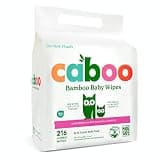
| Caboo Bamboo Baby Wipes, Unscented | Diaper changes | Gluconolactone and sodium benzoate, with citric acid also listed as a preservative[23] | Unscented, bamboo-based viscose cloth with “no nylon, plastic or tree fibers”[23] |
| Annmarie Skin Care Sweet Sunrise Shampoo | Adult shampoo, all hair types | Sodium benzoate and potassium sorbate[21] | Scented with essential oils; contains macadamia and hazelnut oils |
| Branch Basics Gel Hand Soap, Fragrance-Free | Family hand soap, sensitive or fragrance-averse skin | Leuconostoc/radish root ferment filtrate[22] | No added fragrance; 16 fl oz pump bottle |
- For a baby: start with Little Rituals for bath time and Caboo for changes. Our guides to a MADE SAFE certified baby wash and MADE SAFE certified baby wipes go deeper on each, including the second certified wipe from Natracare.
- For your own hair: Annmarie Sweet Sunrise, unless you avoid tree-nut oils. Our MADE SAFE shampoo review covers the matching conditioner.
- For the sink: Branch Basics if you want no fragrance at all; our MADE SAFE hand soap comparison also covers a scented foaming option from Kosmatology.
- For nails and hair smoothing: no product here covers them. Use our nail polish guide and the FDA steps above.
A certification describes what goes into the formula, not a lab test of the finished product for formaldehyde, which is worth knowing given the baby-wipes study above. Our explainer on what MADE SAFE certified means covers how the program screens ingredients.
Frequently asked questions
Q: What is the difference between formaldehyde and a formaldehyde releaser?
Formaldehyde is the chemical itself, and the EU bans it as a cosmetic ingredient. A releaser is a different ingredient, a preservative such as DMDM hydantoin or quaternium-15, that gives off small amounts of formaldehyde over time in the product. They appear under different names on a label.
Q: Is DMDM hydantoin a formaldehyde releaser?
Yes. It is the first of the 25 formaldehyde releasers named in Washington State’s cosmetics rule, and one of the eight releasers the National Toxicology Program reports in U.S. cosmetics data.
Q: Does “formaldehyde-free” mean no releasers?
No. It is the maker’s claim about formaldehyde itself. A product can carry it and still contain a releaser, so check the ingredient list for the names on this page.
Q: Can formaldehyde releasers cause a rash?
Yes. Formaldehyde and releasers such as quaternium-15 are common causes of allergic contact dermatitis in patch-test studies, and about a third of people allergic to formaldehyde in Danish data also reacted to a releaser. FDA lists allergic reactions among the effects of formaldehyde in nail and hair smoothing products.
Q: Does formaldehyde cause cancer?
IARC classifies formaldehyde as carcinogenic to humans (Group 1), and the National Toxicology Program lists it as a known human carcinogen. Both base this mainly on people with high exposure from breathing it at work. Neither body has ruled on any preserved shampoo or lotion.
Q: Are keratin treatments a source of formaldehyde?
FDA says most hair smoothing or straightening products release formaldehyde gas when heated, and it discourages using them at home. If you use one, FDA advises a licensed salon with proper ventilation.
Q: Are formaldehyde releasers banned in the EU?
Formaldehyde itself is banned in EU cosmetics. Releasers are still allowed as preservatives, but a product that releases more than 10 ppm formaldehyde must be labeled “releases formaldehyde.”
Q: Do baby wipes contain formaldehyde releasers?
Some may without saying so. In a 2019 study, none of 51 popular baby wipes declared a releaser, but 12 released formaldehyde in a lab test. MADE SAFE certified wipes from Caboo and Natracare are made under a standard that bans releasers.
References
Each source was read on 2026-11-08.
- Washington Administrative Code, WAC 173-339-110, “Formaldehyde and formaldehyde releasers.” Source
- European Commission. Commission Regulation (EU) 2022/1181 of 8 July 2022 amending Annex V to Regulation (EC) No 1223/2009 on cosmetic products. Source
- Minnesota Statutes, section 325F.177, “Formaldehyde in children’s products; ban.” Source
- Minnesota Statutes, section 325F.176, definitions. Source
- International Agency for Research on Cancer. IARC Monographs Volume 100F, “Chemical Agents and Related Occupations” (2012). Source
- National Toxicology Program. Report on Carcinogens, Fifteenth Edition, “Formaldehyde.” Source
- U.S. Food and Drug Administration. “Formaldehyde in Hair Smoothing Products: What You Should Know.” Content current as of March 2, 2021. Source
- U.S. Food and Drug Administration. “Nail Care Products.” Content current as of October 15, 2024. Source
- U.S. Food and Drug Administration. “Prohibited & Restricted Ingredients in Cosmetics.” Content current as of February 25, 2022. Source
- de Groot AC, White IR, Flyvholm MA, Lensen G, Coenraads PJ. “Formaldehyde-releasers in cosmetics: relationship to formaldehyde contact allergy. Part 1.” Contact Dermatitis, 2010;62(1):2-17. Source
- de Groot AC, Veenstra M. “Formaldehyde-releasers in cosmetics in the USA and in Europe.” Contact Dermatitis, 2010. Source
- Fasth IM, Ulrich NH, Johansen JD. “Ten-year trends in contact allergy to formaldehyde and formaldehyde-releasers.” Contact Dermatitis, 2018;79(5):263-269. Source
- Liou YL, Ericson ME, Warshaw EM. “Formaldehyde Release From Baby Wipes: Analysis Using the Chromotropic Acid Method.” Dermatitis, 2019;30(3):207-212. Source
- Reeder MJ, et al. “North American Contact Dermatitis Group Patch Test Results: 2023-2024.” Dermatitis, 2026. Source
- MADE SAFE. Banned and restricted list, hosted by Madeworks. Source
- MADE SAFE registry. “Little Rituals: Multi-Vitamin Hair & Body Wash.” Source
- MADE SAFE registry. “Caboo: Bamboo Baby Wipes.” Source
- MADE SAFE registry. “Annmarie Skincare: Sweet Sunrise Shampoo.” Source
- MADE SAFE registry. “Branch Basics: Hand Soap (Fragrance Free).” Source
- Little Rituals. Multi-Vitamin Baby & Kids Hair & Body Wash, product page and FAQ. Source
- Annmarie Skin Care. Sweet Sunrise Shampoo, product page. Source
- Branch Basics. Gel Hand Soap, product page. Source
- Caboo. Tree-Free Bamboo Baby Wipes, product page and back-panel ingredient table. Source
Affiliate Disclosure: This article contains affiliate links. NonToxicFinder (Solved Labs LLC) may earn commissions on qualifying purchases at no extra cost to you. We are not affiliated with, endorsed by, or partnered with the Environmental Working Group or MADE SAFE®.