Affiliate Disclosure: This article contains affiliate links. NonToxicFinder (Solved Labs LLC) may earn commissions on qualifying purchases at no extra cost to you. We are not affiliated with, endorsed by, or partnered with the Environmental Working Group or any certification program.
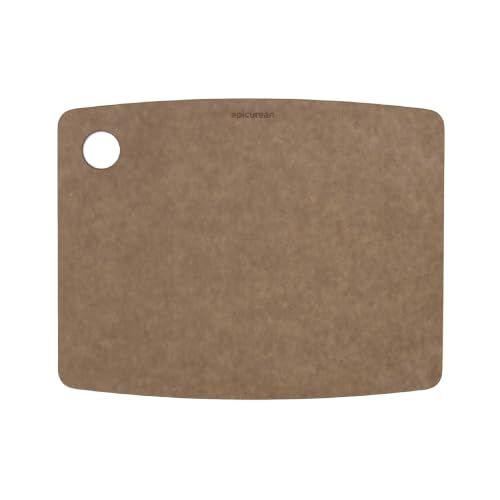
An Epicurean cutting board is made of many layers of kraft paper soaked in a phenolic resin and pressed under heat into a hard, quarter-inch sheet. It is not wood and it is not a soft plastic board. Epicurean says it goes in the dishwasher, needs no oil and handles heat up to 350°F, and NSF lists the Kitchen Series under its food equipment standard. Buy the 14.5 x 11.25 inch Kitchen Series board if you want an easy, dishwasher-friendly everyday board to replace a scored plastic one. Skip it if you want a heavy board that stays put or the softest possible surface for a fine knife edge; a thick wood board suits you better.
What It Is Made Of, Resin Included
Epicurean’s FAQ describes the process: rolls of “high-quality custom craft paper” are “infused with a thermosetting resin,” stacked with the grain direction alternating, then “pressed under even heat and pressure” and cured into a solid sheet. The company started with this material in 2003, cutting boards from the offcuts of skate park ramps, and makes every board in Superior, Wisconsin, according to its About page.
The resin is named in the documents Epicurean links from that FAQ, which come from its material supplier, Richlite. Richlite’s FDA food-contact statement says the Natural and Slate material is “cellulose-based kraft paper” and “fully cured resole phenolic resin (CAS 9003-35-4),” with no coatings or pigments intentionally added. That CAS number is the one PubChem lists as phenol-formaldehyde resin. Richlite says the volatiles, including free phenol, are driven off during curing, and the statement cites the FDA rules for paper in contact with food and for phenolic resins in molded articles (21 CFR 176.170, 176.180 and 177.2410). Its formaldehyde statement adds that the sheet “contains no urea-formaldehyde resins” and reports emissions under 0.001 ppm in GREENGUARD Gold testing.
The three colors differ in more than dye. Epicurean says Natural and Slate use paper “derived from virgin pulp,” while Nutmeg is “50% virgin paper and 50% recycled corrugated cardboard.” The FDA statement above covers Natural and Slate by name, so pick one of those if you want the board the paperwork describes.
Is It Really Dishwasher Safe and Heat Resistant?
Heat. Epicurean’s FAQ says the material is “heat resistant up to 350°F,” and that boards “may be used as trivets but are not to be used as cookware,” so not in the microwave, oven or on the grill. NSF’s materials listing for Richlite’s phenolic sheet shows the same 350°F as the maximum temperature of use. A pan straight off a high burner can run hotter than that, so give it a minute before you set it down.
Dishwasher. Yes. Epicurean lists the board as “Dishwasher Safe” and its FAQ says that includes high-heat cycles. The catch is drying, not washing: Epicurean’s care page says the board “can warp if left in wet or damp conditions for long periods of time.” Most warping comes from storing it flat while one side is still damp. Stand it on edge to dry. If it does bow, Epicurean’s fix is to lay it convex side down on a damp paper towel with a book on top and leave it a day.
Is It Hard on Knives?
It is firmer under the blade than wood. Richlite’s property sheet puts the material at 1.21 times the density of water, and the cured resin does not give the way wood fibers do. Epicurean calls the board “Knife Safe” and says the score marks it collects are the point: the surface “can and should show score marks; that is showing that your board is protecting your knife’s edge.” Because it gives less than wood, you may find you hone a little more often. For serrated knives, Epicurean suggests a gentle sawing motion with only the tip touching the board at the end of the cut.
If keeping a fine edge matters most to you, end-grain wood is the gentler choice: John Boos says end-grain fibers absorb the knife’s impact, as our John Boos maple board review explains.
Epicurean, Wood or Plastic?
| Epicurean Kitchen Series | Maple (John Boos R-Board) | Typical plastic board | |
|---|---|---|---|
| Material | Kraft paper and cured phenolic resin | Edge-grain hard maple, oil finish | Usually polyethylene or polypropylene |
| Thickness and weight | 1/4 inch, about 1.6 lb (14.5 x 11.25) | 1-1/2 inch, 12 lb (20 x 15) | Thin and light |
| Dishwasher | Yes, per Epicurean | No, hand wash only | Usually yes |
| Oiling | Never needed; optional for looks | At least monthly | None |
| Under the knife | Firm; shows score marks | Softer; end grain is gentlest | Soft; scores and grooves quickly |
| When worn | Light 220-grit sanding | Sand and re-oil, many times | Replace |
| Stays put | Can slide; a damp towel underneath helps | Yes, from its weight | Often slides |
| Shed particles | No resin particles found in supplier’s lab test | Wood fiber, no plastic | Plastic particles, per a 2023 study |
Against plastic, Epicurean wins on the thing most people switch for. A 2023 study in Environmental Science & Technology, “Cutting Boards: An Overlooked Source of Microplastics in Human Food?,” measured particles released while chopping on polyethylene and polypropylene boards and called plastic boards “a substantial source of microplastics in human food.” For Epicurean’s material, Richlite commissioned the French lab FILAB, which reported in 2025 that “no particles from the phenolic resin constituting the cutting board were found after leaching,” per Richlite’s microplastics statement. Keep the stakes in proportion: FDA says “current scientific evidence does not demonstrate that levels of microplastics or nanoplastics detected in foods pose a risk to human health.” Our guide to microplastics at home covers where else they show up. You keep plastic’s best feature, the dishwasher, and lose the soft surface that grooves fast.
Against wood, it trades heft and knife feel for zero upkeep. A thick maple or teak board stays planted, is gentler on edges and can be sanded back many times, but it needs regular oil and never goes in the dishwasher. The Teakhaus teak board, for example, wants mineral oil two to three times a month. Many cooks own both: a wood board that lives on the counter for vegetables and bread, and an Epicurean for raw meat that goes straight into the dishwasher.
Food safety is about habits, not material. CDC says to “wash utensils, cutting boards, and countertops with hot, soapy water after preparing each food item” and to keep one board for raw meat, poultry and seafood and a separate one for produce, bread and other foods that will not be cooked. FDA gives the same two rules, and its Food Code says boards that are scratched and scored “shall be resurfaced if they can no longer be effectively cleaned and sanitized, or discarded if they are not capable of being resurfaced.” The Epicurean board is two-sided, but CDC’s advice is a separate board, so a second small one for raw meat is the simple way to follow it.
What “NSF Certified” Means Here
Epicurean’s product page says “NSF Certified.” Two listings in NSF’s own directory back that up, one for the board and one for the material it is cut from:
- The board: NSF lists Epicurean Cutting Surfaces, LLC of Superior, Wisconsin under NSF/ANSI 2, “Food Equipment,” with a “700 Kitchen Series Cutting Board” line covering all four sizes. The Natural 14.5 x 11.25 inch board, sold as SKU 001-151101, appears as model 7001-151101-C: the size and color code match, with a series prefix and suffix added.
- The material: NSF lists Richlite’s “Phenolic Wood Fibre Sheet for Food Zone” under NSF/ANSI 51, “Food Equipment Materials,” in Natural and Slate, for “All food contact types” up to 350°F.
In practice, NSF/ANSI 2 is the standard a restaurant board has to meet, and NSF/ANSI 51 covers the raw material that touches food. A listing means NSF certifies the product line to those standards. It is not a statement about your health.
Which Size to Buy
Every Kitchen Series board is 1/4 inch thick, two-sided, with a hang hole, in Natural, Slate or Nutmeg.
- 8 x 6 inches: a lemon, a shallot, a block of cheese. A good raw-meat or bar board, too small to be your only one.
- 11.5 x 9 inches: fine for one or two people. Room for an onion, not a whole meal’s prep.
- 14.5 x 11.25 inches: the one to buy for most kitchens. Big enough to dice an onion and a pepper side by side, and light enough to carry to the pan in one hand.
- 17.5 x 13 inches: for big prep, carving a roast or breaking down a chicken. Measure your dishwasher rack first; at this size it may only fit hand washed.
The best setup for most homes is the 14.5 x 11.25 in Natural or Slate for everyday chopping plus an 8 x 6 or 11.5 x 9 in a different color kept for raw meat.
See the Epicurean Kitchen Series 14.5 x 11.25 inch board, Natural, on Amazon →
How to Care for It
- Washing: dishwasher or hot, soapy water. Epicurean says diluted bleach will not harm it but is unnecessary, and to skip harsh chemicals.
- Drying: stand it on its edge so both faces dry evenly. Never leave it flat in a wet sink or on a damp counter.
- Oil: not needed. Epicurean says mineral oil or its Board Butter only deepens the color.
- Stains and wear: oily, deeply colored or acidic foods can stain it. Sand lightly with 220-grit paper, then oil if you like.
- New-board smell: normal, and Epicurean says it fades after three or four dishwasher runs.
- Color change: the paper darkens with light over time, and a label can leave a lighter patch that evens out. It does not affect how the board works.
Epicurean backs the board with a lifetime warranty against defects in material and workmanship. It excludes normal wear and tear and damage from ignoring the care instructions, so knife marks and a warp from flat storage are on you.
Who It Suits
- Buy it if you run the dishwasher daily, want to retire a scored plastic board, or want a second small board kept for raw meat.
- Pick Natural or Slate if you want the version Richlite’s FDA statement describes.
- Skip it if you want a board that stays planted for heavy chopping or prize knife edges above all; a thick end-grain or edge-grain wood board fits you better. Epicurean’s own Non-Slip and Big Block series are heavier options from the same maker.
If you are clearing plastic out of the rest of the kitchen too, our guide to swapping plastic food storage for glass and stainless is the next step.
Frequently Asked Questions
What is an Epicurean cutting board made of?
Layers of kraft paper infused with a thermosetting resin and pressed under heat. The material maker, Richlite, names the resin as a fully cured resole phenolic resin (a phenol-formaldehyde resin), with about 65% paper fiber.
Is an Epicurean cutting board plastic?
Not in the sense of a polyethylene or polypropylene board. The binder is a thermoset phenolic resin that is cured into a solid that does not melt or soften. Epicurean lists the board as “Microplastics Free,” and its supplier’s lab test found no resin particles released.
How hot can an Epicurean board get?
350°F, per Epicurean and NSF’s listing for the material. You can use it as a trivet, but not in the oven, microwave or on the grill.
Can an Epicurean cutting board go in the dishwasher?
Yes, including high-heat cycles, according to Epicurean. Dry it standing on edge, because a board left flat and damp can warp.
Does it dull knives?
It is firmer than wood, so you may hone a little more often. Epicurean calls it “Knife Safe” and says the score marks it shows are the board protecting your edge. End-grain wood is gentler if edge life is your priority.
Is the Epicurean cutting board really NSF certified?
Yes. NSF’s directory lists the Kitchen Series under NSF/ANSI 2 (Food Equipment), including the 14.5 x 11.25 inch Natural board’s size and color code, and lists the Richlite material under NSF/ANSI 51 (Food Equipment Materials).
Which size Epicurean board should I buy?
The 14.5 x 11.25 inch board for most kitchens, plus an 8 x 6 or 11.5 x 9 inch board in another color for raw meat. Pick the 17.5 x 13 only if you do a lot of big prep and it fits your dishwasher.
Epicurean or wood?
Pick Epicurean for dishwasher cleaning and no oiling. Pick wood if you want a heavy board that stays put and is gentler on knives, and you do not mind oiling it.
This article contains affiliate links. NonToxicFinder (Solved Labs LLC) may earn commissions on qualifying purchases at no extra cost to you. We are not affiliated with, endorsed by, or partnered with the Environmental Working Group or any certification program.