Affiliate Disclosure: This article contains affiliate links. NonToxicFinder (Solved Labs LLC) may earn commissions on qualifying purchases at no extra cost to you. We are not affiliated with, endorsed by, or partnered with the Environmental Working Group or the USDA.
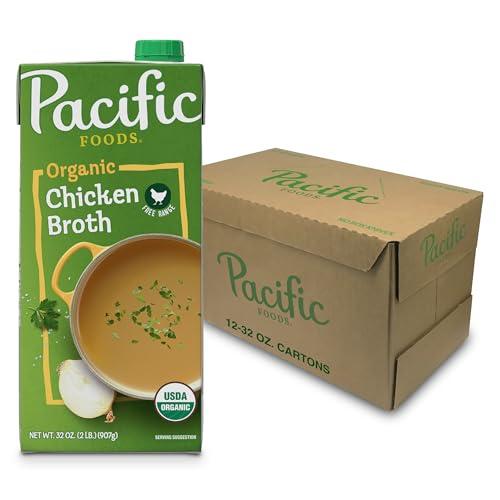
Pacific Foods Organic Free Range Chicken Broth is USDA Certified Organic, according to the maker’s product page. The ingredients are organic chicken broth, organic chicken flavor, sea salt, organic onion powder, organic turmeric extract and organic rosemary extract, and one cup has 10 calories and 530 mg of sodium. It is a good everyday cooking broth if you want an organic carton and you season the rest of the dish with that salt in mind.
Buy it for soups, rice, grains and pan sauces. Skip it, or choose the maker’s low sodium version, if you are watching sodium or want to control the salt yourself.
See Pacific Foods Organic Free Range Chicken Broth (32 oz, case of 12) on Amazon →
Is Pacific Foods Chicken Broth Really Organic?
The maker’s Organic Free Range Chicken Broth page describes it as “USDA Certified Organic” broth, and every ingredient on the list except the sea salt is marked organic. That fits the “organic” label tier, which the USDA’s organic labeling rules set at a minimum of 95 percent organic ingredients, not counting salt and water, and which must be overseen by a USDA-accredited certifying agent.
Pacific Foods is a Campbell’s brand: Campbell’s press release announced that it had completed the acquisition of Pacific Foods of Oregon on December 12, 2017. In the USDA Organic Integrity Database, Campbell Soup Supply Co. (certifier CCOF Certification Services, LLC, status Certified, handling scope) lists a Free-Range Chicken Broth and a Low Sodium Free-Range Chicken Broth among its products. The listing does not use the Pacific name.
Our guide to what the USDA Organic seal means explains the label tiers and how to look up a certified operation by name. Because salt and water do not count toward the 95 percent, the sea salt here does not disqualify the tier, and the same tier is why a product can carry an allowed non-organic ingredient such as the ascorbic acid in our Santa Cruz Organic applesauce spotlight.
What Does Organic Mean for the Chicken?
For the animal, the federal organic rules say an organic livestock operation must not sell, label or represent as organic any animal, or product made from one, that has been treated with antibiotics (7 CFR 205.238(c)(1), in the eCFR). So the organic chicken broth in this carton comes from chickens that meet that rule.
“Free range” is the maker’s own wording. The Pacific Foods FAQ says the “organic free-range chickens are raised on regional farms, and have access to both pastures and barns.”
How Much Sodium Is in It?
One cup (240 mL) has 530 mg of sodium, which the label shows as 23 percent of the Daily Value, and a 32 oz carton is about four cups. Sea salt is the third ingredient.
For scale, the FDA allows the words “low sodium” on a label only at 140 mg or less per serving (21 CFR 101.61). Pacific Foods makes broths with much less, shown in the table below.
How It Compares With Pacific Foods’ Other Chicken Broths
All three are USDA organic by the maker’s own pages, which is useful if you like the brand but want a different salt level or a sipping broth. Figures are per 1 cup (240 mL) from each maker page.
| Ingredients | Calories | Protein | Sodium | |
|---|---|---|---|---|
| Organic Free Range Chicken Broth (this one) | Organic chicken broth, organic chicken flavor, sea salt, organic onion powder, organic turmeric extract, organic rosemary extract | 10 | 1 g | 530 mg |
| Low Sodium Organic Free Range Chicken Broth | Organic chicken broth, organic chicken flavor, organic onion powder, organic yeast extract, organic rosemary extract | 10 | 1 g | 50 mg |
| Organic Unsalted Chicken Bone Broth | Organic chicken bone broth, organic apple cider vinegar | 50 | 10 g | 210 mg |
- Choose this one for general cooking where you want a savory, salted base and will taste before adding more salt.
- Choose the low sodium version if you reduce sauces, make soup from scratch or watch sodium. It has about a tenth of the sodium for the same 10 calories.
- Choose the bone broth if you want to drink a cup. It has 50 calories and 10 g of protein per cup, and a two-item ingredient list.
Which Size Should You Buy?
The maker sells this broth in a 32 oz carton, an 8 fl oz 4 pack and a 48 oz carton. The Amazon listing is the 32 oz carton in a case of 12, which is 384 fluid ounces, or about 48 cups.
- The case of 12 suits a household that cooks soup, rice or grains most weeks. Cartons are shelf stable, so unopened ones wait in the pantry.
- The 8 fl oz 4 pack suits a cook who needs a cup at a time, because nothing sits open in the fridge.
- A single carton is the better first try if you have not cooked with this brand before.
Storage, Packaging and Heating
The Pacific Foods FAQ says its products are shelf stable with a recommended storage temperature of 32 to 80 degrees Fahrenheit, and that once a carton is opened you should “refrigerate and use within 7-10 days.” The FAQ also says all of its cartons are BPA free and recyclable for over 60 percent of US households, and that its products should not be microwaved in the carton: pour the broth into a microwave safe container such as plastic or glass.
The USDA’s Food Safety and Inspection Service (FSIS) gives a general figure for cooked leftovers of 3 to 4 days in the refrigerator, and says perishable food left at room temperature for more than 2 hours (1 hour if the air is above 90°F) should be thrown away (FSIS leftovers and food safety). Pacific Foods’ figure for an opened carton is 7 to 10 days; the 3 to 4 days is FSIS’s figure for leftovers in general. If you will not use a whole 32 oz carton quickly, pour the rest into a covered container, refrigerate it right away and write the date on it, or choose the 8 fl oz size.
Dietary Notes
The maker’s page describes the broth as made from non-GMO ingredients, free of gluten and fat, and says it may be suitable for keto diets. The Pacific Foods FAQ says the company is a peanut free facility and cleans equipment in a five step process after each product. If you manage a serious allergy, read the allergen line on the carton you receive.
Who Should Pick Something Else
- Anyone limiting sodium: the maker’s Low Sodium Organic Free Range Chicken Broth lists 50 mg per cup against 530 mg here.
- Anyone who wants protein from the broth: this one has 1 g per cup; the maker’s Unsalted Chicken Bone Broth lists 10 g.
- Vegetarians and vegans: this is made from chicken. The maker also sells an Organic Vegetable Broth.
- Cooks who use a few tablespoons at a time: a case of 12 is more than most households need unless they cook with broth weekly.
Frequently Asked Questions
Can I freeze Pacific Foods chicken broth?
The maker’s FAQ does not mention freezing. FSIS says leftovers can be frozen for 3 to 4 months and that, although frozen leftovers are safe indefinitely, they can lose moisture and flavor when stored longer.
How should I reheat it?
FSIS says to reheat soups and sauces by bringing them to a rolling boil, covered, and to check that leftovers reach 165°F with a food thermometer. Pacific Foods says to heat its products in a microwave safe container such as plastic or glass, not in the carton.
Does organic mean the broth is low in sodium?
No. The USDA organic rules cover how ingredients are grown and handled, and this broth has 530 mg of sodium per cup. Sodium claims on labels follow separate FDA definitions, such as 140 mg or less for “low sodium.”
Affiliate Disclosure: This article contains affiliate links. NonToxicFinder (Solved Labs LLC) may earn commissions on qualifying purchases at no extra cost to you. We are not affiliated with, endorsed by, or partnered with the Environmental Working Group or the USDA.