Affiliate Disclosure: This article contains affiliate links. NonToxicFinder (Solved Labs LLC) may earn commissions on qualifying purchases at no extra cost to you. We are not affiliated with, endorsed by, or partnered with the Environmental Working Group or the USDA.
For the best organic honey, buy Nate’s Organic Raw & Unfiltered if you want an everyday squeeze bottle at the lowest cost per ounce of the four, and Wholesome Organic Raw Unfiltered if you want a larger bottle from a maker that names Brazil as the source. For a gift, pick Heavenly Organics Raw White Honey (Himalayan wildflower honey in a spreadable texture) or Wedderspoon Organic Raw Mānuka Honey (New Zealand, priced as a treat). All four show the USDA Organic seal on the label or the maker’s own page.
None of them is for a baby: the CDC says not to feed honey to a child younger than 1 year old, organic or not.
How Do the Four Honeys Compare?
Raw wording, origin and taste notes are each maker’s own. The nutrition column is read from the label on each maker’s page, per tablespoon. Price per ounce is in the product details further down.
| Honey | Size we link | Raw or filtered | Origin the maker states | Per tablespoon, from the label | Best for |
|---|---|---|---|---|---|
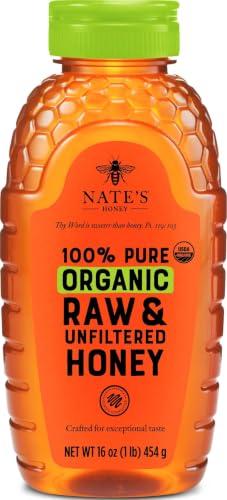
| Nate’s Organic Raw & Unfiltered | 16 oz squeeze bottle | Gently warmed | No country named | 70 calories, 17 g sugars (21 g) | Everyday use, lowest cost per ounce |
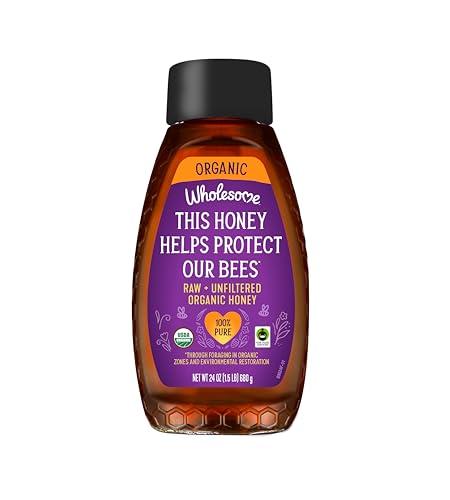
| Wholesome Organic Raw Unfiltered | 24 oz bottle | Lower heat than its non-raw honey | Brazil | 60 calories, 17 g sugars (21 g) | A larger bottle, tea and baking |
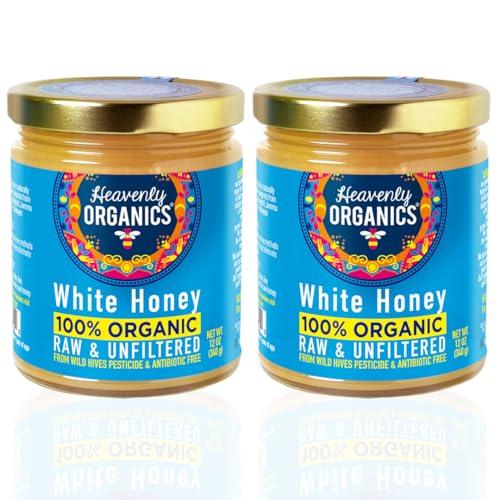
| Heavenly Organics Raw White Honey | Two 12 oz jars | Not heat-treated | India | 70 calories, 14 g sugars (20 g) | Toast, cheese, gifts |
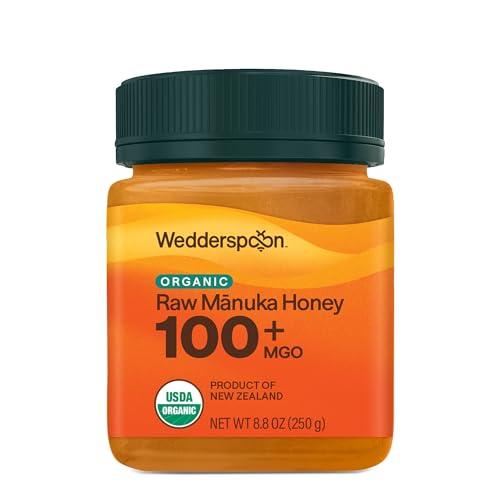
| Wedderspoon Organic Raw Mānuka MGO 100+ | 8.8 oz jar | Never pasteurized | New Zealand | 70 calories, 17 g sugars (21 g) | A premium gift, a spoonful at a time |
What Does “USDA Organic” Mean for Honey?
The USDA’s organic labeling page says organic products must be “Overseen by a USDA NOP-authorized certifying agent, following all USDA organic regulations” and produced without excluded methods. Honey is named on that page too: “Honey, mushrooms, and pet food may be certified to current production and handling standards and must comply with labeling requirements for organic products certified under these standards.”
For a one-ingredient food like honey, that means the jar can carry the seal when the honey is certified. The page describes how organic products are produced and overseen; flavor, color and country of origin are the makers’ own statements, below. For the full explainer, see what the USDA Organic seal means and how to check it.
Raw or Filtered: Which Should You Buy?
“Raw” is each maker’s own word, and the four describe it differently. Nate’s says it “slowly and gently” warms the honey “to the minimum temperature necessary to make it the right consistency to pour into the bottle,” and its label says “Gently warmed for pourability.” Wholesome says its raw honey “retains its beneficial and naturally occurring pollen, and the honey is heated at a lower temperature than our non-raw honey.” Heavenly Organics says its honey is “not heat-treated or fine-filtered after harvest.” Wedderspoon says its manuka honey is “never pasteurized or manipulated.”
Our suggestion: for stirring into tea, baking or drizzling, any of the four works. Pick the Heavenly Organics or Wedderspoon jar if you want the makers’ wording of not heat-treated or never pasteurized, and Nate’s or Wholesome if you want a pourable bottle.
Where Does Each Honey Come From?
- Nate’s: its product page says “We partner closely with beekeepers from around the world,” to source its organic honey. Its FAQ calls its organic honey a blend from “beekeepers from around the world” and names no country for it.
- Wholesome: the product page says “Bees forage in organic zones in Brazil.” Its FAQ says: “Organic honey is sourced deep in the biomes of Brazil.”
- Heavenly Organics: “we source all of our honey from wild hives in remote and untouched parts of India,” says its Perfecting Purity page; the White Honey page names the Gangotri and Jammu and Kashmir regions of the Himalayan Mountains.
- Wedderspoon: the jar says “PRODUCT OF NEW ZEALAND”, and the product page says the honey is “sourced directly from the pristine landscapes of New Zealand’s South Island.”
The 4 Picks
1. Nate’s Organic Raw & Unfiltered Honey, 16 oz: Everyday Squeeze Bottle, Lowest Cost per Ounce
What it is: one ingredient, organic honey, in a squeeze bottle. Nate’s product page lists sizes of 12, 16, 32 and 40 oz, and says it suits “granola, yogurt, coffee and tea and over any food needing a drizzle of natural sweetness.”
Basis: USDA Organic. The USDA Organic seal is on the bottle front and the back label says “Certified organic by QAI.”
Who should skip it: anyone who wants a named country of origin.
Nate’s Organic Honey, 16 oz Squeeze Bottle, on Amazon →
2. Wholesome Organic Raw Unfiltered Honey, 24 oz: A Larger Bottle for Tea and Baking
What it is: raw, unfiltered organic honey in a 24 oz squeeze bottle. Wholesome says it likes it for “adding sweetness to tea and coffee” and as “a fun alternative sweetener to use in baking.”
Basis: USDA Organic. The seal is on the bottle front and the back label says “Certified Organic by: Quality Assurance International.”
Wholesome Organic Raw Unfiltered Honey, 24 oz, on Amazon →
3. Heavenly Organics Raw White Honey, Two 12 oz Jars: For Toast, Cheese and Gifts
What it is: a pale honey that Heavenly Organics describes as light in color and smooth in texture, “ideal for spreading on toast, drizzling on brie, or for creating creamy, whipped honey.” The pair of jars is easy to split into two gifts.
Basis: USDA Organic. The Quick Facts block on the maker’s product page shows the USDA Organic seal.
Who should skip it: anyone who wants a runny pouring honey, since the maker describes this one for spreading.
Heavenly Organics Raw White Honey, 12 oz (2 Pack), on Amazon →
4. Wedderspoon Organic Raw Mānuka Honey MGO 100+, 8.8 oz: A Premium Gift Jar
What it is: a New Zealand manuka honey, one ingredient on the label (“Organic Monofloral Manuka Honey”). Wedderspoon describes a “complex, creamy taste” and says it is “always packed in a BPA-free jar.” The maker defines MGO as “short for methylglyoxal”; the 100+ is the MGO figure the maker puts on the label.
Basis: USDA Organic. The seal is on the jar front, and the back label says “Certified organic by AsureQuality Limited.”
Who should skip it: anyone buying honey to stir into tea or bake with every day. For everyday use, Nate’s or Wholesome is the better buy.
Wedderspoon Organic Raw Mānuka Honey MGO 100+, 8.8 oz, on Amazon →
How Do You Choose Between Them?
- Daily use or baking: a bottle. Nate’s 16 oz for a first try, Wholesome 24 oz if you use it often.
- Taste: Wholesome says its honey runs from lighter amber to darker through the season. Heavenly Organics White Honey is the pale one.
- Price per ounce: the per-ounce figures are in each product block.
- Gifts: our suggestion is to add a jar to a tea or baking gift. Honey also suits a gift basket next to organic dark chocolate, a stocking stuffer or anything from our gift guide.
How Should You Store Honey, and Why Did It Go Hard?
Honey that turns thick or grainy is normal. Wholesome’s label says “All honey crystallizes. Place bottle in warm water to liquefy.” Nate’s label says to “store at room temperature to slow natural process of crystallization,” and its crystallization post suggests filling a bowl with warm water and letting the honey sit until the crystals melt. Heavenly Organics says its honey “can be gently warmed to re-liquefy it.”
Who Should Not Eat Honey?
The CDC’s botulism prevention page says: “We do know that honey is not safe for infants. Honey can contain the bacteria that cause botulism.” Its instruction is: “Do not feed honey to a child who is younger than 1 year old.” That is under 12 months. The page adds: “Do not give honey or products made with it, including honey pacifiers, to infants.”
Organic honey is still honey, so the warning applies to all four. The labels agree: Wholesome says “Do not feed to infants under 1 year,” and Nate’s says “Don’t feed honey to babies one year or younger.” For a baby’s sweetener or a baby-shower gift, skip honey.
Frequently Asked Questions
What is the best organic honey?
Nate’s Organic Raw & Unfiltered for everyday use at the lowest cost per ounce, Wholesome Organic Raw Unfiltered for a bigger bottle, Heavenly Organics Raw White Honey for toast and gifts, and Wedderspoon Organic Raw Mānuka Honey for a premium gift.
Can babies have organic honey?
No. The CDC says not to feed honey to a child younger than 1 year old, and organic honey is no exception.
Is organic honey raw?
All four are sold as raw, and the makers’ wording runs from gently warmed (Nate’s) to never pasteurized (Wedderspoon).
Where does organic honey come from?
Wholesome says Brazil, Heavenly Organics India, Wedderspoon New Zealand; Nate’s names no country.
Why did my honey get hard or grainy?
It crystallized, which is normal; stand the bottle or jar in warm water until it turns liquid again.
Is organic honey lower in sugar?
Not on these labels: they show 14 to 17 g of sugars per tablespoon. The organic seal covers how the honey is produced, not its sugar.
Is manuka honey worth the extra cost?
For everyday sweetening, no: it costs several times more per ounce than Nate’s or Wholesome. Buy it as a gift or a treat.
Which honey is best as a gift?
Heavenly Organics White Honey for a pair of jars to split, or Wedderspoon for a single premium jar.
Affiliate Disclosure: This article contains affiliate links. NonToxicFinder (Solved Labs LLC) may earn commissions on qualifying purchases at no extra cost to you. We are not affiliated with, endorsed by, or partnered with the Environmental Working Group or the USDA.