Affiliate Disclosure: This article contains affiliate links. NonToxicFinder (Solved Labs LLC) may earn commissions on qualifying purchases at no extra cost to you. We are not affiliated with, endorsed by, or partnered with the Environmental Working Group or any certification program.
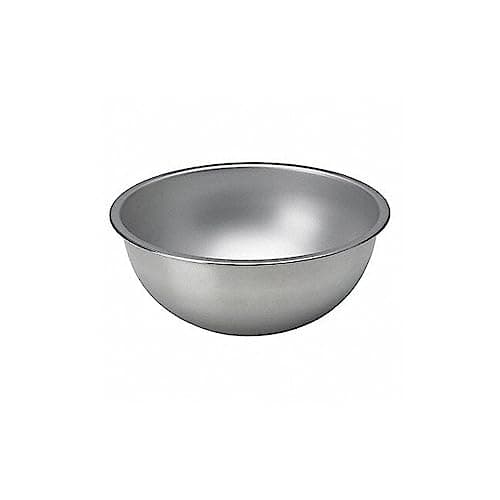
For a stainless steel mixing bowl that will outlast you, buy the Vollrath 69030. It is a 3-quart, one-piece bowl that Vollrath makes in the USA from what it calls “heavy-gauge 300-Series stainless steel,” with tall sides and a weighted, flat-sitting bottom built for restaurant kitchens. It has no lid, no handle and no rubber base, so there is nothing on it but steel. Build a set by adding Vollrath’s 5- and 8-quart bowls, which nest with it. If you want lids for storing dough and leftovers, Pyrex’s 6-piece set of 304 stainless bowls with locking lids is the better buy.
What the Vollrath 69030 Is Made Of
The Vollrath 69030 product page and its sell sheet describe a bowl “made of strong stainless steel” that “resists scratches and stains and features a beautiful satin finish.” Vollrath’s page for the heavy-duty bowl line names the grade family: “Heavy-gauge 300-Series stainless steel,” with a “nonporous finish” that Vollrath says “prevents flavor transfer.” The bowl is one piece of steel, so the stainless is the only surface your food touches. It is made in the USA, per Vollrath.
- Capacity: 3 quarts (2.8 liters).
- Size: 9.4 inches across the rim, 4 inches tall, with a 3.5-inch base.
- Weight: 0.85 lb.
- Design: “tall sides, proper weighting and a concave bottom that sits flat on any counter,” which Vollrath says “prevents tipping and messes.”
- Storage: nests with the other Vollrath heavy-duty bowls.
Vollrath publishes no gauge number, so “heavy-gauge” is its own description. NSF’s food equipment directory lists many Vollrath products, but not these mixing bowls.
See the Vollrath 69030 3-quart heavy-duty stainless steel mixing bowl on Amazon →
18/8, 304 or 430: Which Grade Matters
“18/8” is shorthand for stainless with roughly 18 percent chromium and 8 percent nickel, which is type 304, the most common grade in the 300 series. So a bowl sold as 18/8, 18/10 or 304 is 300-series steel, and so is the Vollrath. Type 430 is a 400-series grade with little or no nickel. It costs less, it is magnetic, and it resists rust and pitting less well than 304.
For a mixing bowl, the difference shows up over years: in how the bowl holds up to salty brines, lemon juice and vinegar left sitting in it, and to repeated dishwasher cycles. A 300-series bowl is the one to want. If a listing just says “stainless steel” with no grade, it could be either.
Which Sizes to Buy
Vollrath sells the heavy-duty bowl one size at a time, all with the same steel and finish, all made in the USA:
| Model | Capacity | Diameter x height | Weight | Good for |
|---|---|---|---|---|
| 69030 | 3 qt | 9.4 x 4 in | 0.85 lb | Whisking eggs, pancake batter, a salad for two to four |
| 69040 | 4 qt | 10.4 x 4.3 in | 1.05 lb | A batch of muffins or a side salad for six |
| 69050 | 5 qt | 11.75 x 4.5 in | 1.21 lb | Cookie dough, a double batch of batter, tossing roasted vegetables |
| 69080 | 8 qt | 13.3 x 5.3 in | 1.65 lb | Bread dough that needs room to rise, big salads, brining a chicken |
| 69130 | 13 qt | 16 x 6 in | 2.32 lb | Party-size batches; too big for most home cabinets |
For most home kitchens, a three-bowl set of 3, 5 and 8 quarts covers everything from two eggs to a loaf of bread dough, and the three nest in a single cabinet spot. If you only buy one, the 3-quart 69030 is the size you will reach for most. A stand mixer owner who mixes dough in the machine can skip the 8-quart.
Stainless vs Glass vs Plastic Mixing Bowls
| Vollrath 69030 | Pyrex 6-piece stainless set | Pyrex 8-piece glass set | Typical plastic bowl | |
|---|---|---|---|---|
| Bowl material | 300-series stainless, one piece | 304 stainless | Tempered glass | Plastic |
| Sizes | 3 qt (sold singly, 3 to 13 qt in the line) | 1.5, 2.5, 4.2 qt | 1, 1.5, 2.5, 4 qt | Varies |
| Lids | None | Locking lids, BPA-free plastic, removable seal | BPA-free plastic lids | Often included |
| Non-slip base | No; weighted flat bottom | Not stated | Not stated | Some have one |
| Dishwasher | Not stated by Vollrath | Yes, lids top rack, per Pyrex | Yes, lids top rack, per Pyrex | Usually top rack |
| Microwave | No (metal) | No, per Pyrex | Yes, bowls and lids, per Pyrex | Only if labeled for it |
| Drops | Dents at worst | Dents at worst | Can chip or shatter | Light; can crack |
| Food touches | Steel only | Steel; plastic lid when covered | Glass; plastic lid when covered | Plastic |
Stainless is light, will not break, and chills fast, which helps when you whip cream or keep a pastry dough cool. The trade-off is the microwave: FDA explains that microwaves “are reflected by metal” and pass through glass and plastic, so melting butter or chocolate means a second dish.
Glass goes in the microwave, lets you see the bottom of the batter, and does not hold odors; Pyrex says its glass bowls “resist stains and do not absorb food odors or flavors.” It is heavier and it can break. Pyrex’s use and care page warns that glass may “break or shatter immediately or later” after sudden temperature changes, so do not pour hot liquid into a cold glass bowl or set a hot one on a wet counter, and retire any bowl that is chipped or cracked.
Plastic is light, cheap and often comes with lids, but the surface your food touches is plastic. If you are taking plastic out of your kitchen, a stainless or glass bowl does that for the bowl itself (lids on both Pyrex sets are still plastic). Keep it in proportion: FDA says “current scientific evidence does not demonstrate that levels of microplastics or nanoplastics detected in foods pose a risk to human health.” Our guides to where microplastics turn up at home and where BPA still hides cover the wider picture.
Lids, Non-Slip Bases and Dishwashers
Lids. The Vollrath 69030 comes without one. A plate, a sheet pan or a reusable cover works for proofing dough, and plastic wrap does the rest. If you store food in your mixing bowls often, the Pyrex 6-piece stainless steel mixing bowl set is the one to buy: three bowls of “premium 304 stainless steel,” each with a locking lid Pyrex calls “airtight and leakproof,” and a handle on the largest lid. Pyrex says the bowls can go in the fridge or freezer and the lid seal comes out for cleaning.
Non-slip bases. The Vollrath has no rubber or silicone ring, and neither Pyrex page lists one. Vollrath relies on weight and a concave bottom that sits flat instead, and a damp kitchen towel under any bowl stops it skating while you whisk. A rubber base is one more material to clean around, and the Vollrath has nothing that can peel off.
Dishwashers. Pyrex says its stainless bowls “can be washed in the dishwasher or by hand,” with lids on the top rack, and asks you to use non-abrasive cleaners and skip steel wool and metal scouring pads. Vollrath’s product page, sell sheet and FAQ give no dishwasher instruction for the 69030. It is a one-piece bowl with no coating, handle or seal, sold to commercial kitchens; Vollrath just does not put the instruction in writing. The same no-steel-wool rule is the sensible one for its satin finish.
Keeping Mixing Bowls Clean
Bowls handle the riskiest raw ingredients in baking and prep, and federal advice covers them directly. FDA’s flour guidance says that after working with flour or raw dough and eggs, “wash utensils, bowls, baking pans and cutting boards, and countertops with warm, soapy water,” and not to eat or let children eat raw dough or batter before it is cooked. CDC lists raw dough and batter made with uncooked flour among its riskier foods and says to keep raw or marinating meat, poultry, seafood and eggs separate from other foods. FDA adds: “Don’t reuse marinades used on raw foods unless you bring them to a boil first.” In practice, wash a bowl that held raw chicken or cookie dough before it holds salad, and marinate in the fridge.
Who Should Buy Which
- Buy the Vollrath 69030 if you want one plain, durable, 300-series stainless bowl with nothing on it but steel, and you are happy to add sizes later.
- Build a Vollrath set of 3, 5 and 8 quarts if you bake and prep a lot. They nest and match.
- Buy the Pyrex stainless set if you want lids, smaller sizes and a written dishwasher instruction.
- Buy glass if you melt butter, warm sauces or proof dough in the microwave.
For storage containers beyond mixing bowls, our guide to swapping plastic food storage for glass and stainless compares glass and stainless sets with lids. Shopping for children’s plates too? Our look at stainless steel kids dinnerware covers a stainless plate with a MADE SAFE® record.
Frequently Asked Questions
Which stainless steel mixing bowls should I buy?
For one bowl, the Vollrath 69030: 3 quarts, 300-series stainless, made in the USA. For a set, add Vollrath’s 5- and 8-quart bowls, which nest with it. If you want lids, buy the Pyrex 6-piece stainless set, which is 304 stainless with locking lids.
What grade of stainless is the Vollrath 69030?
Vollrath describes its heavy-duty bowl line as “heavy-gauge 300-Series stainless steel.” It does not name the exact type or publish a gauge number.
Is 18/8 the same as 304 stainless steel?
Yes. 18/8 is shorthand for about 18 percent chromium and 8 percent nickel, which is type 304. Type 430 is a cheaper, magnetic 400-series grade that resists corrosion less well.
Are stainless steel mixing bowls dishwasher safe?
Pyrex says its stainless bowls can go in the dishwasher, with lids on the top rack. Vollrath gives no dishwasher instruction for the 69030; it is a one-piece steel bowl with no coating, handle or seal. Skip steel wool on either.
Do these bowls come with lids or non-slip bases?
The Vollrath has no lid and no rubber base; it relies on a weighted, flat-sitting bottom. The Pyrex stainless set comes with locking lids, and Pyrex lists no non-slip base.
Can I put a stainless steel bowl in the microwave?
No. FDA explains that microwaves are reflected by metal, and Pyrex says not to microwave its stainless bowls. Use a glass bowl for melting or warming.
Is stainless better than glass or plastic for mixing bowls?
Stainless is light, does not break and chills quickly. Glass goes in the microwave but is heavier and can shatter. Plastic is light and cheap, but your food sits on plastic. For most cooks who want plastic out of the kitchen, stainless for mixing and glass for the microwave covers everything.
This article contains affiliate links. NonToxicFinder (Solved Labs LLC) may earn commissions on qualifying purchases at no extra cost to you. We are not affiliated with, endorsed by, or partnered with the Environmental Working Group or any certification program.