This article contains affiliate links. NonToxicFinder (Solved Labs LLC) may earn commissions on qualifying purchases at no extra cost to you. We are not affiliated with, endorsed by, or partnered with the Environmental Working Group.
Reverse osmosis vs. pitcher water filter comes up constantly once someone decides they want certified filtration and has to choose a format. Most comparisons online frame it as a safety question, as if one option is simply "safer" than the other. It isn't that simple, and it isn't even the right question. A pitcher and an under-sink reverse osmosis system are certified to two different NSF/ANSI standards that test for different things, and the real decision usually comes down to upfront cost, counter space, install effort, and how much water your household actually runs through the system. We put one verified pick from each format side by side, using the same certification documentation and current pricing already confirmed for our dedicated pitcher and under-sink RO guides.
What Each Format Is Actually Certified To
A pitcher filter like the Brita Elite is certified to NSF/ANSI 53, the standard covering health-effects contaminants on activated carbon and ion-exchange filters. NSF/ANSI 53 certification is granted contaminant by contaminant: a pitcher certified for lead has specifically been tested and shown to reduce lead, and the same applies separately for PFAS, mercury, or any other contaminant on its certified list. An under-sink reverse osmosis system like the APEC ROES-50 is certified to a different standard entirely, NSF/ANSI 58, which covers total dissolved solids (TDS) reduction through an RO membrane. Neither standard is a blanket claim that the filtered water is "safe," and neither one is a superset of the other. They test different mechanisms for different contaminant classes, which is why the certified-standard number matters more than the word "certified" by itself. For the full breakdown of what NSF/ANSI 42, 53, and 58 each cover, see our explainer on NSF/ANSI water filter certification standards.
Side-by-Side Comparison
| Factor | Brita Elite Pitcher | APEC ROES-50 Under-Sink RO |
|---|---|---|
| Upfront cost | $36.99 | $182.73 |
| Certified standard | NSF/ANSI 53 (NSF International, lead; IAPMO R&T, PFOA/PFOS 98.1%) | NSF/ANSI 58 (TDS reduction, via WQA Gold Seal); NSF/ANSI 372 (lead-free materials, not a contaminant-reduction claim) |
| Install effort | None, fill from the tap | 1–2 hours DIY, or $150–$350 for a plumber |
| Maintenance cadence | Filter replacement roughly every 40 gallons or two months, per Brita's published guidance | Sediment/carbon pre-filters every 6–12 months; RO membrane every 2–3 years |
| Counter / cabinet space | Countertop or fridge, no plumbing | Under-sink cabinet, permanent install with dedicated faucet |
Best Pitcher Pick: Brita Large 10-Cup Elite Pitcher
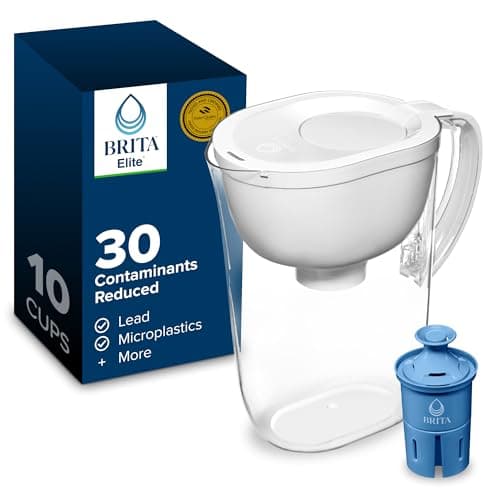
The Brita Elite pitcher is certified to NSF/ANSI 53 by NSF International for lead reduction, with a separate IAPMO R&T certification covering PFOA and PFOS reduction at a 98.1% rate, along with mercury, cadmium, and other listed contaminants. It needs no installation: fill it from the tap and it is ready to use, which makes it the lower-commitment option if you rent, move often, or just want filtered water without a plumbing project. We confirmed it is still in stock and the price below is current as of this draft.
Certified for: Lead (NSF International), PFOA/PFOS (IAPMO R&T, 98.1%), plus mercury, cadmium, and other listed contaminants
Format: Pitcher, 10-cup, no installation
Price: $36.99
Brita Large 10-Cup Elite Water Filter Pitcher , Buy on Amazon ($36.99) ↗
Best Under-Sink RO Pick: APEC ROES-50, 5-Stage Reverse Osmosis System
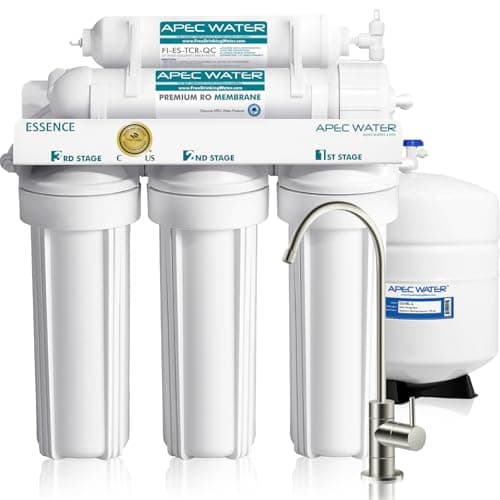
The APEC ROES-50 is certified to NSF/ANSI 58 for TDS reduction and NSF/ANSI 372 for lead-free materials, through WQA Gold Seal certification, a separate accredited certifier from NSF that uses the same ANSI-accredited standards. It installs permanently under the kitchen sink with its own dedicated faucet and a 50-gallon-per-day storage tank, so there is no daily refilling once it is set up. It is a bigger upfront cost and a real install project compared to a pitcher, but it runs continuously without the pitcher's refill routine. We re-confirmed it is in stock and the price below reflects a 21% discount off the $230.99 list price as of this draft.
Certified for: NSF/ANSI 58 (TDS reduction, via WQA Gold Seal); NSF/ANSI 372 (lead-free materials, not a contaminant-reduction claim)
Format: Tank-based under-sink RO, 5-stage
Capacity: 50 GPD
Price: $182.73
APEC ROES-50 5-Stage Under-Sink RO System , Buy on Amazon ($182.73) ↗
Which One Should You Choose
If you rent, move often, or just want something you can start using today without touching your plumbing, the pitcher is the lower-friction option, and the Brita Elite's NSF/ANSI 53 certification covers lead and PFAS specifically. If you own your home, have under-sink cabinet space, and want a system that runs on its own without daily refilling, the APEC ROES-50's NSF/ANSI 58 certification covers TDS reduction through an RO membrane, which pitchers do not attempt. Budget matters too: the pitcher's $36.99 upfront cost is a fraction of the RO system's $182.73, though the RO system's membrane lasts years between replacements versus a pitcher filter every couple of months. Neither certification makes one option a safety upgrade over the other; they certify different things, and the right choice depends on your living situation more than anything else.
For a broader side-by-side of every pitcher option we have verified, see our full guide to NSF-certified water filter pitchers. If you want to compare the full under-sink RO lineup instead of a single pick, read our dedicated guide to under-sink reverse osmosis systems. And for the broader picture across pitcher, under-sink, and whole-house tiers, see our full tier-by-tier water filter guide.
Frequently Asked Questions
Q: Is reverse osmosis better than a pitcher filter?
Neither is universally "better." They are certified to different standards for different purposes: NSF/ANSI 53 pitchers are certified for specific listed contaminants like lead and PFAS, and NSF/ANSI 58 reverse osmosis systems are certified for TDS (total dissolved solids) reduction through a membrane. The right pick depends on your budget, whether you can install under-sink plumbing, and how much water your household uses.
Q: What does NSF/ANSI 58 certify that NSF/ANSI 53 doesn't?
NSF/ANSI 58 certifies total dissolved solids (TDS) reduction specific to reverse osmosis membrane systems. NSF/ANSI 53 certifies reduction of specific listed health-effects contaminants, such as lead or PFAS, on carbon or ion-exchange filters like pitchers. A product certified to one standard is not automatically certified to the other.
Q: How much does a reverse osmosis system cost compared to a pitcher filter?
In this comparison, the Brita Elite pitcher costs $36.99 upfront with a filter replacement roughly every 40 gallons or two months. The APEC ROES-50 under-sink RO system costs $182.73 upfront, plus $150 to $350 for professional installation if you don't do it yourself, with pre-filters replaced every 6 to 12 months and the membrane every 2 to 3 years.
Q: Does the Environmental Working Group rate reverse osmosis systems or pitcher filters?
No. The Environmental Working Group does not evaluate, rate, or endorse specific water filter products of either format. The certifications referenced in this guide, NSF/ANSI 53 and NSF/ANSI 58, come from NSF, IAPMO, and WQA, not from EWG.
Q: Can I use a pitcher filter instead of installing reverse osmosis?
In many cases, yes. If your main concern is a specific contaminant like lead and you don't own your home or don't want a plumbing project, an NSF/ANSI 53 certified pitcher can be a reasonable starting point. If you want broader TDS reduction or a system that runs without daily refilling, an NSF/ANSI 58 certified RO system is the better fit, budget and install effort permitting.
This article contains affiliate links. NonToxicFinder (Solved Labs LLC) may earn commissions on qualifying purchases at no extra cost to you. NSF/ANSI certifications referenced in this guide are issued independently by NSF, IAPMO, and WQA, not by NonToxicFinder or EWG. We are not affiliated with, endorsed by, or partnered with the Environmental Working Group. Certifications and availability can change; verify current status with the manufacturer, NSF, or WQA before purchase.