This article contains affiliate links. NonToxicFinder (Solved Labs LLC) may earn commissions on qualifying purchases at no extra cost to you. We are not affiliated with, endorsed by, or partnered with the Environmental Working Group.
Search "NSF certified water filter pitcher" and most results treat "NSF certified" as a single badge that tells you everything you need to know. It does not. NSF certification covers more than a dozen separate numbered standards, and a pitcher marketed as NSF certified might only be certified for chlorine taste and odor while a nearly identical pitcher on the same shelf is certified to reduce lead. The standard that actually matters for health-related contaminants like lead and PFAS is NSF/ANSI 53. We checked three widely sold pitchers against their own certification documentation and NSF's public listings to find out which ones actually hold that certification, and what happens when a pitcher is marketed as "53" without having earned it.
What "NSF Certified" Actually Means on a Pitcher
NSF International, IAPMO, and the Water Quality Association are independent, accredited bodies that test water treatment products against published standards. NSF/ANSI 42 covers aesthetic effects only, mainly chlorine taste and odor. NSF/ANSI 53 covers health-effects contaminants such as lead, certain VOCs, and cysts, and certification is granted contaminant by contaminant, not as a blanket claim. A pitcher can be NSF/ANSI 42 certified and never have been tested for lead at all. For the full breakdown of every standard number you will see on a filter box, see our explainer on NSF/ANSI 42, 53, and 58.
One more distinction matters just as much as the standard number: certified versus independently tested. A brand can pay an accredited lab to run the same test protocol NSF uses and publish the results without ever submitting the product to NSF, IAPMO, or WQA for formal certification. That is legitimate data, but it is not the same as certification, and a brand that blurs the two is asking you to assume more than it has actually proven. One of the three pitchers below does exactly this, and we call it out specifically rather than folding it in as if it were certified. See our NSF/ANSI 42 vs. 53: What It Means for Kids' Water Bottles.
3 Verified Pitcher Picks at a Glance
| Pitcher | Basis | Certified / Tested For | Price |
|---|---|---|---|
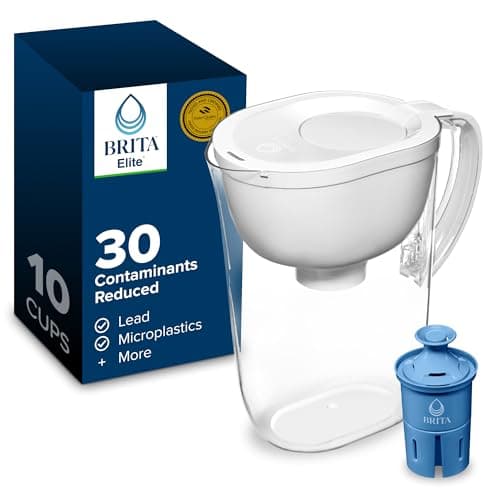
| Brita Large 10-Cup Elite Pitcher | NSF/ANSI 53 certified | Lead, PFOA/PFOS, mercury, cadmium | $36.99 |
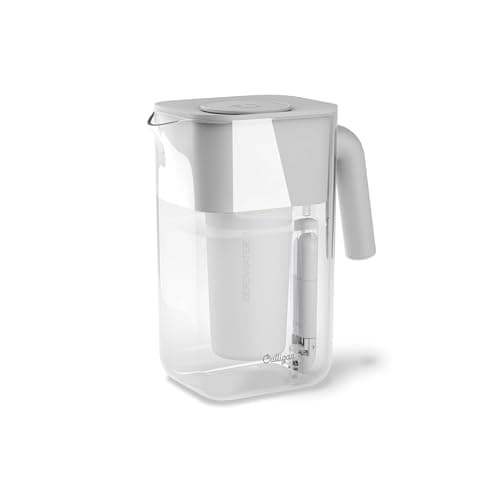
| Culligan ZeroWater 10-Cup Pitcher | NSF/ANSI 53 certified | Lead, PFOA/PFOS, chromium, mercury, fluoride | $26.97 |
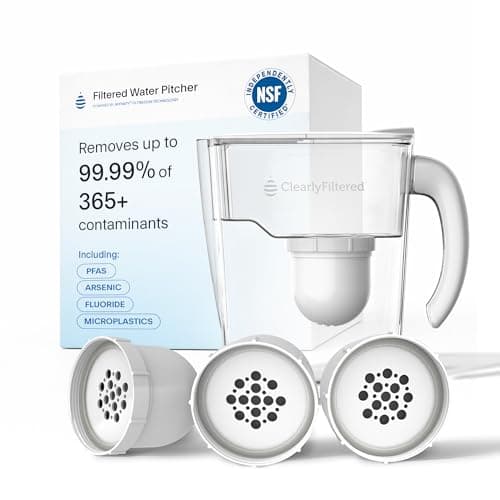
| Clearly Filtered Water Filter Pitcher | NSF/ANSI 42 & 372 certified; NOT 53-certified | Lead (independently lab-tested, 99.34%) | $109.99 |
Best Overall: Brita Large 10-Cup Elite Pitcher
The Brita Elite pitcher is certified to NSF/ANSI 53 by NSF International for lead reduction, and separately certified by IAPMO R&T for PFOA and PFOS reduction at a 98.1% rate, according to Brita's current performance data sheet. The same testing covers mercury, cadmium, and several other listed contaminants. That combination, lead and PFAS under two accredited certifications on one mainstream, widely stocked pitcher, is what makes it the strongest all-around pick here. The 10-cup pitcher is BPA-free and uses a single replaceable filter (model OB06).
Certified for: Lead (NSF International), PFOA/PFOS (IAPMO R&T, 98.1%), plus mercury, cadmium, and other listed contaminants
Format: Pitcher, 10-cup
Price: $36.99
Brita Large 10-Cup Elite Water Filter Pitcher , Buy on Amazon ($36.99) ↗
Best Value: Culligan ZeroWater 10-Cup Pitcher
The Culligan ZeroWater pitcher uses a 5-stage ion-exchange filter certified by IAPMO to NSF/ANSI 53 for total PFAS (including PFOA and PFOS), lead, chromium, mercury, and fluoride, which is the widest certified-contaminant list of the three pitchers here, at the lowest price. It includes a built-in TDS (total dissolved solids) meter that tells you when the filter needs replacing instead of relying on a fixed calendar schedule. Filter life runs 25 to 50 gallons depending on your water's mineral content; the meter removes the guesswork.
Certified for: Total PFAS (PFOA/PFOS), lead, chromium, mercury, fluoride (IAPMO)
Format: Pitcher, 10-cup, 5-stage ion exchange
Filter life: 25-50 gallons (TDS meter included)
Price: $26.97
Culligan ZeroWater 10-Cup Pitcher , Buy on Amazon ($26.97) ↗
Widely Sold, But Not NSF/ANSI 53 Certified: Clearly Filtered Pitcher
The Clearly Filtered pitcher is a common recommendation in "best water filter pitcher" roundups, and it does hold real certifications: NSF/ANSI 42 for chlorine taste and odor, and NSF/ANSI 372 confirming its materials are lead-free. What it does not hold is NSF/ANSI 53 certification. Its lead-reduction claim comes from independent testing by an ISO 17025-accredited lab (IAPMO New Jersey), which showed 99.34% lead reduction at a 152 ppb influent concentration using essentially the same challenge protocol NSF/ANSI 53 certification uses. That is real, credible lab data, but it is testing to the protocol, not certification, and the two are not interchangeable claims.
We include it because the gap between "tested to the protocol" and "certified" is exactly the kind of distinction most buying guides skip over, and this pitcher is popular enough that readers are likely to encounter it regardless. If formal NSF/ANSI 53 certification specifically is a requirement for you, the Brita Elite and Culligan ZeroWater above both hold it; if strong independent lab data on lead is enough, this pitcher has that.
Certified for: NSF/ANSI 42 (chlorine taste/odor), NSF/ANSI 372 (lead-free materials). Not NSF/ANSI 53 certified.
Independently tested: Lead, 99.34% reduction (IAPMO New Jersey ISO 17025 lab, NSF/ANSI 53 protocol)
Format: Pitcher, 10-cup, BPA/BPS-free
Price: $109.99
Clearly Filtered Water Filter Pitcher, 10-Cup , Buy on Amazon ($109.99) ↗
What NSF/ANSI 53 Actually Tests (and What It Doesn't)
NSF/ANSI 53 is a health-effects standard. A product certified under it has been tested to demonstrate reduction of specific contaminants on its own published claims list, at defined performance levels, by an accredited certifier such as NSF, IAPMO, or WQA. It is not a blanket safety claim. A pitcher certified for lead is not automatically certified for PFAS, and a pitcher certified for PFAS is not automatically certified for lead; you have to check the specific contaminant list for the exact model you are buying, not just the standard number on the box.
NSF/ANSI 53 is also distinct from two standards it often gets confused with. NSF/ANSI 42 covers taste and odor only and says nothing about health-related contaminants. NSF/ANSI 401 covers a separate list of "emerging" contaminants and is a different certification from 53, even when a pitcher carries both. None of these standards amount to a general guarantee that a filter makes water "safe"; they certify measured reduction of the specific contaminants each certified model was tested against.
How to Verify a Pitcher's Certification Yourself
Before you buy, you can check any pitcher's actual certified claims directly rather than relying on marketing copy:
- Go to NSF's public Certified Drinking Water Treatment Units database and search by brand or product name.
- Check which standard numbers (42, 53, 58, 401) the exact model is certified under, and which specific contaminants are listed for that certification. A brand name showing up in the database for one standard does not mean every product it sells is certified to that same standard.
- If a claim is not in NSF's database, check whether the manufacturer's own performance data sheet describes it as an independent lab test rather than a certification. That distinction should be stated somewhere in the fine print, even when the front-of-box marketing does not make it obvious.
This is also the process we used to confirm each pick above, and it is why the Clearly Filtered pitcher is listed with a certified-versus-tested distinction rather than folded in as a fourth NSF/ANSI 53 certified option.
For a broader look at filtration across pitcher, under-sink, and whole-house tiers, see our full guide to PFAS and lead water filters across all tiers. If your main concern is water at the tap rather than in a pitcher, NSF-certified shower filters address a different exposure point using the same certification standards. If you're weighing a pitcher against a permanent under-sink setup, see our RO-vs-pitcher comparison if you're deciding between formats.
Frequently Asked Questions
Q: What does "NSF/ANSI 53 certified" mean on a water filter pitcher?
It means an accredited certifier such as NSF, IAPMO, or WQA independently tested the pitcher and confirmed it reduces the specific health-related contaminants listed for that exact model, such as lead or certain PFAS compounds, to a defined performance level. It does not mean the pitcher removes every contaminant that could be in your water.
Q: Is NSF/ANSI 53 the same as NSF/ANSI 42?
No. NSF/ANSI 42 certifies aesthetic improvements like chlorine taste and odor and does not test for health-related contaminants at all. A pitcher can carry NSF/ANSI 42 certification and have never been tested for lead or PFAS under NSF/ANSI 53.
Q: Does the Environmental Working Group certify or rate water filters?
No. The Environmental Working Group does not rate or certify water filter products of any kind. For water filtration, the relevant certifications are NSF/ANSI 53 for activated carbon and ion-exchange filters and NSF/ANSI 58 for reverse osmosis systems, granted by NSF, IAPMO, or WQA.
Q: Does every "NSF certified" pitcher remove PFAS?
No. Many pitchers marketed as NSF certified only hold NSF/ANSI 42 for taste and odor, which says nothing about PFAS. Even among pitchers certified to NSF/ANSI 53, PFAS reduction is a specific contaminant claim that has to be listed separately from a lead claim. Check the certified contaminant list for the exact model, not just the standard number.
Q: Is a pitcher that's "independently tested to NSF/ANSI 53 protocols" the same as one that's NSF/ANSI 53 certified?
No, and this is a common point of confusion. Independent testing to the protocol means an accredited lab ran the same type of test NSF/ANSI 53 certification requires and got a measurable result, without the manufacturer going through the formal NSF, IAPMO, or WQA certification process for that standard. The lab result can be real and credible, but it is not the same claim as certification, and a pitcher should say plainly which one it has.
This article contains affiliate links. NonToxicFinder (Solved Labs LLC) may earn commissions on qualifying purchases at no extra cost to you.