This article contains affiliate links. NonToxicFinder (Solved Labs LLC) earns commissions on qualifying purchases at no extra cost to you. We are not affiliated with or endorsed by the Environmental Working Group.
The baking sheet in your oven right now may have a coating you have never thought twice about. Traditional nonstick bakeware (the kind with the dark, slippery surface that makes roasted vegetables lift right off) is typically coated with PTFE, a synthetic polymer that belongs to the PFAS class of chemicals. EWG has documented PTFE-based nonstick coatings as a household PFAS exposure concern for more than 20 years. Before the holiday baking rush arrives, this is worth knowing, and the fix is less complicated than it sounds.
This guide covers what EWG says about PTFE in bakeware, which materials sidestep the flagged chemistry, and five verified in-stock picks from Nordic Ware, USA Pan, Pyrex, GreenPan, and Lodge. For stovetop pots and pans, see our guide to PFAS-free cookware aligned with EWG's research. For the broader household picture, see our PFAS-free alternatives guide. See our Caraway Cookware Review: Is the Ceramic Nonstick Set Worth It?.
What's on Your Nonstick Baking Sheet
PTFE (polytetrafluoroethylene) is the compound that gives traditional nonstick cookware and bakeware its characteristic low-friction surface. The most recognized brand name is Teflon, but dozens of manufacturers use equivalent PTFE-based coatings under different trade names. PTFE is itself a member of the PFAS class of chemicals (per- and polyfluoroalkyl substances), which share a characteristic fluorine-carbon bond that is extremely resistant to heat, water, and chemical breakdown.
Most nonstick baking sheets, muffin tins, and cake pans currently on the market rely on PTFE coatings to deliver their food-release properties. That same coating is what EWG has flagged as a concern, particularly as pans age, develop scratches, or reach high oven temperatures.
What EWG Says About PTFE in PFAS-Free Bakeware
EWG has published research and guidance on PFAS in cookware and bakeware for more than 20 years. Its documented positions include several specific points about PTFE and home exposure:
- PTFE is itself a PFAS compound; at temperatures above roughly 400 to 500°F, PTFE-coated surfaces can release volatile breakdown compounds.
- Scratched or worn nonstick coatings present a greater concern than intact coatings, because degraded surfaces increase exposure area.
- EWG's guide to avoiding PFAS chemicals explicitly names cookware and bakeware as a household exposure route.
- A July 2026 California law now requires companies to disclose whether their cookware contains PFAS. EWG reported this as a transparency advance for consumers.
- EWG has recommended cast iron, stainless steel, and glass as alternatives to PTFE-based nonstick in its published guidance.
We are reporting EWG's published findings and positions, not making independent health determinations. We are not affiliated with EWG. Reference EWG's full documentation at ewg.org.
Which Bakeware Materials Are PFAS-Free
Uncoated natural aluminum. Natural aluminum bakeware has no PFAS compounds by composition: the metal itself is the baking surface, and nothing synthetic is applied on top. Nordic Ware's natural aluminum line is the most widely recommended example. No manufacturer claim required; the material answers the question directly.
Aluminized steel with silicone-based coatings. USA Pan uses an Americoat coating on aluminized steel that the company states is PTFE-free, PFOA-free, PFOS-free, and PFAS-free. The coating is silicone-based rather than fluoropolymer-based. Verify the current claim at usapan.com before purchasing.
Borosilicate glass. Glass baking dishes have no PTFE or synthetic polymer coating. Pyrex and similar borosilicate glass dishes are PFAS-free by composition. Best for casseroles, gratins, brownies, and anything baked with liquid.
Ceramic nonstick coatings. Ceramic-based coatings such as GreenPan's Thermolon are not PTFE-based. GreenPan states its coatings are made without intentionally added PFAS. Ceramic provides food-release properties similar to traditional nonstick while sidestepping fluoropolymer chemistry. Verify the current claim at greenpan.us.
Enameled cast iron. Enamel glaze over cast iron contains no PTFE or synthetic polymer. The enamel is a glass-based glaze fused to the iron surface. Best for Dutch oven bread baking and covered casseroles rather than standard sheet-pan applications.
Best PFAS-Free Bakeware Picks
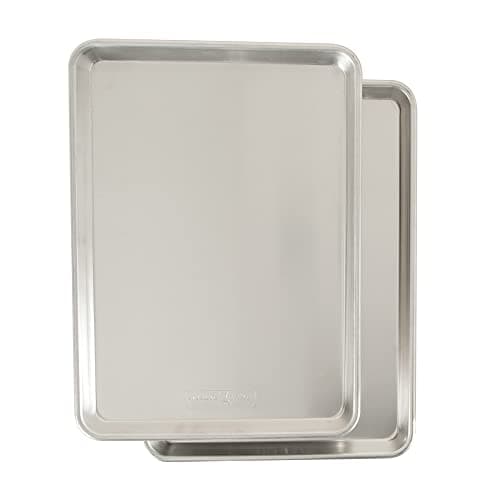
1. Nordic Ware Naturals Half Sheet Pan, 2-Pack: Best Overall
Price: $33.00 (2-pack; $16.50 per pan) | Basis: PFAS-free by composition: uncoated natural aluminum, no synthetic coating of any kind
Nordic Ware's natural aluminum half sheets are the simplest, most defensible recommendation on this list. There is no coating to worry about because there is no coating: the baking surface is bare natural aluminum, which is PFAS-free by composition. No manufacturer claim to interpret, no third-party certification to check: the material itself answers the question.
The two-pack at $33 (about $16.50 per pan) covers the most common baking use case immediately. A half sheet pan at 18 by 13 inches handles sheet-pan dinners, cookies, roasted vegetables, and most standard baking tasks a home kitchen faces in a week. Natural aluminum browns evenly and responds quickly to temperature changes. The pans develop a patina with use: this is cosmetic and expected; it does not affect performance. Nordic Ware also makes quarter-sheet and three-quarter sheet sizes in the same natural aluminum line.
Nordic Ware Naturals Half Sheet 2-Pack on Amazon →
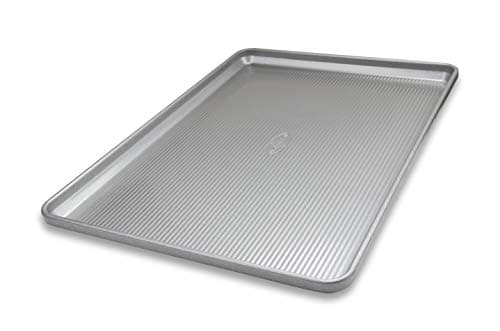
2. USA Pan Heavy Duty Half Sheet Pan: Value Pick
Price: $31.99 | Basis: Americoat silicone-based coating; USA Pan states PTFE-free, PFOA-free, PFOS-free, and PFAS-free; verify current claim at usapan.com
USA Pan's heavy-duty half sheet pan is the pick for readers who want some built-in nonstick release without a PTFE coating. The Americoat coating is silicone-based (not fluoropolymer-based), and USA Pan explicitly states it is free of PTFE, PFOA, PFOS, PFAS, and BPA. The corrugated aluminized steel surface reduces warping and promotes air circulation beneath the pan for more even browning on cookies and sheet-pan proteins.
This is a manufacturer claim about the coating composition. Verify the current Americoat PFAS-free statement at usapan.com before purchasing. The claim was confirmed current at research time in September 2026. Made in the USA.
USA Pan Heavy Duty Half Sheet Pan on Amazon →
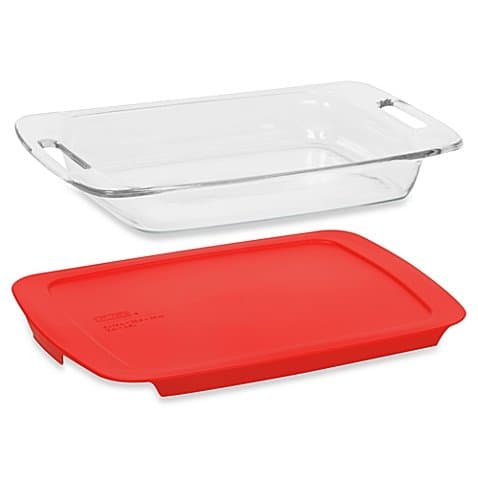
3. Pyrex C-233 3-Quart Glass Baking Dish with Lid: Best for Casseroles
Price: $44.99 | Basis: PFAS-free by composition: borosilicate glass, no coating of any kind; consistent with EWG's recommendation to use glass alternatives to PTFE nonstick
For covered baking (casseroles, lasagna, brownies, and gratins), Pyrex borosilicate glass is the cleanest recommendation on this list. Glass is PFAS-free by composition; there is no coating, no manufacturer claim to verify, and nothing to degrade over time. The 3-quart dish covers a standard 9-by-13 baking use case that Nordic Ware's sheet pans do not address. The included lid makes the dish a complete storage solution as well.
EWG explicitly recommends glass as one of the alternative materials to PTFE-coated nonstick bakeware. Made in the USA. At $44.99 it is the mid-range pick on this list, and unlike ceramic or silicone-coated options there is no coating claim to qualify: borosilicate glass simply does not contain PTFE or any PFAS compound by its nature.
Pyrex C-233 3-Quart Glass Baking Dish with Lid on Amazon →
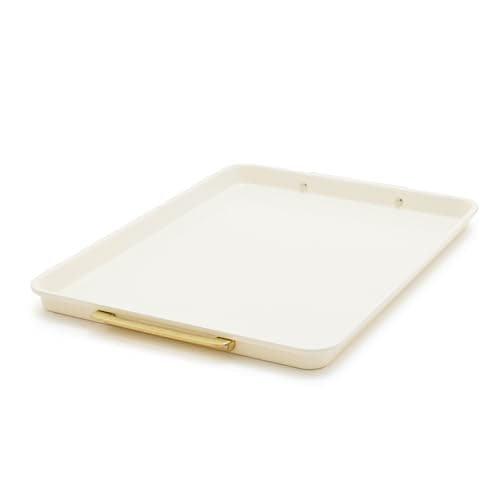
4. GreenPan Ceramic Nonstick Half Sheet Pan: Best Ceramic Pick
Price: $59.99 (limited stock, 4 units as of Sept 2026) | Basis: Thermolon ceramic coating; GreenPan states the coating is made without intentionally added PFAS; verify current claim at greenpan.us
GreenPan's ceramic nonstick sheet pan offers the release properties that readers coming from traditional nonstick bakeware are accustomed to, without the PTFE chemistry. The Thermolon ceramic coating is the same technology GreenPan uses across its cookware line. The company states the coating is made without intentionally added PFAS. This is a manufacturer claim; verify the current statement at greenpan.us before purchasing.
At $59.99, this is the second-highest price point on the list. Stock was very limited as of the September 2026 research date: only four units remaining on the listing. Confirm availability before purchasing. For readers who find uncoated aluminum requires too much parchment prep and want a ceramic alternative with genuine release properties, this is the pick. If it goes out of stock, the Pyrex dish covers the covered-baking use case and Nordic Ware covers the sheet-pan use case without any coating claim.
GreenPan Ceramic Nonstick Half Sheet Pan on Amazon →
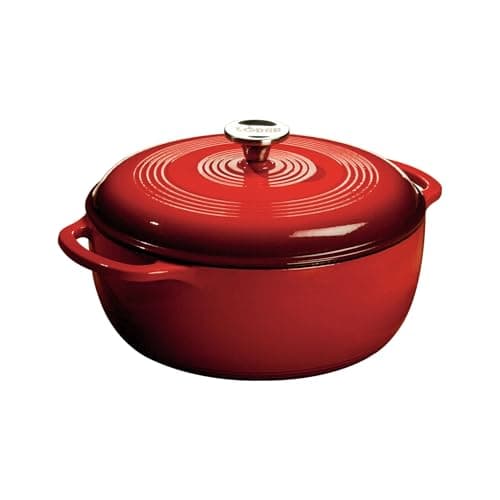
5. Lodge Enameled Cast Iron Dutch Oven, 6 Qt: Best for Bread Bakers
Price: $72.99 | Basis: PFAS-free by composition: vitreous enamel glaze over cast iron, no PTFE or synthetic polymer coating; Lodge has confirmed no PFAS since the beginning of production; verify at lodgecastiron.com
This pick addresses a specific use case: Dutch oven bread baking. An enameled cast iron Dutch oven is the standard vessel for artisan-style loaves: the enclosed lid traps steam during the first 20 minutes of the bake, creating the crust structure that open sheet pans cannot replicate. The Lodge enamel is a glass-based glaze fused to cast iron. There is no PTFE coating and no PFAS chemistry in its composition.
If your household baking centers on sheet-pan cookies and roasted vegetables, the Nordic Ware 2-pack is the better starting point and almost a quarter of the price. If you bake sourdough or artisan bread regularly, the Lodge Dutch oven is a meaningful upgrade from a PTFE-coated loaf pan, and a piece of equipment built to last for decades. At $72.99 it is currently discounted from $89.90.
Lodge Enameled Cast Iron Dutch Oven, 6 Qt on Amazon →
How to Make the Switch
You do not need to replace every piece of bakeware at once. A reasonable starting point is the pan you reach for most often. For most households that is a half sheet pan; the Nordic Ware 2-pack at $33 covers that ground in one purchase without requiring you to verify any coating claim.
Retire scratched and worn pans first. EWG's guidance notes that scratched or damaged nonstick coatings present a greater concern than intact ones, because degraded coatings expose more surface. If your current nonstick baking sheets are visibly scratched, flaking, or discolored from heavy scrubbing, those are the candidates to swap first.
Choose by use case. Sheet-pan meals, roasting, and cookies: Nordic Ware. Casseroles, brownies, and covered dishes: Pyrex. Maximum food release on a sheet pan without PTFE: USA Pan Heavy Duty. Artisan bread: Lodge Dutch oven. Each pick covers a distinct kitchen task; buying all five is redundant for most households.
Rough cost to replace a practical set. The Nordic Ware 2-pack ($33) plus the USA Pan heavy-duty half sheet ($32) plus a Pyrex casserole dish ($45) comes to about $110 for the three most common bakeware use cases in a typical kitchen. Adding the Lodge Dutch oven ($73) for bread bakers brings the total to roughly $183: comparable to what you would spend replacing a full nonstick set, and without the need to replace them again in two to three years as coatings wear.
Parchment paper and silicone baking mats. Uncoated aluminum works best with parchment paper or a silicone baking mat for sticky applications like cookies, caramel, or glazed proteins. USA Pan's corrugated surface provides some natural release without a separate liner. GreenPan's ceramic nonstick needs the least additional prep. Silicone baking mats are not PTFE-based and are a practical companion to natural aluminum pans for frequent bakers.
Frequently Asked Questions
Is all nonstick bakeware PFAS?
Not all of it, but most traditional nonstick bakeware uses PTFE-based coatings, and PTFE is itself a PFAS compound. More recent PFAS-free lines use silicone or ceramic coatings rather than PTFE. If you are unsure about your current bakeware, check the manufacturer's site. If the product is described only as "nonstick" without specifying the coating type, it is likely PTFE-based.
Is ceramic bakeware really PFAS-free?
Ceramic nonstick coatings such as GreenPan's Thermolon are not PTFE-based and are stated by their manufacturer to be made without intentionally added PFAS. Those claims rest on the manufacturer's stated position rather than a standardized regulatory definition. Verify the current claim at greenpan.us before purchasing. Uncoated natural aluminum (Nordic Ware's line) is PFAS-free by composition and requires no claim verification at all.
What about parchment paper? Does that help?
Parchment paper creates a physical barrier between food and the pan surface and reduces direct contact with any coating on the pan. It is a practical short-term measure while you work through replacing bakeware. Most parchment paper is coated with silicone, which is not PTFE-based. Parchment does not change what is on the pan itself, so replacing the pan is the more thorough approach over time.
Does EWG test or certify bakeware?
No. EWG has no bakeware or cookware certification program. Its EWG VERIFIED® mark covers personal care and cleaning products only: it does not extend to kitchen equipment. What EWG has published is research and guidance documenting PTFE-based nonstick coatings as a PFAS concern and recommending cast iron, stainless steel, and glass as alternatives. The products in this article are chosen based on that published EWG guidance, not any EWG endorsement or certification of specific products. NonToxicFinder is not affiliated with EWG.
Is aluminum bakeware safe?
Natural uncoated aluminum bakeware has been used in home and commercial kitchens for many decades. EWG's documented concern in this category is specifically about PTFE-based nonstick coatings, not about aluminum as a base material. Most regulatory bodies including the FDA have not found evidence sufficient to restrict aluminum bakeware in the United States. The concern EWG documents is about the PTFE coating applied over the metal, not the aluminum substrate itself. Nordic Ware's natural aluminum pans remove the coating concern by having no coating at all.