Affiliate Disclosure: This article contains affiliate links. NonToxicFinder (Solved Labs LLC) may earn commissions on qualifying purchases at no extra cost to you. We are not affiliated with, endorsed by, or partnered with the Environmental Working Group or Leaping Bunny.
The American Academy of Dermatology (AAD) says the FDA has not defined “reef safe” for sunscreen. The Active Ingredients box on the back is where you check. A 2018 Hawaii law names two ingredients, oxybenzone and octinoxate, and NOAA names more.
NOAA says mineral sunscreen “is considered a better option because there are less effects to aquatic organisms”. Our suggestion: turn the bottle over, read the active ingredients against the lists below, and treat any reef seal as a claim to look up on the certifier’s own page.
What Does “Reef Safe” Mean on a Sunscreen?
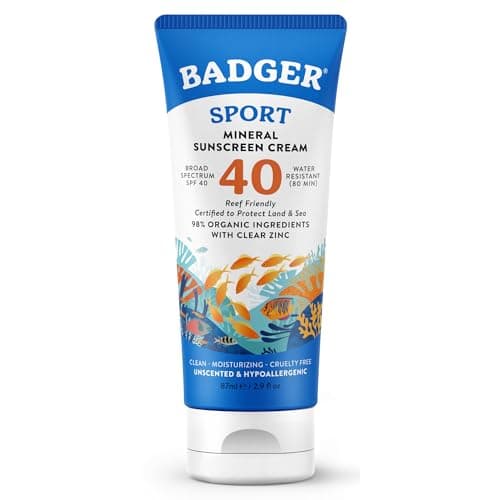
Badger’s own reef page says: “The 'Reef Safe' claim is unregulated so you really have to read the ingredients and know what to look for.” The claim also shows up in a listing title: Amazon’s title for the Badger Sport tube includes the words “Reef Safe” and “Hawaii Reef Act Compliant”.
The science is described differently by different authorities. The AAD says the evidence so far about sunscreens and reefs is “limited and does not provide clear answers” and that the studies behind the label have been criticized for testing ingredients in unrealistic environments and at unrealistically high concentrations. NOAA, summarizing a National Academy of Sciences study from August 2022, says the study “found that specific (chemical) UV filters found in chemical sunscreen can harm aquatic life, including corals”, and that how these compounds affect reef ecosystems “remains an active area of research”.
What Hawaii’s Law Says
Hawaii S.B. 2571 became Act 104. Its session law ends “(Approved July 3, 2018.)” and says “This Act shall take effect on July 1, 2018.” The Act says that, beginning January 1, 2021, “it shall be unlawful to sell, offer for sale, or distribute for sale in the State any sunscreen that contains oxybenzone or octinoxate, or both, without a prescription issued by a licensed healthcare provider”. The phrase “reef safe” does not appear in the Act.
- Names to look for. The Act gives benzophenone-3 as a synonym of oxybenzone, and ethylhexyl methoxycinnamate and octyl methoxycinnamate as synonyms of octinoxate (our oxybenzone explainer goes deeper on that one). It adds that the synonyms “include but are not limited to” the ones it lists.
- What counts as sunscreen. The Act defines sunscreen as “a product marketed or intended for topical use to prevent sunburn” and says the definition does not include products marketed or intended as a cosmetic for the face, as defined in section 328-1.
- Why. The Act says the legislature found that oxybenzone and octinoxate have harmful impacts on Hawaii’s marine environment, including coral reefs.
What NOAA Lists
NOAA’s page on skincare chemicals and coral reefs says the chemicals below, found in some sunscreens, can harm marine life. It adds that the 2022 study found a more comprehensive ecological risk assessment of all UV filters in chemical sunscreen is needed.
- Oxybenzone
- Benzophenone-1
- Benzophenone-8
- OD-PABA
- 4-Methylbenzylidene camphor
- 3-Benzylidene camphor
- nano-Titanium dioxide
- nano-Zinc oxide
- Octinoxate
- Octocrylene
For protection, NOAA suggests sunscreen without those chemicals, shade between 10 am and 2 pm, and UPF sunwear, and calls sun shirts and pants “a great option”.
What the FDA Says About Active Ingredients
The FDA’s consumer page lists the active ingredients commonly used in sunscreen: aminobenzoic acid, avobenzone, bemotrizinol, cinoxate, dioxybenzone, ecamsule, homosalate, meradimate, octocrylene, octinoxate, octisalate, oxybenzone, padimate O, ensulizole, sulisobenzone, titanium dioxide and zinc oxide.
In its questions and answers on the 2021 proposed order, the FDA says it proposed that sunscreens containing zinc oxide or titanium dioxide are generally recognized as safe and effective (GRASE), and that twelve others, including oxybenzone and octinoxate, need more data. The FDA adds that the proposal “does not represent a conclusion by the FDA that the sunscreen active ingredients proposed as having insufficient data are unsafe for use in sunscreens”. The FDA also says it issued a final administrative order on September 10, 2026 removing aminobenzoic acid (PABA) and trolamine salicylate from the sunscreen OTC monograph, and that it will address the other proposals in a future order or orders.
How to Read the Label
- Find the Active Ingredients box. The AAD says the FDA requires sunscreen makers to list the active ingredients, and that you will find a section labeled “Active Ingredients” on the container.
- Check it against the names above. Hawaii’s law names oxybenzone and octinoxate; NOAA’s list adds the rest. Our suggestion: put back any bottle that lists a name from either list.
- Know what mineral means. The AAD says a sunscreen whose active ingredient is titanium dioxide, zinc oxide or both is a physical (mineral) sunscreen, and that a hybrid contains one or more active ingredients found in chemical and physical sunscreens. Our guide to switching from chemical to mineral sunscreen covers the FDA’s position.
- Nano minerals are named separately. NOAA’s list names nano-zinc oxide and nano-titanium dioxide, and HEL’s list excludes any nanoparticles like zinc oxide or titanium dioxide.
- Check the form. The FDA says spray sunscreens should never be applied directly to your face, and that flammable products must carry a warning to keep them away from open flame.
- Look up any reef seal. The Haereticus Environmental Laboratory (HEL) says products with its Protect Land + Sea seal have been laboratory-tested to verify they are free of the chemicals on its “HEL LIST”. That list includes oxybenzone, octinoxate, octocrylene, PABA, parabens, triclosan, homosalate, octisalate and more. HEL also says its certifications “last for only two years”.
- Keep the sun-protection basics. The AAD says any chemical, physical or hybrid sunscreen can protect you if it offers SPF 30 or higher, broad-spectrum protection and water resistance. The FDA says no sunscreen is waterproof and that a “water resistant” label must state 40 or 80 minutes.
An Example: Badger Sport Mineral Sunscreen SPF 40
The Badger Sport tube is the example here. Its one basis is Leaping Bunny, at brand level. The Leaping Bunny listing for Badger reads “Certified since 2003” and lists SUN CARE among the products sold; it does not list individual products, so it does not name this tube. Leaping Bunny describes its certified companies as free of animal testing, so the listing is not a reef claim.
Badger’s product page for the tube lists, among its benefits, “Protects with only zinc oxide”, and “Tested SPF 40, broad spectrum, and water resistant 80 minutes”. Badger’s reef page says its sunscreens all use zinc oxide as their only active ingredient. Our Badger Sport spotlight covers the formula and how it feels on skin.
See Badger Sport Mineral Sunscreen SPF 40 (2.9 fl oz) on Amazon →
Frequently Asked Questions
Is zinc oxide reef safe?
NOAA calls mineral sunscreen a better option; its list also names nano forms.
How often do I reapply?
The FDA says at least every two hours, and more often if you are swimming or sweating.
References
- American Academy of Dermatology, How to decode a sunscreen label, read 2026-11-14.
- Hawaii Act 104 (S.B. 2571), 2018 session law, read 2026-11-14.
- NOAA National Ocean Service, Skincare Chemicals and Coral Reefs, last updated 09/23/26, read 2026-11-14.
- FDA, Sunscreen: How to Help Protect Your Skin from the Sun, current as of 10/16/2026, read 2026-11-14.
- FDA, Questions and Answers: FDA’s regulatory actions on over-the-counter sunscreen, current as of 09/10/2026, read 2026-11-14.
- Haereticus Environmental Laboratory, Protect Land + Sea Certification, read 2026-11-14.
- Leaping Bunny, Badger brand listing, read 2026-11-14.
Affiliate Disclosure: This article contains affiliate links. NonToxicFinder (Solved Labs LLC) may earn commissions on qualifying purchases at no extra cost to you. We are not affiliated with, endorsed by, or partnered with the Environmental Working Group or Leaping Bunny.