Affiliate Disclosure: This article contains affiliate links. NonToxicFinder (Solved Labs LLC) may earn commissions on qualifying purchases at no extra cost to you. We are not affiliated with, endorsed by, or partnered with the Environmental Working Group.
If you already own a chemical sunscreen and just checked the ingredient list after reading about oxybenzone, you're looking for a chemical sunscreen alternative, not a first-time buying guide. EWG, the Environmental Working Group, an independent nonprofit that publishes an annual Sunscreen Guide, flags several chemical UV filters common in mainstream formulas. This guide covers what EWG says about those filters and three EWG VERIFIED® mineral sunscreens confirmed in stock as of September 2026, so you know exactly what to buy instead.
For the full roundup, see our complete guide to EWG VERIFIED® sunscreen. Shopping for an infant or toddler specifically? See our EWG VERIFIED® picks made for babies and toddlers.
Why Swap Your Sunscreen? What EWG Flags About Chemical UV Filters
Most mainstream sunscreen sold in U.S. drugstores relies on chemical UV filters: oxybenzone, octinoxate, octisalate, octocrylene, and homosalate are the names to look for on the back label. EWG's annual Sunscreen Guide has flagged oxybenzone and octinoxate specifically for hormone-disruption research and for showing up in human blood and breast milk in published studies. Octocrylene has separately drawn attention for breaking down into benzophenone, a compound EWG also tracks. Category-level, conventional chemical-filter sunscreens frequently land in the C to D range in EWG's Guide to Healthy Cleaning and Skin Deep frameworks, largely on the strength of these ingredients.
This is EWG's own published, category-level pattern, not a claim NonToxicFinder is making about any single brand or bottle sitting in your bathroom. Formulations change between reformulations and between brands, so if you want to check the exact sunscreen you already own, search the product name at ewg.org/skindeep or ewg.org/sunscreen before deciding whether to swap.
What EWG VERIFIED® Means for Mineral Sunscreen
The EWG VERIFIED® mark requires more than a good Skin Deep score. To earn it, a sunscreen brand has to submit its complete ingredient list, including fragrance components, for EWG's review; avoid every ingredient on EWG's "Unacceptable" list, which for sunscreen specifically includes oxybenzone, octinoxate, and homosalate above threshold levels; and meet UVA protection standards stricter than the current U.S. FDA minimum. A product can score reasonably well on Skin Deep without ever going through that process. EWG VERIFIED® means the brand went through it.
Mineral sunscreens built around zinc oxide or titanium dioxide as the only active ingredients sidestep the chemical-filter concern by mechanism, not just by ingredient list. A mineral active sits on the skin's surface and physically scatters UV light, rather than being absorbed into skin the way a chemical filter is designed to be. That's the functional reason EWG VERIFIED® sunscreens are, almost without exception, mineral-only formulas. All three picks below carry the EWG VERIFIED® mark; NonToxicFinder is not affiliated with, endorsed by, or partnered with EWG, and the mark reflects EWG's own independent review, not a claim we're making about these products.
3 EWG VERIFIED® Mineral Sunscreens to Switch To
All three picks below were confirmed in stock via live Amazon product data on September 29, 2026. Prices reflect what we saw at verification and can move.
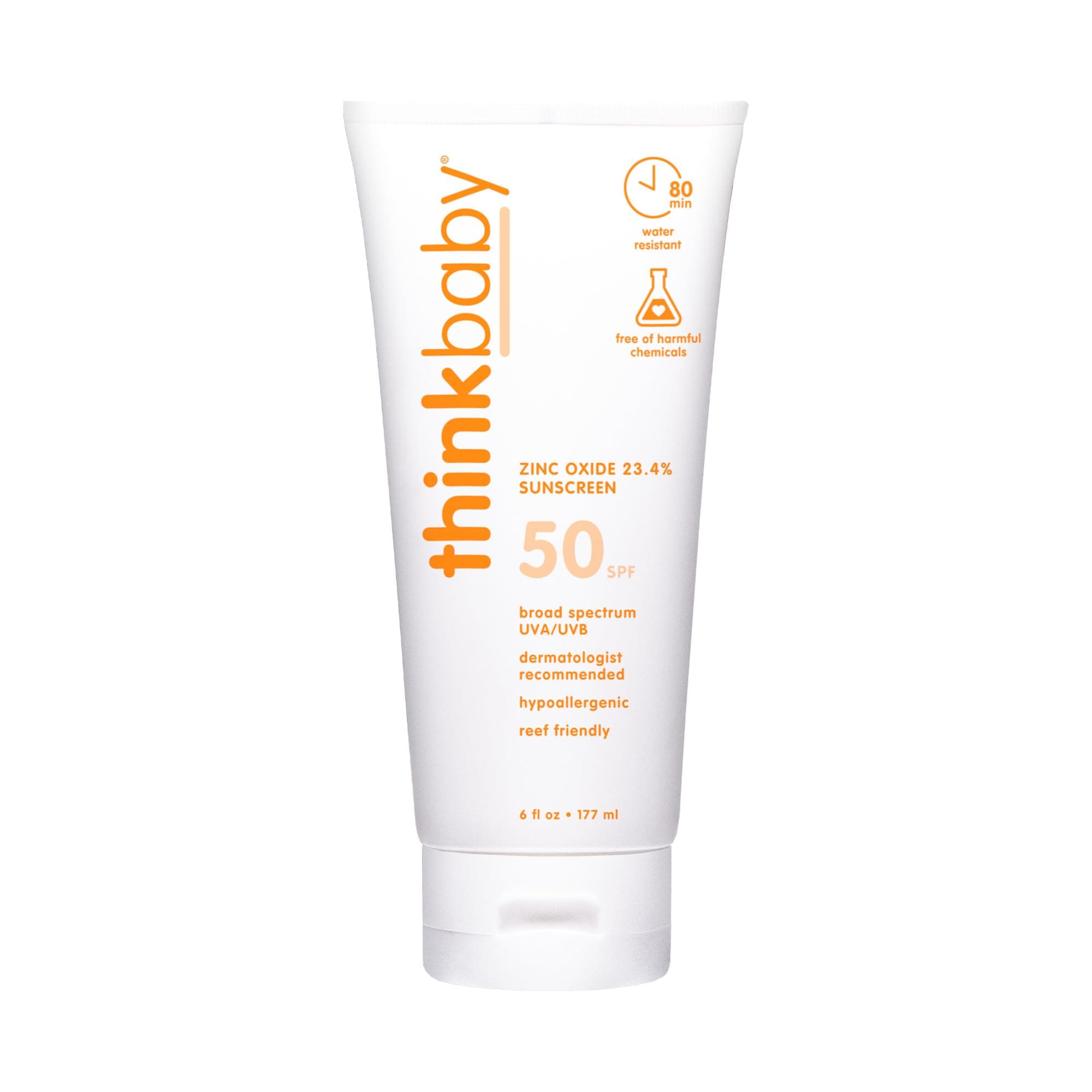
1. Thinkbaby Baby Sunscreen SPF 50+, Mineral Formula (6 oz): Best for Whole-Family Everyday Use
Price: $19.97 ($3.33/oz) | EWG Status: EWG VERIFIED®
Thinkbaby's Clear Zinc formula is EWG VERIFIED® and uses non-nano zinc oxide as its only active ingredient, with no chemical UV filters on the label. It's fragrance-free and water-resistant, and the lotion texture rubs in more evenly than many high-zinc mineral formulas, which makes it a practical one-bottle swap if you'd rather not stock a separate sunscreen for every family member.
Thinkbaby Baby Sunscreen SPF 50+, Mineral Formula on Amazon →
2. Babo Botanicals Sensitive Baby Mineral Sunscreen Stick, SPF 50 (0.6 oz): Best for Face and On-the-Go Touch-Ups
Price: $14.50 ($24.17/oz) | EWG Status: EWG VERIFIED®
This stick format was among the first sunscreens to earn EWG VERIFIED® status. It's fragrance-free, built around zinc oxide as the sole active ingredient, and the stick applicator makes it easy to reapply around a child's eyes and hairline without a lotion mess. The per-ounce price runs well above the lotion picks in this guide, which is typical for stick-format sunscreen given its small size, not a sign of a pricing error.
Babo Botanicals Sensitive Baby Mineral Sunscreen Stick SPF 50 on Amazon →
3. ATTITUDE Mineral Sunscreen SPF 30, Unscented (5.2 oz): Best Value for Adults and Families
Price: $13.95 ($2.68/oz) | EWG Status: EWG VERIFIED®
ATTITUDE's unscented mineral sunscreen is EWG VERIFIED® and uses non-nano zinc oxide, free of oxybenzone, octinoxate, and synthetic fragrance. At $2.68 per ounce it's the lowest per-ounce price of the three picks here, and the 5.2 oz tube covers full-body application for an adult or older child, which makes it a reasonable everyday swap if cost per ounce matters most.
ATTITUDE Mineral Sunscreen SPF 30, Unscented on Amazon →
How to Make the Switch
Cost per ounce
- ATTITUDE Mineral Sunscreen SPF 30 (5.2 oz at $13.95): $2.68/oz, the lowest of the three
- Thinkbaby Baby Sunscreen SPF 50+ (6 oz at $19.97): $3.33/oz
- Babo Botanicals Mineral Stick SPF 50 (0.6 oz at $14.50): $24.17/oz, priced like most stick-format sunscreens and balms
A family that goes through roughly two 5 to 6 oz bottles a summer would spend somewhere in the $25 to $45 range on either of the lotion picks above, plus whatever the stick adds for face touch-ups. That's a modest premium over a typical drugstore chemical sunscreen, and it buys an EWG VERIFIED® ingredient list instead of one built around oxybenzone or octinoxate.
Practical tips for switching
- Finish the bottle you have. Sunscreen doesn't need to be tossed early. Make the swap when you're due for a new bottle anyway.
- Expect a different feel. Mineral formulas can leave more of a white cast than chemical sunscreens, especially right after application. It rubs in more as it sets; it isn't a sign the product is defective.
- Reapplication cadence doesn't change. Reapply every two hours, or immediately after swimming or heavy sweating, same as any other sunscreen.
- Patch-test a new formula on sensitive skin. Any new product, mineral or chemical, can cause an individual reaction. Try a small area first if skin is reactive.
For the full comparison of EWG VERIFIED® sunscreen picks, see our complete EWG VERIFIED® sunscreen guide. Shopping specifically for an infant or toddler? See our EWG VERIFIED® baby sunscreen picks.
Frequently Asked Questions
What does EWG flag about chemical sunscreen filters like oxybenzone?
EWG's annual Sunscreen Guide has flagged oxybenzone and octinoxate for hormone-disruption research and for turning up in human blood and breast milk in published studies. Octocrylene has drawn separate attention for breaking down into benzophenone. This is EWG's own published, category-level concern, not a claim NonToxicFinder makes about a specific bottle.
What's the difference between EWG VERIFIED® and a sunscreen that just says "reef-safe" or "mineral"?
"Reef-safe" and "mineral" are not regulated terms in the U.S., and a brand can print either on a label without any outside review. EWG VERIFIED® is a formal program: the brand submits its full ingredient list, including fragrance, for EWG's review, avoids every ingredient on EWG's "Unacceptable" list, and meets UVA protection standards stricter than the FDA minimum. A mineral sunscreen can be genuinely mineral-based without carrying the VERIFIED mark; the mark is the stricter, third-party-reviewed designation.
Does EWG VERIFIED® mean a sunscreen is guaranteed safe or hypoallergenic?
No. It means the brand disclosed its complete ingredient list and the product avoided every ingredient on EWG's "Unacceptable" list, along with meeting EWG's UVA and disclosure standards. It isn't a guarantee that every ingredient is non-irritating for every person, and it isn't a health or medical claim from EWG or from NonToxicFinder. If a child has a diagnosed skin condition, check with a pediatrician or dermatologist before switching products.
Will a mineral sunscreen work as well as my current chemical sunscreen?
Non-nano zinc oxide provides broad-spectrum UVA and UVB coverage and is stable in sunlight, so it functions as sun protection the same way a chemical filter does, just by a different mechanism (physical scattering rather than chemical absorption). The main practical differences are texture (more white cast at first, especially on darker skin tones) and sometimes a thicker feel. Reapplication frequency stays the same either way.
How much more does an EWG VERIFIED® mineral sunscreen cost per year?
Based on the prices in this guide, EWG VERIFIED® mineral sunscreen runs roughly $2.68 to $3.33 per ounce for the lotion picks, with the stick format running higher per ounce as sticks typically do. For a household using two to three bottles a season, that's usually a modest premium over a mainstream drugstore chemical sunscreen, not a major budget shift.
NonToxicFinder (Solved Labs LLC) may earn commissions on qualifying purchases at no extra cost to you. We are not affiliated with, endorsed by, or partnered with the Environmental Working Group.