Affiliate Disclosure: This article contains affiliate links. NonToxicFinder (Solved Labs LLC) may earn commissions on qualifying purchases at no extra cost to you. We are not affiliated with, endorsed by, or partnered with the Environmental Working Group or OEKO-TEX.
An OEKO-TEX® STANDARD 100 label on baby clothes means the garment, down to every thread, snap and print, was tested against OEKO-TEX’s list of more than 1,000 harmful substances and met its limits. For babies, the label should say Product class I, the strictest class, which covers items for children up to three. It does not mean the cotton is organic; that is what GOTS certifies. Of the baby brands parents usually compare, little planet by Carter’s is the one whose label number, 20.HUS.39362, comes up valid in OEKO-TEX’s own Label Check at class I, and that certificate covers bodysuits, rompers, pants, leggings, sleepwear and sleep sacks.
Which Baby Clothing Brands Carry It
Many brands say “OEKO-TEX”. Fewer give a number you can check. Here is what each brand claims and what OEKO-TEX’s own Label Check and buying guide show.
| Brand | Label number given | What OEKO-TEX shows | Item types on the certificate | Our call |
|---|---|---|---|---|
| little planet by Carter’s | 20.HUS.39362 | Valid, STANDARD 100, Product class I, owner The William Carter Company | Bodysuits, rompers, pants, leggings, sleepwear, sleep sacks, bibs, hats, socks and more | Our pick |
| Burt’s Bees Baby | 23.HUS.80428 (held by its maker, Ayablu, Inc) | Valid, STANDARD 100, Product class I | Bodysuits, pajamas, pants, leggings, wearable blankets, bibs, hats in cotton and cotton blends | Certified maker, but its product pages sell on GOTS, not OEKO-TEX |
| Hanna Andersson | None published | Listed in OEKO-TEX’s buying guide with Product class I baby and children’s nightwear, trousers, T-shirts and underwear | As listed, by product group | Certified company; no number to match to one item |
| Gerber Childrenswear | None | No Gerber listing in OEKO-TEX’s buying guide | Brand says its bodysuits are certified | Not picked |
| Kyte BABY | None | No Kyte listing in OEKO-TEX’s buying guide | Brand says it is certified every year | Not picked |
Gerber and Kyte BABY both state on their own sites that their clothes are OEKO-TEX certified, but neither names a label number and neither appears in OEKO-TEX’s public buying guide, so there is nothing a shopper can match to the item. If one of their tags shows a number, the check below settles it in a minute.
Which One to Buy
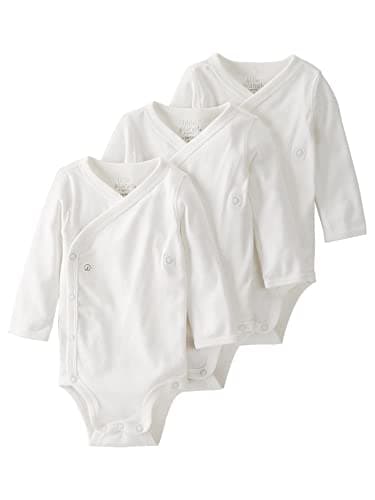
- Newborn wardrobe on a budget: the little planet unisex long-sleeve bodysuit 3-pack. Bodysuits are what a newborn wears most, and a plain multipack is the simplest way to get a garment whose certificate you can confirm. The listing we link is the 6-month size, so choose the size you need if the listing offers others.
- A gift for a shower or a new arrival: the little planet floral short-sleeve 3-pack, on the same certificate. Pair it with a certified swaddle or blanket from our baby shower gift guide for a bigger present.
- Sleepers, pants or a sleep sack: the Carter’s certificate lists all three, so little planet pieces in those styles carry the same class I label. Read the tag for the number before you buy.
- You want organic cotton above all: start with our GOTS certified baby onesies and GOTS certified baby pajamas guides. The little planet pieces here are organic cotton, but OEKO-TEX is not what tells you that.
What the Label Means on Baby Clothes
OEKO-TEX describes STANDARD 100 as covering textiles “from yarn to finished product,” and says “every thread, button and accessory” is tested against a list of over 1,000 harmful substances. Its STANDARD 100 FAQ names some of them: banned azo dyes, carcinogenic and allergy-inducing colorants, pesticides on natural fibers, phthalates, PFOS and PFOA, formaldehyde, cadmium and nickel, and the lead requirements of the US Consumer Product Safety Improvement Act. OEKO-TEX reviews its limit values at least once a year.
The standard has four product classes, and the stricter the skin contact, the stricter the limits:
- Class I: “textiles and materials for babies and toddlers up to three years of age: underwear, rompers, bed linen, bedding, etc.” OEKO-TEX says formaldehyde finishes are excluded here, and colors and prints must be saliva-resistant so they do not bleed when a baby sucks on them.
- Class II: items worn against the skin, such as shirts and underwear.
- Class III: items with little skin contact, such as jackets.
- Class IV: decorative materials, such as curtains.
A certificate lasts 12 months and has to be renewed, so a label number can lapse. For a longer look at what the label leaves out, see our explainer on what OEKO-TEX Standard 100 means.
OEKO-TEX or GOTS?
They answer different questions, so many parents want both.
| OEKO-TEX STANDARD 100 | GOTS | |
|---|---|---|
| The question it answers | Did the finished garment pass limits for harmful substances? | Is the fiber organic, and was it processed under GOTS rules? |
| What is checked | Lab tests of the item and all its parts | Organic fiber, chemical inputs, wastewater and social criteria, with annual on-site audits |
| Organic required? | No. Conventional cotton and polyester can qualify | Yes |
| How to check it | Label number in OEKO-TEX’s Label Check | Certificate or license number in GOTS’s certified suppliers database |
GOTS says every company in the production chain must be certified by an approved certification body before a product can be sold as GOTS certified. Pick OEKO-TEX if your question is what is in the finished fabric, GOTS if it is how the fiber was grown and processed, and look for both on the same tag if you want both answers. The GOTS explainer covers that label in the same detail.
How to Check the Item in Your Hand
- Find the label. A real STANDARD 100 label shows a label number and the testing institute. OEKO-TEX’s FAQ says a label without both is not valid. Look on the hangtag, the sewn-in care label, the packaging or the product page.
- Enter the number in OEKO-TEX’s Label Check, exactly as printed. Numbers are case sensitive.
- Read three lines on the result: whether it says the certificate is valid, the product class (you want I), and the certificate owner, which should be the brand or its maker.
- Match the item type. The result lists the kinds of articles the certificate covers. OEKO-TEX says products not listed on a certificate may not carry the label, so a sleep sack sold under a certificate that lists only bodysuits is not covered.
Carter’s 20.HUS.39362 passes all four: valid, class I, owned by The William Carter Company, and listing the main baby clothing types. A logo on a listing with no number cannot be checked at all.
little planet by Carter’s Long-Sleeve Bodysuits, 3-Pack
Carter’s little planet line is organic cotton, and Carter’s lists OEKO-TEX label 20.HUS.39362 on its little planet product pages. OEKO-TEX’s Label Check shows that number as a valid STANDARD 100 certificate at Product class I, owned by The William Carter Company. This is a gender-neutral pack of three long-sleeve bodysuits, the piece a newborn goes through fastest, and long sleeves layer under a sleeper or sleep sack in cooler months.
See the little planet long-sleeve bodysuit 3-pack on Amazon →
little planet by Carter’s Floral Short-Sleeve Bodysuits, 3-Pack
The same organic cotton line and the same certificate in a short-sleeve floral pack. Short sleeves suit warm months or a warm house, and the print makes it the more giftable of the two.
See the little planet floral short-sleeve 3-pack on Amazon →
Other Certified Brands Worth Knowing
Burt’s Bees Baby. Ayablu, Inc, which OEKO-TEX’s buying guide lists with the Burt’s Bees Baby website, holds STANDARD 100 certificate 23.HUS.80428, which Label Check shows as valid at class I for knitted bodysuits, pajamas, pants, leggings and wearable blankets in cotton and cotton blends. The brand’s own product pages describe its sleepers and bodysuits by their GOTS certification and do not mention OEKO-TEX, so the item-level proof to look for is the label number on the tag. Its GOTS-certified sleepers are covered in our GOTS baby pajamas guide.
Hanna Andersson. OEKO-TEX’s buying guide lists Hanna Andersson, LLC with class I certified products for babies and children, including nightwear, trousers, T-shirts and underwear. It is a good brand to check in person: the number on the tag will tell you whether that piece is one of them.
Sleepers and Sleep Sacks: What Else Applies
OEKO-TEX covers substances, not fit or fire. Two other sets of rules matter for anything a baby sleeps in.
- Flammability. The CPSC’s children’s sleepwear rules require sleepwear to pass flammability tests unless it qualifies as an “infant garment” (sized nine months or smaller) or a tight-fitting garment. The CPSC says tight-fitting sleepwear must carry the label “WEAR SNUG-FITTING, NOT FLAME RESISTANT.” If you see that label, buy the size that fits snugly, not one to grow into.
- Safe sleep. The NIH’s Safe to Sleep campaign says overheated babies are at higher risk for SIDS, to dress baby for the room temperature, and to use a wearable blanket or an extra layer of clothing instead of loose blankets. The American Academy of Pediatrics, on HealthyChildren.org, advises one layer more than you are wearing and no weighted sleepers or swaddles.
More Certified Basics for the Nursery
The same label check works for bedding: our guide to OEKO-TEX certified crib sheets walks through the picks there. If you are focused only on bodysuits, the OEKO-TEX baby onesies guide narrows the field, and the baby registry guide covers everything beyond clothing.
Frequently Asked Questions
What does OEKO-TEX certified mean on baby clothes?
The garment and every part of it were tested against OEKO-TEX’s list of more than 1,000 harmful substances and met its limits. For baby clothes, look for Product class I, the strictest class, which excludes formaldehyde finishes and requires saliva-resistant colors.
Is OEKO-TEX the same as organic?
No. OEKO-TEX STANDARD 100 tests the finished garment for harmful substances, whatever the fiber. GOTS certifies that the fiber is organic and was processed under GOTS rules. A garment can have one, both or neither.
Are Carter’s baby clothes OEKO-TEX certified?
The little planet line is. Its label number, 20.HUS.39362, shows in OEKO-TEX’s Label Check as a valid STANDARD 100 certificate at Product class I, owned by The William Carter Company, covering bodysuits, rompers, pants, sleepwear and sleep sacks.
Are Gerber onesies OEKO-TEX certified?
Gerber says its bodysuits are, but it does not publish a label number and has no listing in OEKO-TEX’s public buying guide. If the tag on the pack shows a number, check it in Label Check.
How long does an OEKO-TEX certificate last?
Twelve months. The holder has to renew it each year, which is why Label Check shows whether a number is currently valid.
Does OEKO-TEX mean baby pajamas are flame resistant?
No. Flammability is set by CPSC rules. Sleepwear over nine months must pass flammability tests or be tight-fitting and labeled “WEAR SNUG-FITTING, NOT FLAME RESISTANT.”
Affiliate Disclosure: This article contains affiliate links. NonToxicFinder (Solved Labs LLC) may earn commissions on qualifying purchases at no extra cost to you. We are not affiliated with, endorsed by, or partnered with the Environmental Working Group or OEKO-TEX.