Affiliate Disclosure: This article contains affiliate links. NonToxicFinder (Solved Labs LLC) may earn commissions on qualifying purchases at no extra cost to you. We are not affiliated with, endorsed by, or partnered with the Environmental Working Group.
A tag that says "OEKO-TEX" on a onesie tells you something specific: the finished garment was lab-tested against a list of substance limits, not that the cotton was grown organically. Those are two different questions, and baby-clothing marketing often blurs them together. For OEKO-TEX certified baby onesies and bodysuits, the relevant tier is Product Class I, the most stringent class in the standard, covering anything worn against the skin of infants and children up to about age 3. This guide keeps that distinction clean and walks through six verified picks across three brands, each with its own documented OEKO-TEX basis rather than a blanket claim.
If organic fiber sourcing matters more to you than substance testing, see our GOTS certified baby onesies guide for the organic-fiber-and-processing standard instead. For OEKO-TEX certified baby clothing beyond onesies and bodysuits, see our broader OEKO-TEX certified baby clothes guide.
What OEKO-TEX Standard 100 actually tests on a onesie
OEKO-TEX Standard 100 is a textile testing standard, not a farming or supply-chain standard. It tests the finished garment, meaning the fabric plus everything added to it (dyes, prints, snaps, thread, any coatings) against a defined list of substance limits that is updated annually and currently runs past 100 categories. That list includes pesticide residue, heavy metals such as lead and cadmium, formaldehyde, skin-compatible pH value, phthalates, banned azo dyes, and flame retardants of concern.
Product Class I is the strictest of the standard's four product classes. It applies to items intended for babies and toddlers, and its substance limits are set lower than Class II (adult clothing worn close to skin) or Classes III and IV (items with less or no skin contact). A onesie or bodysuit marketed for a newborn should carry a Class I certification specifically, not just a general OEKO-TEX claim.
What Standard 100 does not do: it does not require organic fiber, it does not test for crib or sleepwear flammability compliance, and it is not a government safety mandate. It certifies that the finished product, as tested, came back within the defined substance limits at the time of certification.
Why EWG doesn't apply here
The Environmental Working Group does not maintain a clothing or textile database. There is no EWG Skin Deep score and no EWG VERIFIED® mark for a onesie, a bodysuit, or any other garment. When a parent is comparison-shopping baby clothes and looking for a third-party substance-testing signal, OEKO-TEX Standard 100 (or GOTS, for organic fiber sourcing) is the relevant framework, not an EWG rating. NonToxicFinder is not affiliated with, endorsed by, or partnered with the Environmental Working Group.
OEKO-TEX certified baby onesies and bodysuits: six verified picks
Stock and pricing verified 2026-10-04 via Amazon's product catalog API. All six ASINs were confirmed active, purchasable listings.
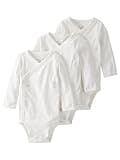
1. little planet by Carter's Unisex 3-Pack Long Sleeve Bodysuits, Organic Cotton, 6M, $16.86
OEKO-TEX basis: certificate 20.HUS.39362 (Hohenstein), stated as "OEKO-TEX® STANDARD 100: 20.HUS.39362 Hohenstein" and repeated identically across three independent carters.com product pages, refetched and confirmed this run. This is the strongest-documented claim in this set: a named certifying body plus a specific number, stated consistently rather than once.
This 3-pack covers long-sleeve bodysuits in a gender-neutral light cream colorway, organic cotton, sized for 6 months. With a 30-unit max order quantity and a plain "In Stock" status, it is also the most reliably available pick here.
Check the little planet unisex 3-pack bodysuits on Amazon →
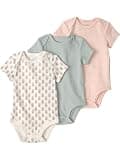
2. Little Planet by Carter's Girl 3-Pack Short Sleeve Bodysuits, Floral, 6M, $18.00
OEKO-TEX basis: the same certificate 20.HUS.39362, covering the dual-cut little planet line. If you want short sleeves or a floral colorway instead of the unisex long-sleeve 3-pack above, this is the direct swap at the same certification strength.
Check the Little Planet girl 3-pack bodysuits on Amazon →
3. Gerber Baby Boys 3-Pack Organic Cotton Onesies, $12.99
OEKO-TEX basis: Gerber's own organic-cotton onesie product pages state the garments are "independently tested and certified against a list of over 400 harmful chemicals according to strict STANDARD 100 by OEKO-TEX® guidelines." No specific certificate number is disclosed for this organic-cotton line. This is a real, explicit brand-page claim, but it sits a notch below the little planet picks above, which cite a specific number repeated across multiple pages.
Stock was scarce at verification: 4 units left, with Amazon's own "order soon" flag. If this exact colorway is in stock when you check, it is a genuine OEKO-TEX claim at a lower price point; if it has sold through, the little planet picks above remain in steady supply.
Check the Gerber Baby Boys 3-pack onesies on Amazon →
4. Gerber Baby Girls 3-Pack Organic Cotton Onesies, $11.88
OEKO-TEX basis: the same brand-page claim as the boys 3-pack above, same organic-cotton line, no disclosed certificate number. Stock was even more scarce at verification: 3 units left.
Check the Gerber Baby Girls 3-pack onesies on Amazon →
5. KYTE BABY Soft Bamboo Rayon Romper, Zipper Closure, 3-6 Months, Sage, $37.99
OEKO-TEX basis: a brand-wide, annually renewed claim. KYTE BABY states on its own site that its fabrics are "tested and certified every single year by OEKO-TEX®." No certificate number is published anywhere on the brand's site, so this rests on the brand's own repeated annual-testing statement rather than a searchable number.
The fabric here is bamboo-rayon rather than cotton, which is the one pick in this group offering a genuinely different material if you are building a mixed-fabric wardrobe. Single-zipper closure, size 3-6 months, confirmed in stock with a max order quantity of 6.
Check the KYTE BABY Sage romper on Amazon →
6. KYTE BABY Infant Shortall Romper, Dual Zipper, 3-6 Months, Slate, $34.99
OEKO-TEX basis: the same brand-wide annual claim as the Sage romper above, same bamboo-rayon fabric and certification basis. This cut uses a dual zipper for diaper access from either direction and comes in a different colorway and shortall silhouette. Confirmed in stock, max order quantity 10.
Check the KYTE BABY Slate shortall romper on Amazon →
How to verify an OEKO-TEX certificate yourself
OEKO-TEX's own Label Check tool at oeko-tex.com lets you enter a certificate number and see the certificate holder, the standard it was issued under, and its validity period. Certificate 20.HUS.39362, cited above for both little planet picks, is publicly checkable this way.
When a brand does not disclose a certificate number, as with the Gerber organic-cotton line and KYTE BABY here, the certification may still be genuine: some brands document it internally and state it on their own product pages rather than publishing a searchable number. A verifiable certificate number is the strongest signal available to a shopper without contacting the brand directly, but its absence on a brand page is not automatically a red flag. This guide states that distinction for every pick rather than presenting all six as equally documented.
OEKO-TEX vs. GOTS: what's the difference?
These two labels answer different questions about the same onesie. OEKO-TEX Standard 100 asks whether the finished garment, as it exists after dyeing and sewing, tests within defined substance limits. It does not require the cotton to be grown organically at all. GOTS (the Global Organic Textile Standard) asks whether the fiber was grown organically and whether restricted processing chemicals were used from farm to finished garment; it is a supply-chain standard, not a finished-product lab test.
In practice, a onesie can carry OEKO-TEX Standard 100, GOTS, both, or neither. A conventional-cotton onesie can be OEKO-TEX tested without being organic. An organic-cotton onesie can be GOTS certified without any finished-garment substance testing under OEKO-TEX's list. None of the six picks above make a GOTS claim; if organic fiber content is the priority, our GOTS certified baby onesies guide covers four picks verified specifically on that basis, including one with a numbered Control Union certificate.
Related guides
- For organic-fiber-certified onesies and rompers instead of substance-tested ones, see our GOTS certified baby onesies guide.
- For OEKO-TEX certified baby clothing beyond onesies and bodysuits, see our OEKO-TEX certified baby clothes guide.
- For GOTS certified sleepwear rather than everyday bodysuits, see our GOTS certified baby pajamas guide.
Frequently asked questions
Does OEKO-TEX mean a onesie is organic?
No. OEKO-TEX Standard 100 tests the finished garment for substance limits; it does not require organic fiber content at any percentage. Organic fiber sourcing is what GOTS certifies instead. A onesie can carry either label, both, or neither, and each answers a different question about how the garment was made or tested.
Does EWG rate baby clothes or onesies?
No. The Environmental Working Group does not maintain a clothing or textile database. Its Skin Deep database covers personal care products and its Guide to Healthy Cleaning covers cleaning products; neither extends to apparel. For baby clothing, OEKO-TEX Standard 100 and GOTS are the relevant third-party certification standards, and NonToxicFinder is not affiliated with, endorsed by, or partnered with EWG.
What does OEKO-TEX Standard 100 actually test for?
It tests the finished textile, including fabric, thread, dyes, prints, and hardware, against a list of 100+ substance categories: pesticide residues, heavy metals such as lead and cadmium, formaldehyde, skin-compatible pH, phthalates, banned azo dyes, and flame retardants of concern, among others. For baby items, Product Class I applies the strictest limits in the standard.
How do I verify a brand's OEKO-TEX certificate number myself?
Go to the OEKO-TEX Label Check tool at oeko-tex.com and enter the certificate number exactly as shown; the search is case-sensitive. Certificate 20.HUS.39362, cited above for the little planet picks, is checkable this way. A result shows the certificate holder, the standard, and its validity period.
Why do some certified brands not publish a certificate number?
Some brands, including Gerber's organic-cotton onesie line and KYTE BABY here, state an OEKO-TEX Standard 100 claim on their own product pages without printing a specific certificate number. That is a real claim with less independent corroboration than a numbered certificate, not an automatic red flag. This guide states that distinction for every pick rather than treating all claims as equally documented.
The bottom line
For the strongest-documented OEKO-TEX claim, the little planet by Carter's 3-packs cite certificate 20.HUS.39362 across both the long-sleeve unisex and short-sleeve floral styles, $16.86 to $18.00. For a lower price point with a brand-stated but unnumbered claim, the Gerber organic-cotton 3-packs run $11.88 to $12.99, though stock was scarce at verification. For a bamboo-rayon alternative to cotton, KYTE BABY's rompers carry a brand-wide annual OEKO-TEX claim at $34.99 to $37.99. If organic fiber sourcing matters more than substance testing for your family, see our GOTS certified baby onesies guide instead. We earn a commission on purchases through our links; each product's documented OEKO-TEX basis, not commissions, determines what appears here. NonToxicFinder is not affiliated with EWG.
Affiliate Disclosure: This article contains affiliate links. NonToxicFinder (Solved Labs LLC) may earn commissions on qualifying purchases at no extra cost to you. We are not affiliated with, endorsed by, or partnered with the Environmental Working Group.