Affiliate Disclosure: This article contains affiliate links. NonToxicFinder (Solved Labs LLC) may earn commissions on qualifying purchases at no extra cost to you. We are not affiliated with, endorsed by, or partnered with the Environmental Working Group or MADE SAFE®.
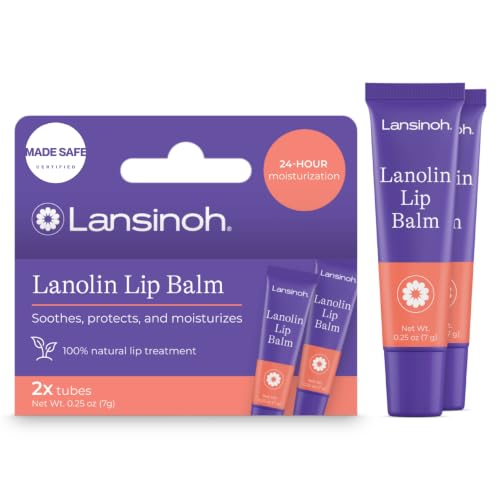
If you want a lanolin lip balm with nothing else in it, buy Lansinoh Lanolin Lip Balm. Lansinoh lists one ingredient, 100% HPA® modified lanolin, with no fragrance, flavor or preservative, in two 0.25 oz angled-tip tubes. It is the same lanolin as Lansinoh’s nipple cream, and MADE SAFE’s own directory lists both as MADE SAFE® certified. It suits people who have used lanolin before without trouble. Skip it if you are vegan, if you have eczema, or if lanolin has ever made your skin itch: the American Academy of Dermatology lists lanolin among the ingredients to stop using while lips are chapped. For a lanolin-free balm, the ATTITUDE Lip Balm, Unscented is the pick.
See Lansinoh Lanolin Lip Balm (2 x 0.25 oz) on Amazon →
What Lanolin Is and What It Does for Dry Lips
Lanolin is the greasy, yellow, fat-like substance sheep secrete into their wool. It is washed out of the wool and refined, and it is a mix of esters, alcohols, sterols, fatty acids and hydrocarbons. A 2023 review in Cutis, “Lanolin: The 2023 American Contact Dermatitis Society Allergen of the Year”, says lanolin can hold as much as twice its weight in water and may cut water loss through the skin by 20% to 30%, which is why it turns up in products for dry, cracked skin.
The FDA recognizes that use. Its over-the-counter skin protectant rules list lanolin, at 12.5 to 50 percent, as an active ingredient, and a lip protectant made with it may be labeled to “temporarily protect” chapped or cracked lips. That range applies to drug products. Lansinoh’s balm is pure lanolin, and its page lists lanolin under Ingredients rather than as a drug active ingredient.
Dermatologists add a caution. The American Academy of Dermatology’s tips for healing dry, chapped lips put lanolin on its list of ingredients to stop using while your lips are chapped, next to fragrance, flavorings, menthol and camphor, as part of its advice to use non-irritating lip products. The same page recommends castor seed oil, shea butter, dimethicone, mineral oil, petrolatum and white petroleum jelly, and suggests a thick ointment such as white petroleum jelly for very dry, cracked lips. So the honest answer is that lanolin is a recognized lip protectant that most people tolerate, and a known irritant or allergen for a minority. If your lips burn, sting or itch after you put it on, the AAD’s advice is to stop using that product.
Can Lanolin Cause an Allergy?
Yes, though it is uncommon. The American Contact Dermatitis Society named lanolin its 2023 Allergen of the Year, and two 2023 reviews lay out who is at risk and why it is hard to test for:
- It is rare on healthy skin. Jenkins and Belsito, writing in Dermatitis (2023, “Lanolin”), call it a weak sensitizer and put contact allergy in the general European population at about 0.4%. In people referred for patch testing it is higher: the North American Contact Dermatitis Group found 3.3% reacted to a lanolin test from 2001 to 2018, as the Cutis review reports.
- Damaged skin raises the risk. The groups at higher risk are people with atopic dermatitis (eczema), stasis dermatitis, chronic leg ulcers, and perianal or genital dermatitis. Children and older adults are at higher risk too, largely because eczema and leg ulcers are more common in those age groups.
- It is not a wool allergy. The Cutis review says a lanolin allergy is unrelated to wool itself. Wool sweaters can irritate skin, especially in people with eczema, but that is irritation, not lanolin allergy.
- Testing is disputed. Dermatologists still disagree on the best patch test for lanolin, and Jenkins and Belsito note that some people with a positive patch test can still use lanolin on normal skin.
Lansinoh says its lanolin goes through an “ultra-purification” process and calls it hypoallergenic. The FDA points out that “hypoallergenic” has no federal definition and “means whatever a particular company wants it to mean,” so treat it as the maker’s description, not a test result. If a lanolin product has ever left you with a rash, the FDA’s page on allergens in cosmetics advises knowing what you are sensitive to and avoiding it by reading the ingredient panel, and talking to a healthcare provider, who may suggest patch testing. You can also report a reaction to the FDA.
What Is in Lansinoh Lanolin Lip Balm
Nothing besides lanolin. Lansinoh’s product page gives the ingredient list as “Lanolin 100% HPA® Modified Lanolin, USP.” Its FAQ says the balm is “completely fragrance-free and flavor-free” and made without added scents, preservatives or parabens. Lansinoh describes the finish as sheer and shiny.
- What you get: two 0.25 oz tubes with an angled tip, so you glide it on straight from the tube instead of using a finger.
- How to use it: Lansinoh says to apply it to dry or chapped areas as often as needed, and that it also works on dry patches around the nose, cuticles, elbows and heels. The AAD suggests applying a lip balm several times a day and before bed.
- In cold weather: pure lanolin firms up when it is cold and softens when it is warm. Lansinoh’s advice for its lanolin cream is to knead the tube in your hand until it softens, and not to microwave it or put it in boiling water.
- Outdoors: it has no SPF. The AAD advises a lip balm with SPF 30 or higher, made with zinc oxide or titanium oxide, before going outside, reapplied every two hours.
Is It the Same as Lansinoh Nipple Cream?
Same ingredient, different package. Lansinoh’s own FAQ answers this directly: the lip balm is made with the same 100% lanolin as its nipple cream, “just a new format.”
| Lanolin Lip Balm | Lanolin Nipple Cream | |
|---|---|---|
| Ingredient | 100% HPA® modified lanolin | 100% lanolin, the same lanolin per Lansinoh |
| Package | Two 0.25 oz tubes, angled tip | One 1.41 oz (40 g) tube |
| Directions | Glide on as often as needed | A pea-sized amount, softened between clean fingers, after each feeding or as needed |
| MADE SAFE® listing | Yes, as Lanolin Lip Balm, all sizes | Yes, as HPA Lanolin, all sizes |
If you already have the nipple cream, you already have the material. The lip balm is worth buying for the format: a small tube for a pocket or diaper bag that you apply without touching, kept separate from the tube you use for nursing. Lansinoh’s nipple cream page says the cream does not need to be removed before breastfeeding, and the company says the balm uses the same lanolin. For other nursing gear screened by the same certifier, see our look at Natracare’s MADE SAFE nursing pads.
What the MADE SAFE® Listing Covers
The MADE SAFE® directory entry names Lansinoh and the Lanolin Lip Balm, files it under Balms, and says: “MADE SAFE® Certified in all currently available sizes / packaging options.” The entry does not list Amazon listings, but its all-sizes wording covers the two-pack of 0.25 oz tubes Lansinoh itself sells.
MADE SAFE® explains its screen on its certification standards page: products are “screened to validate that over 15,000 Banned / Restricted List substances have been avoided or constrained,” and companies must disclose all known added substances in a formula. It reviews what goes into the tube. It does not test how a balm works on lips, and it does not tell you whether you personally are allergic to lanolin. Our explainer on what MADE SAFE certified means covers the program and how it differs from EWG VERIFIED®.
Lanolin Balm vs. the Alternatives
Most people weighing a lanolin balm are also looking at a plant-oil balm, a beeswax balm or plain petroleum jelly. The table uses the makers’ ingredient lists and the AAD’s chapped-lips lists.
| Basis | What it is made of | Scent or flavor | On the AAD “stop while chapped” list? | Vegan | |
|---|---|---|---|---|---|
| Lansinoh Lanolin Lip Balm | MADE SAFE® | Lanolin only | None | Yes: lanolin | No |
| ATTITUDE Lip Balm, Unscented | EWG VERIFIED® (maker page) | Sunflower and coconut oils, shea butter, castor oil, sweet almond oil, plant waxes | Unscented | None of them | Yes, per ATTITUDE |
| Badger Classic Lip Balm, Unscented | USDA Organic (maker page) | Olive oil, beeswax, castor oil, rosemary extract | Unscented | None of them | No: beeswax |
| Kosmatology Orange Sweetness Lip Balm | MADE SAFE® | Full list not on the certifier record | Orange and vanilla | Yes: citrus flavoring | Not stated on the record |
| White petroleum jelly | None on this site | Petrolatum | None | No; the AAD recommends it for very dry, cracked lips | No animal ingredients |
Pick the Lansinoh balm if you have used lanolin before without a reaction and want the shortest possible ingredient list with no scent or flavor at all. Pick the ATTITUDE Unscented balm if your lips are already chapped and sore, if you have eczema, or if you are vegan; it is built on shea butter and castor oil, both on the AAD’s helpful list, though its sweet almond and coconut oils rule it out for anyone avoiding those. Our EWG VERIFIED® lip balm guide covers it and Badger in detail, including an SPF option. Badger suits people who want four organic ingredients and are fine with beeswax. Kosmatology, covered in our MADE SAFE lip balm spotlight, is another MADE SAFE® lip balm, but every flavor it comes in is the kind the AAD says to avoid on chapped lips. Petroleum jelly is the AAD’s own suggestion for badly cracked lips; it carries no certification we cover. If you want a glossy finish rather than a balm, the True Botanicals Lipid Lip oil also carries the MADE SAFE® listing.
Who Should Skip It
- Anyone who has reacted to lanolin, wool alcohols or a lanolin cream: this balm is nothing but lanolin.
- People with eczema or other chronic dermatitis: the 2023 reviews name atopic dermatitis among the conditions with higher lanolin allergy risk.
- Anyone whose lips are cracked and stinging right now: the AAD lists lanolin among the ingredients to pause until chapped lips heal. A balm with shea butter or castor oil, or white petroleum jelly, follows its advice more closely.
- Vegans: lanolin comes from sheep.
- Anyone who needs sun protection: it has no SPF.
The AAD says chapped lips usually improve in two to three weeks with self-care. If they do not, it advises seeing a board-certified dermatologist, because an allergic reaction, an infection or another condition can look like ordinary dryness.
Frequently Asked Questions
Is lanolin good for chapped lips?
FDA lists lanolin as a skin protectant ingredient for chapped or cracked lips, and many people use it that way without trouble. The AAD, though, lists lanolin among the ingredients to stop while lips are chapped, because a minority of people react to it. If you know lanolin agrees with you, it is a single-ingredient option. If you are not sure, start with a balm built on shea butter, castor oil or petrolatum.
Is Lansinoh Lanolin Lip Balm vegan?
No. Lanolin is a wax from sheep’s wool. Lansinoh says its lanolin is ethically sourced and that it is never tested on animals, but the ingredient itself is animal-derived.
Can I just use Lansinoh nipple cream on my lips?
It is the same 100% lanolin, according to Lansinoh. The lip balm puts it in a smaller tube with an angled tip, which is easier to apply on the go.
Why is my lanolin hard to squeeze out?
Pure lanolin firms up in the cold. Lansinoh says to knead the tube in your hand until it softens, and not to microwave it or put it in boiling water.
Is MADE SAFE® the same as EWG VERIFIED®?
No. They are separate programs run by separate organizations. This balm’s certification basis is MADE SAFE®.
Affiliate Disclosure: This article contains affiliate links. NonToxicFinder (Solved Labs LLC) may earn commissions on qualifying purchases at no extra cost to you. We are not affiliated with, endorsed by, or partnered with the Environmental Working Group or MADE SAFE®.