This article contains affiliate links. NonToxicFinder (operated by Solved Labs LLC) earns commissions on qualifying purchases at no extra cost to you. We are not affiliated with the Environmental Working Group.
The plastic sandwich bag is one of the most routine items in a packed lunch. Most households go through a box every few weeks without thinking much about it. EWG's PFAS research has flagged flexible plastic food-contact packaging as a category worth paying attention to, noting that PFAS compounds documented in some flexible packaging materials can migrate into food. Reusable food-grade silicone bags are the practical alternative: they're made from an inorganic silicon-oxygen polymer that contains no fluoropolymers by design, which means no PFAS by material composition.
This article covers what EWG's PFAS research says about flexible plastic food packaging, why food-grade silicone sidesteps that concern, and five verified in-stock picks from $8.38 to $34.99. These are flexible snack and sandwich bags only. For glass and stainless rigid food storage containers backed by the same EWG PFAS research, see our companion guide on swapping plastic food storage containers for glass and stainless.
What EWG's PFAS Research Found About Flexible Plastic Food Packaging
EWG has documented PFAS concerns in flexible food-contact materials through its PFAS Central research project (ewg.org/pfascentral) and its food packaging policy work. The concern is not a claim that every plastic sandwich bag on grocery store shelves contains PFAS. Rather, EWG's research has found that PFAS compounds have been detected in flexible food-contact packaging materials, and that those compounds can migrate into food, particularly with heat or with fatty and greasy foods.
EWG has called publicly for eliminating PFAS from all food packaging, citing the migration risk as a real exposure route that predates most consumer awareness. Its focus area page on cookware and food containers (ewg.org/areas-focus/household-consumer-products/cookware-food-containers) covers this category explicitly. EWG also published findings noting that PFAS has been detected in a range of flexible packaging types, including bags used for fast food and grocery items.
The practical upshot of EWG's position: flexible plastic food-contact packaging is a category where PFAS exposure can occur, and EWG recommends avoiding these chemicals in food packaging wherever possible. NonToxicFinder is reporting EWG's published research and positions. We are not affiliated with EWG, and these are not our independent safety determinations.
Why Food-Grade Silicone Sidesteps the Concern
Silicone is an inorganic polymer built from a silicon-oxygen backbone, not from carbon-fluorine bonds. It is not a fluoropolymer, which means it does not contain the PFAS chemistry that EWG has documented in flexible plastic food-contact materials. Products labeled "platinum silicone" or "100% food-grade silicone" and certified to LFGB (the EU food safety standard) or FDA standards are free of PFAS by material composition.
All five picks below use food-grade or platinum silicone and carry no fluorination treatment. They sidestep the concern EWG's PFAS research identifies in flexible plastic packaging not by having a better rating on a test, but by using a fundamentally different material class. Food-grade silicone also does not absorb odors, does not stain from greasy foods, and handles repeated washing without degrading the way thin plastic does over months of use.
5 Reusable Silicone Snack Bag Picks (Verified In Stock, Sep 11 2026)
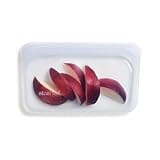
1. Stasher Premium Silicone Snack Bag, Clear, 12 oz
Price: $8.38 | EWG basis: PFAS-free pick backed by EWG's PFAS research; food-grade silicone, no fluoropolymers by composition
Stasher is the most widely recognized reusable silicone bag brand, and this 12 oz snack bag is its entry-level pick. It holds about the same volume as a standard snack-size Ziploc and is the right size for cut fruit, crackers, trail mix, or a handful of carrot sticks. BPA-free, phthalate-free, and lead-free per Stasher. The pinch-lock seal closes completely flat, which makes it easy to wash by hand or on the top rack of the dishwasher.
At $8.38 per bag, this is the most accessible starting point on this list. If you're testing the switch before committing to a full set, one of these in a lunchbox for a week is a reasonable trial.
Stasher Silicone Snack Bag, 12 oz on Amazon →
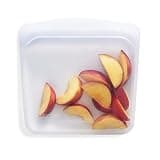
2. Stasher Premium Silicone Sandwich Bag, Clear, 28 oz
Price: $11.99 | EWG basis: PFAS-free pick backed by EWG's PFAS research; food-grade silicone, no fluoropolymers by composition
The 28 oz sandwich bag is the direct size replacement for a standard Ziploc sandwich bag. It holds a full sandwich, a wrap, or several larger snack items. Same food-grade silicone construction as the snack bag, same pinch-lock seal, same care instructions. This is the pick for replacing the lunch sandwich bag specifically rather than the snack bag.
Running both the 12 oz snack bag and this 28 oz sandwich bag covers the two most common single-use bag sizes in a packed lunch. The combined cost is just over $20, which is roughly four months of weekly Ziploc box purchases.
Stasher Silicone Sandwich Bag, 28 oz on Amazon →
3. Zip Top Reusable Silicone Snack Bag, Gray
Price: $12.99 | EWG basis: PFAS-free pick backed by EWG's PFAS research; platinum silicone, no fluoropolymers, Made in USA
Zip Top makes its bags in the USA, which is a differentiator in a category where most products are manufactured overseas. The snack bag holds about 1.2 cups and uses a self-sealing zip top that does not require any locking mechanism beyond pressing the top closed. The design sits flat when full and stands upright when placed on a surface, which makes it easier to load than bags that tip or collapse while you're filling them.
Stock is limited as of this writing. If this specific color is unavailable, the Zip Top Teal Snack Bag (same product, different color) is the backup.
Zip Top Silicone Snack Bag, Gray on Amazon →
4. Bumkins Silicone Sandwich & Snack Bags, Blue, 2-Pack
Price: $17.16 (2-pack, roughly $8.58 per bag) | EWG basis: PFAS-free pick backed by EWG's PFAS research; platinum silicone, third-party lab tested per Bumkins
Bumkins' 2-pack includes both a snack-size and a sandwich-size bag, which means one purchase covers both use cases. Bumkins notes that its silicone is third-party lab tested, which provides an additional layer of verification beyond the manufacturer's own claims. The bags have a slightly textured interior lining that helps keep food from sticking.
At roughly $8.58 per bag in a two-size set, this is also competitive with the individual Stasher picks above. It's a good choice for families who want to replace both bag sizes in a single order. Stock is limited as of this writing.
Bumkins Silicone Sandwich & Snack Bags 2-Pack on Amazon →
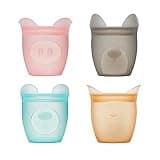
5. Zip Top Reusable Silicone Baby + Kid Snack Containers, Set of 4 (Made in USA)
Price: $34.99 (set of 4, roughly $8.75 per container) | EWG basis: PFAS-free pick backed by EWG's PFAS research; 100% platinum silicone, Made in USA
This set is specifically designed for babies and toddlers. The four containers are sized for small portions and have a stays-open design: the top holds itself open while you load food in, which is genuinely useful when you're filling a container one-handed. The self-standing shape means the containers sit upright on a tray or in a lunchbox without tipping.
At $8.75 per container in a set of four, the per-unit cost is comparable to the individual bags above. This is the right pick for families with kids in the high-chair or early lunchbox years who want snack storage sized for small portions. For non-toxic water bottles and lunch boxes to pair with these containers, see our guide to non-toxic kids water bottles and lunch gear.
Zip Top Silicone Baby + Kid Snack Containers, Set of 4 on Amazon →
How to Make the Switch
Cost comparison
A 90-count box of Ziploc sandwich bags runs about $5 to $6 and lasts a typical family roughly one month at two or three bags per school day. That works out to about $60 to $72 per year in disposable bags, indefinitely.
The five picks above range from $8.38 to $34.99. A practical starter set of two Stasher bags (one 12 oz snack, one 28 oz sandwich) costs about $20. That set breaks even against disposable bags in roughly four months and generates no recurring cost afterward, assuming reasonable care. Most silicone bags last several years of regular use.
Practical tips
- Use up what you have first. There's no need to throw out a box of plastic bags mid-use. Start replacing when you run out of the current box.
- Start with two or three bags. One snack bag and one sandwich bag covers most lunchbox needs. Expand from there once you've settled on what sizes you actually use.
- Dishwasher safe, top rack. All five picks above are dishwasher safe. Hand washing with warm soapy water also works well. Silicone does not absorb food odors the way plastic does, so a brief rinse after each use is usually enough for non-greasy contents.
- Check fit in the lunchbox. Silicone bags are thicker and less flexible than plastic bags. Some lunchboxes have tighter compartments where a fully loaded silicone bag may not lie flat. A quick test before the school year starts prevents surprises.
For glass and stainless rigid containers to pair with this switch, the companion article on swapping plastic food storage for glass and stainless covers four verified picks from Pyrex, Anchor Hocking, OXO, and U-Konserve. The two articles cover different product types: flexible bags (this article) and rigid containers (that one). For a complete non-toxic lunchbox setup, the guide to non-toxic kids water bottles and lunch gear covers stainless water bottles and bento boxes alongside the EWG PFAS research context for food-contact materials.
Frequently Asked Questions
Are reusable silicone snack bags really PFAS-free?
Food-grade and platinum silicone bags are PFAS-free by material composition. Silicone is an inorganic polymer built from silicon and oxygen, not from carbon-fluorine bonds. It is not a fluoropolymer, which means it contains no PFAS chemistry. This is a property of the material itself, not a test result that varies by manufacturer. Products certified to LFGB or FDA food safety standards for food-grade silicone confirm the material meets those specifications.
What does EWG's PFAS research actually say about plastic sandwich bags?
EWG's PFAS research covers flexible food-contact packaging broadly, not specific consumer bag brands. EWG has documented PFAS compounds in flexible plastic food-contact materials and noted that those compounds can migrate into food, particularly with heat or with fatty foods. EWG has called on regulators to eliminate PFAS from all food packaging. EWG has not published specific ratings or scores for Ziploc or other consumer sandwich bag brands. The concern applies to the material category. NonToxicFinder is reporting EWG's published research positions; we are not affiliated with EWG.
Can you microwave food in silicone snack bags?
Food-grade silicone is generally considered microwave safe, and most of the bags on this list are marketed as such. That said, it is a good practice to leave the bag slightly open when microwaving to allow steam to escape, and to check the manufacturer's specific guidance for each product. None of the five picks above are listed as having microwave restrictions, but usage guidelines on the product page take precedence over general material claims.
Are reusable silicone bags leak-proof enough for school lunches?
For dry and semi-dry foods (crackers, cut fruit, sandwiches, trail mix), all five picks above are effectively leak-resistant. For wet items like soups, smoothies, or liquid-heavy marinades, results vary by product. Stasher's pinch-lock seal is designed to be fully airtight and holds liquids in most normal-use scenarios. Zip Top's self-sealing design is reliable for most lunch contents. Bumkins is marketed for solids and semi-solids. If a child's lunch regularly includes very liquid-heavy items, a rigid container with a locking lid (see the Row 9 article above) is a more reliable choice for those specific foods.
What is the difference between food-grade silicone and platinum silicone?
"Food-grade silicone" refers to silicone that meets food safety standards for direct food contact (FDA in the US, LFGB in the EU). "Platinum silicone" refers to a specific curing process that uses a platinum catalyst rather than a peroxide-based process. Platinum-cured silicone is considered higher quality because it leaves no catalyst residue and has better temperature stability. All five products on this list use either platinum silicone or food-grade silicone certified to LFGB or FDA standards. Both are PFAS-free by composition. The practical difference for everyday lunch use is minimal; the label distinction matters more when choosing for very high-temperature applications.