Affiliate Disclosure: This article contains affiliate links. NonToxicFinder (Solved Labs LLC) may earn commissions on qualifying purchases at no extra cost to you. We are not affiliated with, endorsed by, or partnered with the Environmental Working Group.
A baby blanket is one of the most-handled textiles in a nursery: swaddling, tummy time, stroller cover, car seat, burp cloth. Here is the honest starting point before comparing anything: the Environmental Working Group does not rate or certify baby blankets, swaddles, or any other textile. There is no EWG score to check on a blanket's packaging and no EWG flag indicating a problem with the blankets already in your stack. That is not a defect in the current product, just a sign that EWG is not the standard that applies to this category. The relevant independent certification is GOTS, the Global Organic Textile Standard, and it documents something EWG's databases never touch: how the cotton was grown and processed before it became the blanket your baby naps under.
What's in a Conventional Baby Blanket (and What No One Certifies)
Most baby blankets sold at big-box retailers and through registries are cotton, cotton-polyester, or fleece blends with no independent documentation behind the fiber or dye claims on the label. That is not an assertion that any specific conventional blanket contains a specific flagged substance. The gap is narrower and more mundane: the packaging might say "100% cotton" or "soft and breathable," but it does not say where the cotton was grown, what certifying body reviewed that claim, or what dyes and finishing chemicals the fabric passed through on its way to the shelf.
None of that means the blanket currently in your nursery needs to go in the donation pile today. It means no outside party has confirmed, through an independent chain-of-custody record, what the fiber and processing actually involved. GOTS certification is how that documentation gap gets closed for the three picks below.
What GOTS Certification Actually Covers
GOTS (Global Organic Textile Standard) is a supply-chain certification for textiles made with organic fibers. At the "organic" grade, it requires at least 95% certified organic fiber content, plus restricted processing chemicals and dyes across spinning, dyeing, and finishing, with third-party certifier audits at each stage. A valid GOTS claim names a specific certifying body, such as ICEA or IDFL Laboratory and Institute, that you can look up independently rather than taking the brand's word for it.
GOTS is not a safety certification and does not test the finished blanket for flame resistance, sleep performance, or every possible substance a fabric might carry. It is also a different standard from OEKO-TEX Standard 100, which tests the finished textile for specified substances without requiring organic fiber content, and from GREENGUARD Gold, which measures chemical emissions from finished products rather than reviewing the fiber supply chain. A blanket can carry one of these, more than one, or none; GOTS addresses the organic-fiber-and-processing question specifically, and that is the question this guide answers. For the full category comparison, see our full guide to GOTS certified baby blankets.
GOTS-Certified Baby Blanket Picks, Compared
We re-verified all three picks below for GOTS basis and Amazon stock status on October 3, 2026. This is the same three-product pool already covered in our GOTS certified baby blankets buying guide, reframed here for a parent who already owns conventional blankets and wants to know what to buy at the next natural replacement point.
| Product | Price | GOTS basis | Stock |
|---|---|---|---|
| Under the Nile Organic Cotton Muslin Swaddle Blanket (White) | $20.00 | GOTS certified (ICEA), license ICEA-TX-3555 | In stock |
| MakeMake Organics Scalloped Knit Baby Blanket (Beige, 30x40) | $48.00 | GOTS certified (IDFL Laboratory and Institute), license IDFL 010673 | Low stock (only a few left at last check) |
| MakeMake Organics Pointelle Knit Baby Blanket (Ivory, 30x40) | $48.00 | GOTS certified (IDFL Laboratory and Institute), license IDFL 010673 | In stock |
Prices and stock verified October 3, 2026 via the Amazon Creators API. Check the current listing before buying, especially the MakeMake scalloped knit pick below.
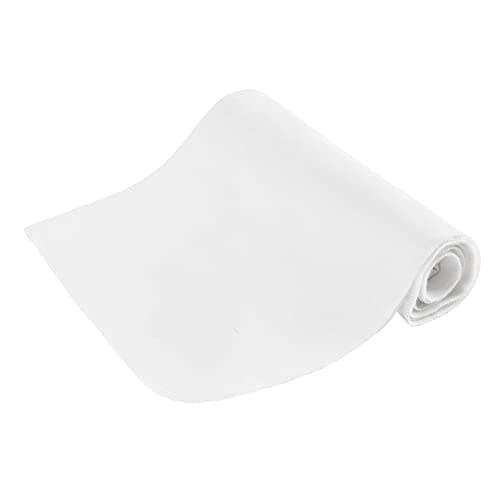
1. Under the Nile Organic Cotton Muslin Swaddle Blanket (White)
Price: $20.00 | Basis: GOTS certified (ICEA), license ICEA-TX-3555, printed on Under the Nile's own certifications page
This lightweight muslin swaddle is the simplest first swap: a single layer of organic cotton gauze that works for swaddling, a stroller cover, or a burp cloth. Under the Nile's certification covers the organic cotton fiber content and the restricted processing chemicals used to produce it, not a finished-product chemical test, which is OEKO-TEX's scope rather than GOTS's. If you only replace one blanket type first, a muslin swaddle like this one is the highest-rotation item in most newborn stacks.
Under the Nile Organic Cotton Muslin Swaddle Blanket on Amazon →
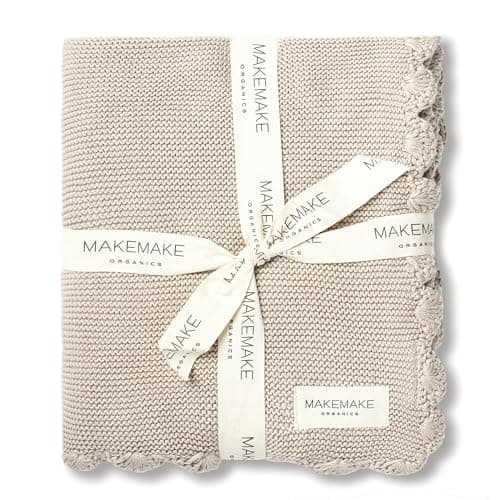
2. MakeMake Organics Scalloped Knit Baby Blanket (Beige, 30x40)
Price: $48.00 | Basis: GOTS certified (IDFL Laboratory and Institute), license IDFL 010673, printed on MakeMake Organics' own certifications page
This scalloped-edge knit blanket is heavier than the muslin swaddle above, better suited to stroller rides and car seat use once swaddling season ends. MakeMake Organics' certification page states the GOTS license applies brand-wide to its organic cotton products rather than to one specific SKU, which is the same framing the brand uses across its line. As of this verification, stock on this particular listing is limited to a few units with more reported as on the way; if it has sold out by the time you check, the Pointelle knit pick below carries the identical GOTS basis.
MakeMake Organics Scalloped Knit Baby Blanket on Amazon →
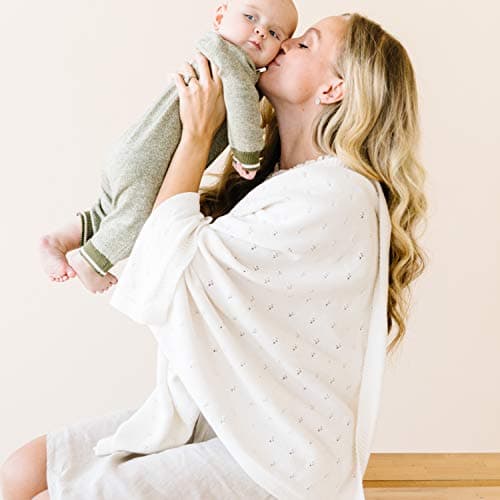
3. MakeMake Organics Pointelle Knit Baby Blanket (Ivory, 30x40)
Price: $48.00 | Basis: GOTS certified (IDFL Laboratory and Institute), license IDFL 010673, same brand-wide certification as the scalloped knit pick above
This pointelle-knit blanket is similar in weight to the scalloped-knit pick, with an openwork pattern instead of a scalloped edge. The choice between the two MakeMake picks comes down to pattern and color rather than material or certification, since both carry the identical GOTS license.
MakeMake Organics Pointelle Knit Baby Blanket on Amazon →
Making the Switch
You do not need to throw out a blanket that still works. A reasonable approach is to keep using what you already have and bring in a GOTS-certified pick the next time you would buy a new blanket anyway, whether that is a gift, a size-up, or simply replacing one that has worn out.
Most parents end up with 4 to 6 blankets in rotation during the first several months, between swaddling, naps, stroller duty, and the laundry cycle, so a full-stack swap in one order is rarely necessary or realistic. A mixed-replacement approach works well here: start with a muslin swaddle like the Under the Nile pick for the highest-rotation role, then add a midweight knit blanket like one of the MakeMake picks for stroller and car seat use as your baby grows into less-frequent swaddling. Two Under the Nile swaddles run about $40.00; pairing one with one MakeMake knit blanket brings a three-blanket mixed stack to about $88.00, a reasonable starting point rather than a full wardrobe replacement.
For the rest of the nursery textile checklist, including sleepwear and crib bedding, see our non-toxic baby registry guide.
Frequently Asked Questions
Does EWG rate or certify baby blankets?
No. The Environmental Working Group does not rate or certify textiles of any kind, including baby blankets and swaddles. There is no EWG score, EWG VERIFIED® mark, or EWG flag that applies to this product category in either direction. This guide relies on GOTS's own certifier claims instead, since GOTS is the independent standard that actually covers textiles.
What does GOTS certification actually mean for a baby blanket?
GOTS certifies at least 95% certified organic fiber content plus restricted processing chemicals and dyes across the full supply chain, from farm to finished blanket, backed by third-party certifier audits. It is a supply-chain standard, not a general safety guarantee for the finished product.
Is GOTS the same as OEKO-TEX or GREENGUARD Gold?
No. GOTS covers organic fiber sourcing and restricted processing chemicals through manufacturing. OEKO-TEX Standard 100 tests the finished textile for specified substances without requiring organic fiber content. GREENGUARD Gold measures chemical emissions from the finished product. A blanket can carry any combination of the three, or none; none of the picks above make a GREENGUARD or OEKO-TEX claim, only GOTS.
How many blankets does a newborn actually need?
Most registry guides suggest 4 to 6 lightweight swaddle or receiving blankets for the first months, since they get used for swaddling, tummy time, stroller cover, and burp cleanup and need frequent washing. A couple of midweight knit blankets cover naps and car seat use once swaddling season ends.
Are GOTS-certified organic cotton blankets machine washable?
Most GOTS-certified organic cotton muslin and knit blankets are machine washable in cold water, though a gentle cycle is often recommended for knit weaves to limit stretching. Check the care label on the specific product before washing.
Affiliate Disclosure: This article contains affiliate links. NonToxicFinder (Solved Labs LLC) may earn commissions on qualifying purchases at no extra cost to you. We are not affiliated with, endorsed by, or partnered with the Environmental Working Group.