This article contains affiliate links. NonToxicFinder (Solved Labs LLC) may earn commissions on qualifying purchases at no extra cost to you. We are not affiliated with, endorsed by, or partnered with the Environmental Working Group.
OEKO-TEX Standard 100 certified sheets carry a specific meaning that a lot of marketing copy blurs: the finished sheet, after dyeing, printing, and finishing, was tested against limits for more than 100 substance categories and passed at the time of certification. That is a real, independently issued credential. It is not the same thing as organic. EWG does not rate or certify bed sheets or any other textile, so you will not find a Skin Deep score or an EWG VERIFIED® mark on a sheet set no matter how it is marketed. This guide explains what OEKO-TEX Standard 100 actually tests, how it differs from GOTS, and five sheet sets, each with a certificate number we checked against the brand's own page, a retailer listing, or OEKO-TEX's public certificate page. We note where a certificate names a parent company or product type rather than the exact set.
What OEKO-TEX Standard 100 Actually Tests
OEKO-TEX Standard 100 is administered by independent test institutes (Hohenstein and TESTEX are the two that show up most often on sheet sets) against an annually updated substance list. For adult bedding, products typically fall under Product Class II, which covers items with extended direct skin contact. The list includes:
- Pesticide residues, including organochlorine and organophosphorus compounds
- Heavy metals such as lead, cadmium, and arsenic
- Formaldehyde from certain finishing treatments
- Banned azo dyes that can release aromatic amines under certain conditions
- Phthalates used in some coatings and prints
- pH value within a skin-compatible range
- Colorfastness to rubbing and perspiration
Three limits are worth knowing before you shop. First, OEKO-TEX Standard 100 tests the finished textile for the substances on its list. It is not a safety guarantee, and we make no health or safety claims about any sheet set here. Second, a certificate covers only the articles and product class named on it. It may name a manufacturer or parent company and a range of product types (sheets, pillowcases, duvet covers) rather than one specific retail listing. Third, certificates expire and are renewed, so a brand that was certified two years ago may not hold a current certificate today.
The most reliable way to confirm a specific set is to take the certificate number printed on the packaging, hangtag, or brand page and check it against OEKO-TEX itself. The OEKO-TEX Label Check tool does this, and OEKO-TEX also publishes a result page for each certificate at oeko-tex.com/v/ followed by the certificate number. That page shows the certificate holder, the product class, the types of articles covered and whether the certificate is valid. For every pick below we looked up the certificate number on that result page on October 15, 2026, and noted who actually holds it.
What OEKO-TEX Standard 100 does not certify: organic fiber origin, sustainable farming practices, or supply-chain labor conditions. A sheet spun from conventionally grown cotton can carry full OEKO-TEX Standard 100 certification if the finished fabric passes the substance tests. That is the gap in the title of this guide: certified does not mean organic.
OEKO-TEX vs. GOTS: Two Different Questions About the Same Sheet
Both are legitimate third-party programs. They answer different questions, and a sheet set can carry either, both, or neither.
| Certification | What it certifies | What it does NOT cover |
|---|---|---|
| OEKO-TEX Standard 100 | The finished fabric was tested against limits for 100+ substance categories and met them at the time of certification. Applies regardless of fiber origin. | Organic fiber sourcing, farming practices, dye-house labor conditions, or supply-chain sustainability. |
| GOTS (Global Organic Textile Standard) | The fiber was grown organically and those practices were maintained through spinning, weaving, dyeing, and finishing. Includes social criteria for workers. | Does not run the same breadth of finished-product substance testing that OEKO-TEX Standard 100 does; GOTS restricts inputs during processing rather than testing the final fabric against a substance panel. |
If organic fiber sourcing and farming practices are your priority, look for GOTS, ideally alongside OEKO-TEX. Our guide to GOTS certified organic sheets covers four GOTS picks for exactly that priority. If your priority is an independent substance test of the fabric you'll actually sleep on, regardless of whether the fiber was organic, OEKO-TEX Standard 100 is the relevant signal, and that's the focus of this guide.
The Best OEKO-TEX Certified Sheets
All five picks below are Queen size (the most commonly stocked size for each). Each listing was checked through the Amazon Creators API in October 2026 and was available at that time. Prices and availability change, so check the current listing before buying.
| Product | Price (Oct 2026) | Fabric | OEKO-TEX Standard 100 certificate | Availability |
|---|---|---|---|---|
| Mellanni Iconic 4-Piece Sheet Set | About $30 to $37 | Double-brushed polyester microfiber | 22.HUS.40891 (held by Alirm, LLC, Mellanni's trademark owner) | Available at last check |
| Bedsure 100% Cotton Percale Sheet Set | $59.99 | 100% cotton percale | 24.HCN.19195 (Hohenstein China) | Available at last check |
| Brooklinen Percale 4-Piece Sheet Set | $199.00 | 100% cotton percale | 17.HUS.08214 (Hohenstein) | Available at last check |
| Bare Home 100% European Linen Sheet Set | About $144 to $200 by color | 100% European linen | 21.HCN.84390 (cited by Bare Home; held by its manufacturer) | Available at last check |
| ettitude 100% Lyocell from Organic Bamboo Sheet Set | $359.00 | 100% lyocell (from bamboo) | SH025 285270 (Testex, Class I) | Available at last check (October 15, 2026) |
Prices and availability checked October 15, 2026. Every pick lists one certification basis: OEKO-TEX Standard 100. Check current Amazon listings before purchasing.
Mellanni Iconic 4-Piece Sheet Set (ASIN B00NLLUMOE, about $30 to $37)
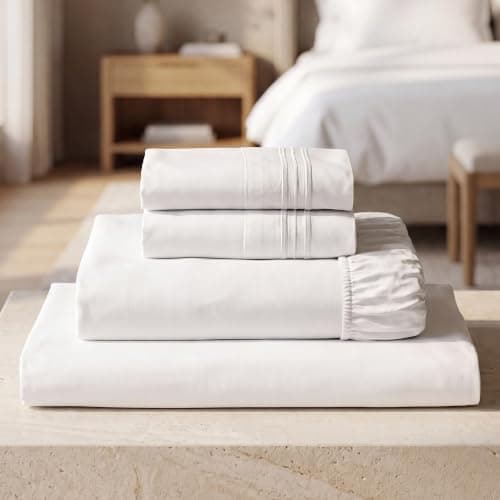
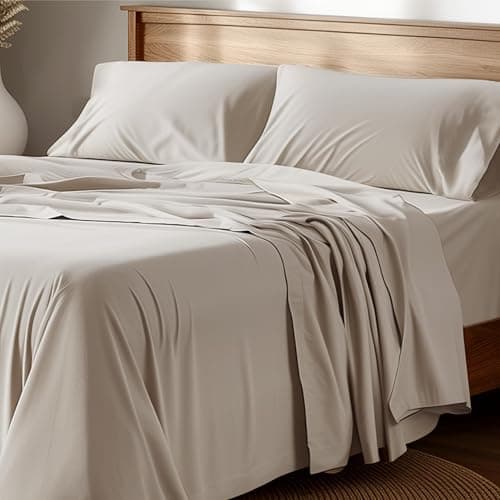
Mellanni is the budget entry point in this guide, and it is polyester, not cotton. The Iconic set is a double-brushed microfiber, which feels soft and smooth but is a different material from the cotton and linen picks. The OEKO-TEX Standard 100 certificate we checked, 22.HUS.40891, is published on OEKO-TEX's own certificate page. It is held by Alirm, LLC, the trademark owner of the Mellanni name, and lists sheet sets, fitted and flat sheets and pillowcases made from woven 100% polyester or 100% cotton fabric under Product Class II, with a valid status when we checked.
Know the limit of that match: the certificate names the company and a range of product types, not the Iconic collection or this specific Amazon listing, and Mellanni's product page did not display the number in a form we could read automatically. If the exact certificate matters to you, ask the seller or look for the number on the packaging. Amazon showed a price of $29.97 and a second offer near $37 on October 15, 2026, which is why we give a range.
Mellanni Iconic 4-Piece Sheet Set | Buy on Amazon ↗
Bedsure 100% Cotton Percale Sheet Set (ASIN B0C65GF7HQ, ~$60)
Bedsure's certificate number, 24.HCN.19195, issued by Hohenstein's China test institute, appears on the brand's own Amazon listing for this specific ASIN. OEKO-TEX's result page for that number lists Bedshe International Co., Ltd. as the holder, names the Bedsure brand, and showed it as valid under Product Class II on October 15, 2026. The fabric is cotton percale, a plain, crisp weave that tends to run cool, at roughly a third of the price of the Brooklinen set below. The listing was available when we checked on October 15, 2026. For a shopper who wants a cotton set with a published OEKO-TEX certificate number without a premium-brand price tag, this is the budget cotton pick.
Bedsure 100% Cotton Percale Sheet Set | Buy on Amazon ↗
Brooklinen Percale 4-Piece Sheet Set (ASIN B0BTJPCWLN, ~$199)
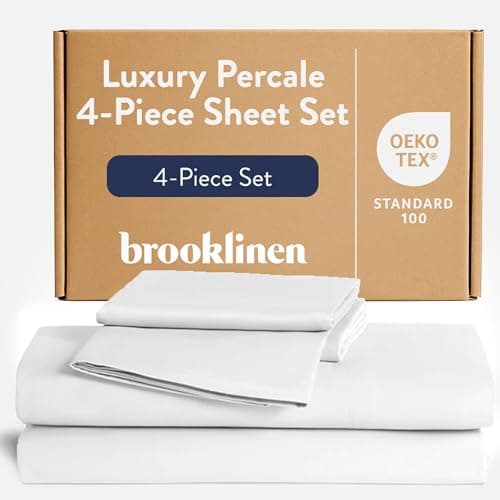
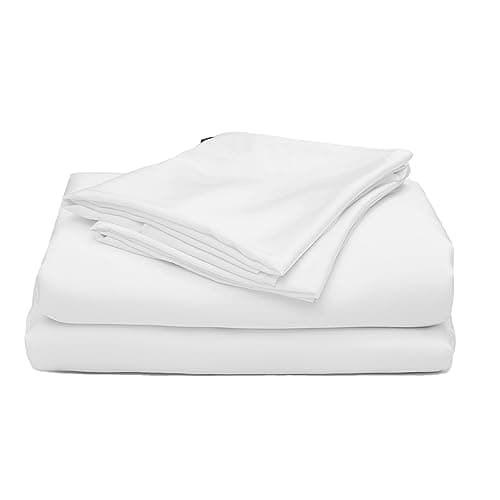
Brooklinen publishes its OEKO-TEX Standard 100 certificate number, 17.HUS.08214, directly on its own FAQ page, which is the clearest first-party confirmation among the picks in this guide. OEKO-TEX's result page for that number lists Brooklinen Inc. as the holder, covering woven bed sets, sheets and pillowcases under Product Class I, and showed it as valid on October 15, 2026. The fabric is 100% cotton percale, woven in a plain, matte, crisp weave that tends to run cool for hot sleepers. The set includes a flat sheet, fitted sheet, and two pillowcases. The listing was available when we checked on October 15, 2026. This is the pick for someone who wants a well-known, easy-to-verify brand and doesn't mind paying a premium for it.
Brooklinen Percale 4-Piece Sheet Set | Buy on Amazon ↗
Bare Home 100% European Linen Sheet Set (ASIN B0B1GDTGVV, about $144 to $200)
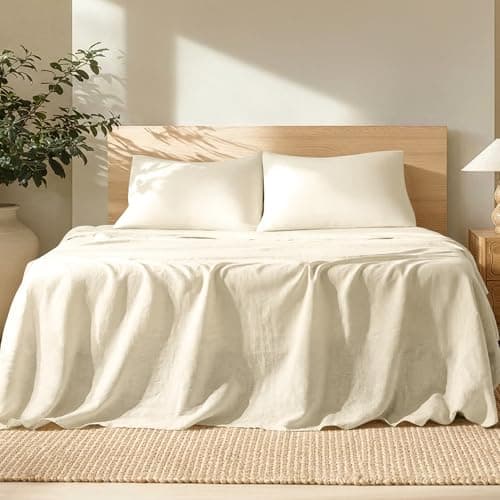
Bare Home is the linen option. The brand's own product page cites OEKO-TEX Standard 100 certificate 21.HCN.84390, and the same number appears in the specifications on its Target listing. OEKO-TEX's certificate page for that number shows it is held by Nature Field Housewear Co., Ltd., a manufacturer rather than Bare Home, and lists flat sheets, fitted sheets, pillowcases and other bedding made from fabrics that include 100% linen, with a valid status when we checked. So the accurate summary is that Bare Home cites this certificate for the product, not that Bare Home holds it. OEKO-TEX's page does not name Bare Home.
The linked Natural colorway was $199.99 on October 15, 2026. The Glacier Grey colorway of the same set was listed near $144, so the price depends on the color you pick. Linen feels textured and relaxed, and it softens with washing. It sits at the upper end of the price range here.
Bare Home 100% European Linen Sheet Set | Buy on Amazon ↗
ettitude 100% Lyocell from Organic Bamboo Sheet Set (ASIN B0C5QNJZ8Q, ~$359)
ettitude's product page states its OEKO-TEX Standard 100 certificate directly: SH025 285270, issued by Testex under Product Class I, the stricter class normally reserved for baby and infant-contact textiles. OEKO-TEX's result page for that number lists ETTITUDE HOLDINGS, INC. as the holder and showed it as valid on October 15, 2026, covering sheets, pillowcases, duvet covers and other home textiles made of woven fabric. The fabric is lyocell, a fiber processed from bamboo using a closed-loop solvent-recovery method, distinct from bamboo viscose/rayon, which uses a more chemically intensive open process. Lyocell tends to feel silkier and drape more than cotton, and it's frequently marketed as cooling. The listing was available when we checked on October 15, 2026; availability can change, so check the current listing. At $359 this is the premium pick in the guide, aimed at a shopper who specifically wants a non-cotton, bamboo-derived fiber alongside Class I-level certification.
ettitude 100% Lyocell from Organic Bamboo Sheet Set | Buy on Amazon ↗
What to Look for When Buying: Fabric, Fit, and Confirming the Label
Fabric type: Microfiber (Mellanni) is a fine polyester fabric that feels soft and smooth at the lowest price here, but it is not a natural fiber. Percale (Brooklinen, Bedsure) is a plain, tight cotton weave that feels crisp and cool, similar to a quality button-down shirt. Linen (Bare Home) is textured, breathable and softens with washing. Lyocell from bamboo (ettitude) drapes more like a fine knit and tends to run cooler still, at a meaningfully higher price point. None of these fabric choices affect the OEKO-TEX certification itself; the standard applies to the finished textile regardless of fiber type.
Sizing and pocket depth: Confirm the specific size (Twin, Queen, King, etc.) and the fitted sheet's pocket depth against your mattress thickness before ordering. Deep mattresses and mattress toppers can require an extra-deep-pocket variant that may be a different ASIN from the one linked here.
Confirming the certification on the product: An OEKO-TEX Standard 100 certificate number typically follows a pattern like two digits, a dot, three or four letters, a dot, and a number sequence (for example, 17.HUS.08214), or a Testex-style prefix like SH025 285270. You can check any certificate number at the OEKO-TEX Label Check tool, or on OEKO-TEX's certificate page at oeko-tex.com/v/ followed by the number, to see who holds it, which articles it covers and whether it's currently valid. A brand that states "OEKO-TEX certified" without a certificate number anywhere on its own site is a harder claim to verify independently; every pick in this guide has a published certificate number, and we say above where the certificate holder is a parent company or manufacturer.
For nursery-specific sizing, see our guide to OEKO-TEX certified crib sheets, and for the clothing side of the same standard, see OEKO-TEX certified baby clothes. If organic fiber sourcing matters more to you than substance testing alone, our guide to GOTS certified organic sheets covers picks built around that standard instead. For how OEKO-TEX Standard 100 compares to GOTS and GREENGUARD Gold across mattresses and pillows too, see our non-toxic bedding certification guide.
Frequently Asked Questions
Is OEKO-TEX the same as GOTS?
No. OEKO-TEX Standard 100 tests the finished fabric against limits for listed substances (pesticide residue, heavy metals, formaldehyde, banned dyes, and others) and certifies that it met defined limits at the time of testing, regardless of fiber origin. GOTS certifies that the fiber was grown organically and that organic practices were maintained through processing and manufacturing. A sheet set can carry both, one, or neither. Neither certification is a safety guarantee.
Does OEKO-TEX certified mean the sheets are organic?
Not necessarily, and this is the most common misconception about the standard. OEKO-TEX Standard 100 certifies that the finished fabric passed substance testing. It does not require organic fiber sourcing. A sheet made from conventionally grown cotton can carry full OEKO-TEX Standard 100 certification if the finished textile passes the tests. If organic fiber sourcing matters to you specifically, look for GOTS in addition to OEKO-TEX.
Does EWG rate bed sheets?
No. The Environmental Working Group does not rate or certify textiles of any kind, including bed sheets. EWG's databases cover personal care products (Skin Deep), cleaning products (Guide to Healthy Cleaning), and food (Food Scores). EWG does not maintain a textile database and does not endorse NonToxicFinder. For bed sheets, OEKO-TEX Standard 100 and GOTS are the relevant independent third-party certifications.
How do I confirm a sheet set actually has OEKO-TEX Standard 100 certification?
Look for a certificate number printed on the packaging, hangtag, or the brand's own product page. Formats vary by test institute but commonly look like 17.HUS.08214 (Hohenstein) or SH025 285270 (Testex). You can check any certificate number at the OEKO-TEX Label Check tool (oeko-tex.com/en/label-check) to confirm who issued it and whether it's currently valid. A brand that names a specific certificate number on its own site is a stronger, more independently verifiable claim than generic "OEKO-TEX certified" marketing language with no number attached.
What's the practical difference between microfiber, percale, linen, and bamboo lyocell sheets?
Microfiber is a fine polyester fabric that feels soft and smooth and is usually the lowest-priced option. Percale is a tight, plain cotton weave that feels crisp and cool, similar to a dress shirt. Linen is textured and breathable and softens with washing. Bamboo lyocell is a completely different fiber processed through a closed-loop solvent method; it drapes more like a fine knit and is often marketed as especially cooling, generally at a higher price point than cotton options. None of these fabric choices change whether a product can carry OEKO-TEX Standard 100 certification. The standard applies to the finished textile regardless of fiber type.
This article contains affiliate links. NonToxicFinder (Solved Labs LLC) may earn commissions on qualifying purchases at no extra cost to you.