This article contains affiliate links. NonToxicFinder (operated by Solved Labs LLC) earns commissions on qualifying purchases at no extra cost to you. We are not affiliated with or endorsed by the Environmental Working Group.
What EWG says about tampons: EWG (the Environmental Working Group) does not assign Skin Deep scores to individual tampon or pad products — the FDA classifies menstrual products as medical devices, not cosmetics, placing them outside Skin Deep's scope. But EWG has published research documenting concerns about pesticide residues in conventional cotton, dioxins from chlorine bleaching, and synthetic fragrance in menstrual products. The organic cotton brands in this guide — Natracare, LOLA, Cora, L., and The Honey Pot Company — use certified organic cotton, chlorine-free processing, and fragrance-free formulas that directly address every concern EWG has documented for this category.
Most parents and adults who follow EWG's ingredient guidance for skincare and cleaning products have not thought deeply about what goes into conventional menstrual products. EWG (the Environmental Working Group, an independent nonprofit at ewg.org) has published research documenting concerns about dioxins from chlorine bleaching processes, pesticide residues in non-organic cotton, and synthetic fragrances in conventional tampons and pads. These are EWG's documented concerns — not our independent health claims.
One important framing note: Tampons and pads are classified by the FDA as medical devices, not cosmetics. This means EWG's Skin Deep database — which rates cosmetics — does not formally score individual tampon and pad products the same way it rates body wash or shampoo. We will not cite Skin Deep scores for these products because we cannot verify that such scores exist for the specific products listed. What we can say: the brands below use certified organic cotton and chlorine-free processing that directly address what EWG has documented as concerns in this category.
What EWG's Research Says About Conventional Period Products
EWG has documented the following concerns about conventional menstrual products:
- Dioxins from chlorine bleaching: Conventional cotton is typically bleached with chlorine or chlorine compounds, which can produce dioxin byproducts. Dioxins are persistent environmental contaminants that accumulate in body fat. EWG has flagged dioxins as a concern for products with prolonged mucosal contact.
- Pesticide residues: Conventional cotton is one of the most pesticide-intensive crops globally. Non-organic cotton can carry residues of pesticides and herbicides including glyphosate. EWG has documented concerns about pesticide exposure in menstrual products.
- Synthetic fragrance: "Deodorizing" or "scented" menstrual products contain synthetic fragrance compounds — a catch-all ingredient term that can conceal dozens of undisclosed chemicals including phthalates, which EWG flags as endocrine-disrupting chemicals.
- Rayon: Conventional tampon absorbency is often achieved through rayon (wood-pulp-derived fiber), which can undergo chlorine bleaching during processing.
What to Look for in Non-Toxic Period Care
Certified Organic Cotton (GOTS or USDA Organic)
GOTS (Global Organic Textile Standard) is the most rigorous organic textile certification: it requires that cotton was grown without synthetic pesticides, herbicides, or fertilizers, and that processing chemicals meet environmental and toxicological standards. USDA Organic (National Organic Program) applies the same pesticide-free growing requirements. Both certifications directly address EWG's documented concern about pesticide residues in conventional cotton.
Chlorine-Free and Dioxin-Free Processing
Organic tampon brands use one of two chlorine-free bleaching approaches: ECF (Elemental Chlorine-Free, which uses chlorine dioxide rather than elemental chlorine) or TCF (Totally Chlorine-Free, which uses hydrogen peroxide or oxygen). TCF is the more rigorous standard. Look for "chlorine-free" or "TCF bleaching" on the label.
Fragrance-Free and Dye-Free
Any menstrual product with "deodorizing," "scented," or "freshness" language contains synthetic fragrance — the same undisclosed ingredient that EWG flags across all personal care categories. Organic and non-toxic period care brands use fragrance-free formulas.
BPA-Free Applicator
For applicator tampons, look for cardboard or BPA-free plastic applicators. Most organic brands use one of these. Cardboard applicators are biodegradable and compostable; BPA-free plastic applicators reduce chemical exposure while maintaining the conventional applicator format.
Best Organic Cotton Tampons
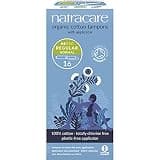
Natracare Organic Cotton Regular Tampons, 192 Count (ASIN: B000EWFOQ4, ~$30) — Best Value
Natracare has been making organic cotton tampons since 1989 — the pioneering brand in the category. GOTS-certified organic cotton; cardboard applicator (biodegradable and compostable); no rayon, no chlorine, no fragrance, no dioxins. The 192-count (12 packs of 16) brings the per-unit price to the lowest in this roundup and is the best choice for anyone who has already committed to organic period care and buys in bulk. Natracare products appear on EWG's Skin Deep brand pages for the company's other products.
Cotton: GOTS-certified organic
Applicator: Cardboard (biodegradable/compostable)
Free from: Chlorine, dioxins, rayon, fragrance, dyes
Count: 192 (12 × 16)
Best for: Bulk buyers; eco-minded shoppers; lowest per-unit cost
Natracare Organic Cotton Regular Tampons, 192ct — Buy on Amazon ↗
Cora Organic Cotton Regular Tampons, 36 Count (ASIN: B06XKBV8VV, ~$10)
Cora uses USDA-certified organic cotton and formats it in a clean, minimal package with a BPA-free plastic applicator. Free from pesticides, dioxins, rayon, chlorine, fragrance, and dyes. Cora's brand page appears in EWG's Skin Deep database for the company's personal care products. At ~$10 for 36, this is a practical single-box trial size for someone switching from conventional tampons and wanting to evaluate the organic experience before committing to a bulk buy.
Cotton: USDA Organic
Applicator: BPA-free plastic
Free from: Pesticides, dioxins, rayon, chlorine, fragrance, dyes
Count: 36
Best for: First-time organic tampon buyers; DTC-brand quality with Amazon availability
Cora Organic Cotton Regular Tampons, 36 Count — Buy on Amazon ↗
The Honey Pot Company Organic Cotton Core Tampons, 18 Count (ASIN: B085DLP3R9, ~$10)
Honey Pot uses organic cotton for the tampon core with plant-derived materials throughout. Free from chlorine, synthetic fragrance, and pesticides. The brand is widely available in mass retail and has strong consumer recognition. Honey Pot's brand page appears in EWG's Skin Deep database for personal care products. The 18-count size is appropriate for light-to-regular flow users or as a complement to another brand's super absorbency.
Cotton: Organic cotton core
Materials: Plant-derived
Free from: Chlorine, fragrances, pesticides
Count: 18
Best for: Shoppers who prefer widely available mass-retail brands
The Honey Pot Company Organic Cotton Core Tampons, 18 Count — Buy on Amazon ↗
L. Organic Cotton Tampons, Regular + Super, 64 Count (ASIN: B07FRNB75Z, ~$14)
L. (by Procter & Gamble) uses U.S.-grown organic cotton in a BPA-free plastic applicator format. The 64-count multi-absorbency pack (regular and super) is practical for varying flow. Chlorine-free; pesticide-free; fragrance-free. L.'s brand page appears in EWG's Skin Deep database for the brand's personal care products. At ~$14 for 64, the per-unit price is among the lowest in this guide after Natracare's bulk buy. Good mainstream-price, organic-quality option.
Cotton: US-grown organic cotton
Applicator: BPA-free plastic
Free from: Chlorine, pesticides, fragrance
Count: 64 (regular + super variety)
Best for: Value-oriented shoppers; mixed-absorbency needs
L. Organic Cotton Tampons, Regular + Super, 64 Count — Buy on Amazon ↗
LOLA 100% Organic Cotton Tampons, Regular, 60 Count (ASIN: B0BQHP7SKT, ~$16)
LOLA is a DTC-founded brand with strong ingredient transparency credentials: 100% organic cotton, no rayon, no synthetic fragrance, no chlorine, BPA-free applicator. The brand publishes full ingredient lists — an unusual level of transparency in the period care category. At ~$16 for 60 regular tampons, the price per unit is comparable to other brands in this guide. LOLA is primarily a subscription brand but has a meaningful Amazon presence for non-subscribers.
Cotton: 100% organic cotton (no rayon)
Applicator: BPA-free plastic
Free from: Rayon, synthetic fragrance, chlorine
Count: 60 regular
Best for: Ingredient-transparency-focused buyers; DTC quality via Amazon
LOLA 100% Organic Cotton Tampons, Regular, 60 Count — Buy on Amazon ↗
What About Organic Pads, Liners, and Menstrual Cups?
The same criteria apply to pads and liners: certified organic cotton, chlorine-free processing, and fragrance-free. Most brands above also carry organic pads and pantiliners. Menstrual cups made from medical-grade silicone or stainless steel eliminate disposable product concerns entirely — there is no cotton, no processing, and no monthly consumable. If you are open to reusable period care, medical-grade silicone cups and stainless steel menstrual cups are the options that most cleanly sidestep the chemical concerns EWG documents for disposables.
How to Discuss Period Product Safety With Your Daughter
For parents of teens and tweens transitioning to period care, the organic vs. conventional conversation can be straightforward: "These are made with organic cotton, the same way some foods are organic — grown without certain pesticides and processed without harsh bleaching chemicals." You don't need to detail dioxins or EWG research. The parallel to organic food is clear and accessible for most teenagers.
The transition from conventional to organic tampons is typically seamless — they perform the same way; the differences are internal ingredients and processing methods.
Related Non-Toxic Personal Care
For pregnancy-specific product guidance aligned with EWG's research, see our guide to pregnancy-safe skincare top-rated by EWG. For more on how EWG's certification programs work (and which categories they cover), see our explainer on what EWG VERIFIED® means.
Frequently Asked Questions
Q: Does EWG rate tampons with a Skin Deep score?
No, and this is an important accuracy note. EWG's Skin Deep database is designed to rate personal care products that the FDA classifies as cosmetics (shampoo, lotion, sunscreen, etc.). Tampons and pads are classified by the FDA as medical devices — a separate regulatory category — and Skin Deep does not formally score them the same way it scores cosmetics. We will not claim Skin Deep scores for these products because we cannot independently verify that individual product scores exist. What we can document: EWG has published broader research about concerns in menstrual products, and the organic certifications these brands carry directly address those concerns.
Q: Are organic tampons better than conventional?
The available scientific evidence on tampon ingredient absorption through mucosal tissue is limited and contested. We make no independent health claims. What organic cotton certification does address: it eliminates pesticide residues from the cotton growing process (EWG's documented concern), chlorine-free processing eliminates the dioxin-byproduct risk (EWG's documented concern), and fragrance-free formulas eliminate undisclosed synthetic chemicals (EWG's documented concern across personal care). For families that follow EWG's guidance in other product categories, applying the same framework to menstrual products is consistent.
Q: Can you use organic tampons the same as conventional ones?
Yes. Organic cotton tampons perform identically to conventional tampons — same absorbency ratings (regular, super, super-plus), same applicator formats (cardboard or BPA-free plastic), same change frequency. The difference is entirely in what the cotton is made from and how it's processed, not in how the product functions.