You’ve swapped your dish soap. You’ve checked a few products on EWG Skin Deep. Now you want to understand why any of this matters and what the actual science says about living with fewer synthetic chemicals in your home. That’s what this reading list is for.
These books are selected by one criterion: the author must be able to explain the science, not just repeat talking points. Each pick below is written by a credentialed researcher, physician, or scientist with a specific area of expertise in environmental health, endocrine disruption, or toxicology. No self-published wellness blogs in book form; no alarmism without evidence.
Already browsing our product guides? See our roundups: Non-Toxic Cleaning Products | EWG VERIFIED® Sunscreens for Kids | Top-Rated Non-Toxic Baby Shampoos
Product Guides Answer One Question. Books Answer Another.
Product guides are useful. But they answer “which product should I buy?” The books on this list answer a different question: which chemicals should you actually worry about, and why? Once you understand how endocrine-disrupting chemicals (EDCs) work, why the regulatory landscape is the way it is, and which categories of exposure actually matter most, you can evaluate any product on your own. You’ll spend your energy on the swaps that give you the most reduction in exposure for the least inconvenience.
That’s the framework behind every book below.
The Best Non-Toxic Living Books for Families
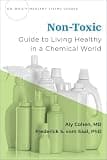
1. Non-Toxic: Guide to Living Healthy in a Chemical World by Dr. Aly Cohen, MD & Frederick vom Saal, PhD
Publisher: Oxford University Press (Dr. Andrew Weil Integrative Medicine Library), 2020
Authors: Dr. Aly Cohen is a board-certified rheumatologist and integrative medicine physician. Frederick vom Saal, PhD is a reproductive biologist at the University of Missouri and one of the most-cited researchers on bisphenol A (BPA) and endocrine disruption.
Why we picked it: EWG President Ken Cook endorsed this as “the blueprint for families,” a rare public endorsement from someone who has spent decades in the environmental health policy space. The co-authorship structure matters: one author explains the clinical picture, the other explains the biochemistry. Together they produce a book that is both scientifically rigorous and genuinely readable for non-scientists.
The book is organized around the rooms and habits of daily life: what you put on your body, what you clean your home with, what you eat, what you breathe indoors. Each section identifies the key chemicals to know about, explains the mechanism of concern, and gives prioritized, realistic guidance on reduction. No catastrophism, no impossible perfectionism. Just evidence-based, actionable steps.
Read our full review: NonToxicFinder’s Inaugural Review of Non-Toxic by Aly Cohen & Frederick vom Saal
2. The Slightly Greener Method by Tonya Harris, MSHN, BCHN
Authors: Tonya Harris holds a Master of Science in Human Nutrition and is Board Certified in Holistic Nutrition (BCHN).
Why we picked it: Harris brings a practical, room-by-room framework (she calls it her “prioritized dirty dozen of toxins” approach) that has resonated with a very wide audience. The book has accumulated over 1,900 Amazon reviews at a 4.8-star average, which is unusually high for a book in this category. The nutrition background means the food and cleaning sections are strong; the personal care sections are equally well-covered. If you want one book that covers the whole home without feeling overwhelmed, this one fits that need well.
Note: Harris’s book is honest about what it is. It’s a practical guide for busy families, not an academic text. There are no inline citations, and it’s explicitly written for a general audience. For readers who want the peer-reviewed science behind the recommendations, pair it with vom Saal and Cohen’s book above.
3. Count Down by Shanna H. Swan, PhD & Stacey Colino
Author: Dr. Shanna Swan is a reproductive epidemiologist and professor at the Icahn School of Medicine at Mount Sinai. Her peer-reviewed research on phthalates and sperm count decline is among the most-cited work in reproductive health science.
Why we picked it: Swan’s work is the authoritative source if you want to understand the science of phthalates and other EDCs at a deeper level, and why the personal care and baby product categories deserve particular attention. Her research on anogenital distance as a biomarker for prenatal phthalate exposure has been replicated across multiple countries and is foundational to this field.
One honest note on framing: the book’s title and some of its narrative adopt an alarmist register that the underlying science doesn’t necessarily require. The most practically valuable parts of the book are the actionable sections covering which chemicals to reduce and which exposures matter most for pregnancy and early childhood. We recommend it for the science; approach the catastrophism framing with appropriate skepticism.
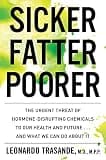
4. Sicker, Fatter, Poorer by Dr. Leo Trasande, MD, MPP
Author: Dr. Leo Trasande is a pediatrician, environmental health researcher, and Deputy Director of the Division of Environmental Pediatrics at NYU Langone Health. His research on the economic costs of EDC exposure has been published in major peer-reviewed journals.
Publisher: Houghton Mifflin Harcourt, 2019
Why we picked it: Trasande approaches EDCs from a public health economics angle that most non-toxic living books ignore. He quantifies what chemical exposures actually cost in increased rates of neurodevelopmental disease, obesity, cardiovascular disease, and reduced IQ, and makes the case that the standard regulatory assumption (“safe until proven harmful”) is economically as well as scientifically indefensible. The result is a book that gives you a framework for understanding why the regulatory landscape works the way it does, not just what to buy.
For parents of young children, the sections on prenatal and early childhood EDC exposure (phthalates, bisphenols, flame retardants) are especially well-researched and directly applicable to everyday product choices.
Get Sicker, Fatter, Poorer on Amazon →
5. Raising Baby Green by Dr. Alan R. Greene, MD
Author: Dr. Alan Greene is a practicing pediatrician affiliated with Stanford University and the founder of DrGreene.com. Winner of the Nautilus Book Award.
Why we picked it: Greene’s book remains the most accessible entry point for parents of infants and toddlers who want a pediatrician-authored guide to non-toxic baby care. The conceptual framework holds up very well: what product categories matter most for babies, why early-life exposure is disproportionately important, how to prioritize when you can’t do everything at once.
Important caveat: Raising Baby Green was published in 2007. Specific product recommendations, brand names, and formulations referenced in the book may be outdated or discontinued. Use the book for the framework and the science; use current EWG Skin Deep® ratings for specific product selections.
How to Use This Reading List
You don’t need to read all five. Here’s how to choose:
- Start here if you’re new to this: Non-Toxic by Cohen & vom Saal. It’s the most comprehensive, most actionable, and the most credentialed book on this list for a general audience.
- Best practical room-by-room guide: The Slightly Greener Method by Tonya Harris. Pair it with a more science-heavy book for the full picture.
- Best for understanding the science: Count Down by Shanna Swan if you want reproductive health/phthalates; Sicker, Fatter, Poorer by Trasande if you want the economic and public health angle.
- Best for parents of babies: Raising Baby Green (read alongside current EWG Skin Deep ratings).
What Makes a Non-Toxic Living Book Worth Reading?
There are hundreds of “non-toxic living” books on Amazon. Many are written by people with no background in chemistry, toxicology, environmental health, or nutrition and make claims that range from unsupported to actively misleading. Every book on this list passed the same filter:
- The author has verifiable credentials in a relevant field (medicine, biochemistry, toxicology, epidemiology, nutrition).
- Claims are traceable to peer-reviewed science, not just personal experience or consensus in “the wellness community.”
- The book avoids absolute claims (“this chemical causes cancer”; “this product is safe”). Good science is probabilistic and acknowledges dose, duration, and exposure context.
- The framing is actionable, not catastrophist. Books that leave you feeling overwhelmed and helpless are not useful. Books that give you a prioritized, achievable reduction strategy are.
Every book on this list passes that filter. Many popular titles in this genre do not, and we’ve deliberately excluded them.
Frequently Asked Questions
Are these books available as audiobooks or Kindle editions?
Yes. All five titles above are available in Kindle and/or audiobook formats on Amazon. For on-the-go listening, Non-Toxic by Cohen & vom Saal and Count Down by Swan both have strong audiobook editions.
Is EWG involved with any of these books?
NonToxicFinder (Solved Labs LLC) is not affiliated with, endorsed by, or partnered with the Environmental Working Group. The mention of EWG President Ken Cook’s endorsement of Non-Toxic by Cohen & vom Saal refers to Cook’s independent, publicly stated endorsement of that specific book. It does not imply any relationship between NonToxicFinder and EWG.
Do these books recommend specific products?
Most do, to varying degrees. Because formulations change and products are discontinued, we recommend using these books for the framework and science, then checking current EWG Skin Deep® ratings for specific product selections. Our own roundup guides (linked throughout this article) are updated regularly for the same reason.