This article contains affiliate links. NonToxicFinder (Solved Labs LLC) earns commissions on qualifying purchases at no extra cost to you. We are not affiliated with the Environmental Working Group.
If you've ever read the label on a can of Easy-Off, you already know something isn't right. The fumes, the warnings to ventilate the kitchen and wear gloves: those aren't there for show. EWG rates Easy-Off Fume Free Oven Cleaner and Easy-Off Heavy Duty Oven Cleaner grade F in its Guide to Healthy Cleaning (ewg.org/cleaners), the highest-hazard rating EWG assigns. The primary concerns flagged in EWG's database: lye (sodium hydroxide) and butane propellant in aerosol variants.
Here's the hard truth: there is no dedicated commercial oven cleaner that earns an EWG Guide grade A. The oven cleaner product category doesn't work that way. Baked-on grease and carbon deposits require either caustic chemistry or a lot of time and elbow grease, and the caustic route consistently fails EWG's ingredient assessment. EWG's own consumer guidance recommends skipping commercial oven cleaners entirely and using a baking soda paste instead.
So the "swap" here is different from most product swaps: you're not finding a better-rated oven cleaner. You're replacing the oven cleaner category with two things: EWG VERIFIED® all-purpose cleaners applied to oven surfaces, and EWG's recommended baking soda method for heavy buildup. This article covers what EWG rates on conventional oven cleaners, why no dedicated alternative earns EWG's top grade, and four verified picks plus a DIY method that make the swap practical. For all-purpose cleaner picks across your whole kitchen, see our EWG VERIFIED® all-purpose cleaner guide.
What EWG Rates on Conventional Oven Cleaners
EWG rates household cleaning products in its Guide to Healthy Cleaning (ewg.org/cleaners) on a scale of A (lowest concern) through F (highest hazard), based on ingredient hazard and transparency. The oven cleaner subcategory is among the lowest-rated categories in the entire database.
Here are EWG's published ratings for the most widely sold oven cleaners. These are EWG's independent ingredient assessments, not our claims:
| Product | EWG Grade | Primary Flagged Ingredients |
|---|---|---|
| Easy-Off Fume Free Oven Cleaner | F | Lye (sodium hydroxide), monoethanolamine |
| Easy-Off Heavy Duty Oven & Grill Cleaner | F | Lye (sodium hydroxide), butane propellant, synthetic fragrance |
| Easy-Off Heavy Duty Oven Cleaner, Fresh Scent | F | Lye, butane/propane propellant, synthetic fragrance |
An F from EWG indicates the highest concern level: EWG has identified high-hazard ingredients and, in many cases, limited ingredient disclosure. All three Easy-Off variants listed earn F regardless of whether they are marketed as "fume free": the "fume free" designation refers to the absence of lye fumes during application, not to the overall ingredient profile. EWG rates the fume-free formula F due to monoethanolamine, which EWG flags for respiratory and skin concerns at the concentrations used in oven cleaners.
To check any specific product, search at ewg.org/cleaners by exact product name. EWG grades individual variants, not brands as a whole.
Why There Is No EWG A-Rated Dedicated Oven Cleaner
This is worth explaining directly, because many parents searching for a "non-toxic oven cleaner" expect to find a product that works like Easy-Off but scores better from EWG. That product doesn't currently exist in the Guide to Healthy Cleaning database.
The challenge is chemistry. Baked-on oven grease is a polymerized fat-and-carbon matrix that resists most gentle cleaners. Commercial oven cleaners cut through it using highly alkaline chemistry: lye (pH 13–14), monoethanolamine, or strong surfactant blends. EWG flags these ingredients for caustic burn risk and, in the case of monoethanolamine, for respiratory concerns. No product in the dedicated "oven cleaner" subcategory has yet achieved an EWG A grade.
EWG's consumer guidance, published in its Tips for Greener Cleaning resources, is direct: try a do-it-yourself paste of baking soda and water in the oven. That recommendation appears in EWG's own materials, not just third-party sources. EWG also recommends skipping aerosol spray cleaners generally, citing propellant concerns and the risk of inhalation exposure.
This is where the swap lives: not oven cleaner A swapped for oven cleaner B, but oven cleaners swapped for EWG VERIFIED® all-purpose formulas plus the baking soda method.
4 EWG VERIFIED® Picks + the Baking Soda Method
All four products below hold EWG VERIFIED® status: EWG's highest designation, requiring full ingredient disclosure and meeting EWG's strictest standards for ingredient safety, manufacturing, and labeling. Three were confirmed in stock on Amazon as of September 19, 2026; one (Branch Basics) is available on a ship date. None are marketed as dedicated oven cleaners, and none should be used the same way you'd use Easy-Off. See the practical how-to section below for the right approach.
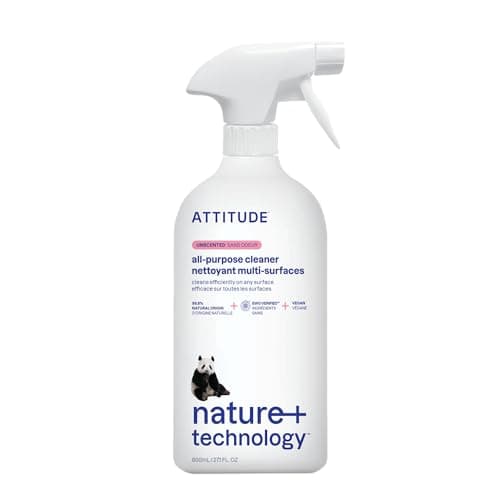
1. ATTITUDE All Purpose Cleaner Spray, EWG Verified, Unscented: $7.67 (Best Value)
Price: $7.67 for 27 fl oz | EWG Status: EWG VERIFIED®
ATTITUDE's unscented all-purpose spray is the most accessible pick on this list at $7.67 for a 27-ounce bottle, and one of the easiest to find. It carries EWG VERIFIED® status and is formulated without synthetic fragrance, dyes, or harsh solvents. For light-to-moderate oven grime (recent spills, drips that haven't fully carbonized), spray it on, let it sit for a few minutes, and wipe with a damp cloth. It won't cut through a year of baked-on grease the way a caustic oven cleaner would, but paired with the baking soda method for heavy buildup, it works well for maintenance cleaning between deep-cleans. Unscented is the right choice for oven use: fragranced cleaners can leave residue that smells when the oven heats up.
ATTITUDE All Purpose Cleaner, Unscented 27 fl oz on Amazon →
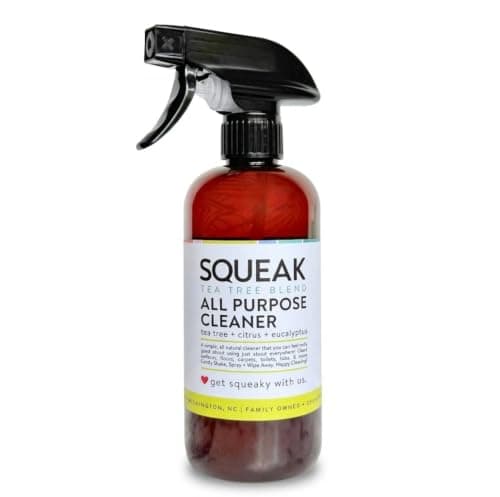
2. SQUEAK All Purpose Cleaner, EWG Verified, Tea Tree & Citrus: $13.95
Price: $13.95 for 16 fl oz | EWG Status: EWG VERIFIED®
SQUEAK is an EWG VERIFIED® all-purpose spray with a tea tree and citrus formula. It's a smaller bottle (16 fl oz) at a mid-range price, which makes it a reasonable option if you want a dedicated kitchen bottle rather than using your all-purpose household spray on your oven surfaces. Tea tree oil has natural degreasing properties that can assist with light to moderate grease buildup. Note: because it has a light scent from the citrus and tea tree, open your kitchen window when using it on oven interiors, and wipe surfaces thoroughly before heating the oven again.
SQUEAK All Purpose Cleaner Spray 16 oz on Amazon →
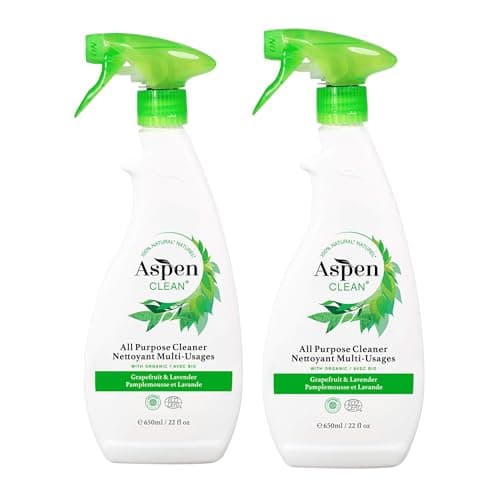
3. AspenClean All Purpose Cleaner, EWG Verified: $29.99 (2-Pack)
Price: $29.99 for a 2-pack (22 fl oz per bottle) | EWG Status: EWG VERIFIED®
AspenClean is a Canadian-made brand with a full line of EWG VERIFIED® cleaning products. The all-purpose spray comes in a 2-pack at $29.99, bringing the cost per bottle to about $15. Like the other picks here, AspenClean's all-purpose cleaner is plant-derived and holds EWG VERIFIED® status across its formulations. It's a good choice if you want a longer supply: two bottles cover your kitchen surfaces plus a dedicated oven-cleaning bottle. AspenClean also makes an EWG VERIFIED® bathroom cleaner if you're looking to replace products across multiple rooms at once.
AspenClean All Purpose Cleaner Spray, Pack of 2 on Amazon →
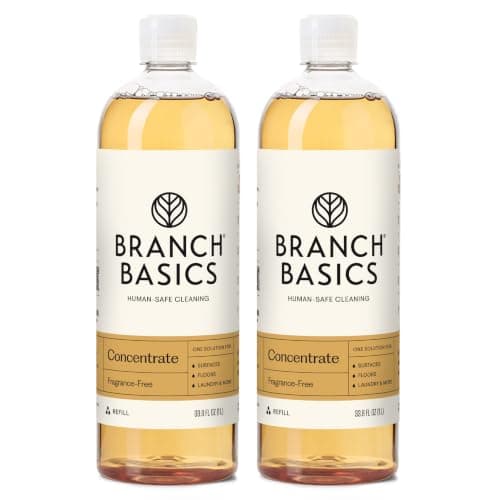
4. Branch Basics Concentrate, Fragrance-Free: EWG VERIFIED® (Concentrate)
Price: $92.87 for a 2-pack (33.8 fl oz per bottle) | EWG Status: EWG VERIFIED®
Branch Basics is a concentrate-based system: you dilute one bottle of concentrate into multiple spray bottles at different dilution ratios for different cleaning tasks. The brand holds EWG VERIFIED® status and is fragrance-free. For oven interior cleaning, Branch Basics recommends their "All-Purpose" dilution (about 1 part concentrate to 20 parts water in the spray bottle they supply). The upfront cost is high ($92.87 for two refill bottles), but one bottle of concentrate makes many bottles of finished cleaner, so the per-use cost is lower than it looks. Branch Basics is the right pick if you're already using the system for the rest of your home cleaning and want to keep everything in one ecosystem. If you're new to Branch Basics, the starter kit (sold directly on their website) includes the spray bottles and concentrate together.
Branch Basics Concentrate Refill 2 Pack on Amazon →
DIY Method: The Baking Soda Paste (EWG's Own Recommendation)
Cost: Under $1 per oven clean | EWG Status: EWG explicitly recommends this method
EWG's Guide to Healthy Cleaning, published in its Tips for Greener Cleaning resources, recommends this method directly: sprinkle baking soda on oven stains, moisten with water, let it stand overnight, then wipe and rinse. Baking soda (sodium bicarbonate) is a mild alkali: strong enough to loosen and absorb grease and carbon deposits over time, not caustic enough to burn skin or require gloves and ventilation. Baking soda rates well in EWG's ingredient assessments because it's a single-ingredient substance with a well-understood safety profile.
This method takes overnight versus the 20-to-30-minute wait time of caustic oven cleaners, but no fumes, no rubber gloves required, and nothing in EWG's database to flag. For a typical household oven:
- Remove oven racks first (soak separately in hot water and dish soap)
- Spread a generous layer of baking soda across the oven floor and walls
- Lightly spray with water until the baking soda is damp but not runny
- Leave overnight (at least 8 hours)
- Wipe out with a damp cloth; use a plastic scraper for stubborn spots
- Spray with white vinegar to neutralize any baking soda residue, then wipe again
For moderate buildup, one overnight treatment is usually enough. For ovens that haven't been cleaned in a year or more, you may need two rounds. Combined with one of the EWG VERIFIED® all-purpose cleaners above for maintenance cleaning between deep-cleans, this approach keeps the oven reasonably clean without anything EWG flags.
How to Use EWG VERIFIED® Cleaners in Your Oven
These all-purpose cleaners are not formulated as dedicated oven cleaners. Used incorrectly, you can leave residue that smells during baking or doesn't cut through heavy grease. Here's how to use them effectively:
- Maintenance cleaning (monthly or after spills): Spray on the cool oven interior, let sit 5 to 10 minutes, wipe with a damp microfiber cloth, rinse with a clean damp cloth. This is where EWG VERIFIED® all-purpose cleaners work best: preventing buildup rather than eliminating it.
- Moderate buildup: Apply more generously, use a non-scratch scrub pad (like a Scotch-Brite non-scratch pad), let sit 10 to 15 minutes. Multiple applications may be needed. Wipe and rinse thoroughly.
- Heavy buildup: Use the baking soda paste method (overnight), then follow up with an EWG VERIFIED® spray for the final wipe-down.
- Always rinse thoroughly before heating the oven. Any cleaner (even a gentle one) can produce fumes if residue is present when the oven heats. A final wipe with a clean damp cloth removes residue.
- Skip fragranced variants for oven interiors. Fragrance residue can smell unpleasant when the oven heats up. The ATTITUDE Unscented and Branch Basics Fragrance-Free are the right picks here for that reason.
Frequently Asked Questions
What does EWG rate for Easy-Off oven cleaner?
EWG rates Easy-Off Fume Free Oven Cleaner and Easy-Off Heavy Duty Oven Cleaner grade F in its Guide to Healthy Cleaning (ewg.org/cleaners). EWG's F grade indicates the highest concern level. For Easy-Off variants, EWG flags lye (sodium hydroxide) as the primary concern, along with monoethanolamine in the fume-free formula and butane propellant in aerosol variants. These are EWG's published ingredient assessments, not our own claims. Check ewg.org/cleaners for the current rating on your specific product.
Is there an EWG-rated dedicated oven cleaner that earns a good grade?
As of EWG's current database, no dedicated commercial oven cleaner earns an EWG Guide grade A. The oven cleaner subcategory relies on caustic chemistry (lye, monoethanolamine) that EWG consistently flags at high-hazard levels. EWG's own consumer guidance recommends a baking soda paste as the alternative, and EWG VERIFIED® all-purpose cleaners for maintenance cleaning. This article covers both approaches.
Can EWG VERIFIED® all-purpose cleaners actually clean an oven?
They can, with realistic expectations. EWG VERIFIED® all-purpose cleaners work well for maintenance cleaning: recent spills, light grease buildup, and monthly upkeep between deeper cleans. They won't dissolve carbonized, year-old baked-on grease in 30 minutes the way a caustic oven cleaner might. For heavy buildup, the baking soda paste method (overnight) is more effective. Combining both approaches (baking soda paste for periodic deep-cleans, EWG VERIFIED® spray for monthly maintenance) handles most household ovens without conventional oven cleaner chemistry.
What does EWG VERIFIED® mean for a cleaning product?
EWG VERIFIED® is EWG's highest designation for cleaning and personal care products. To earn the mark, a product must fully disclose all ingredients, meet EWG's standards for ingredient safety (no EWG-flagged ingredients above specified thresholds), and comply with EWG's manufacturing and labeling requirements. Products bearing the EWG VERIFIED® mark have been reviewed by EWG directly; an A grade in EWG's Guide to Healthy Cleaning means EWG's assessment found low hazard concern. Neither the mark nor the grade is a safety guarantee: EWG's ratings reflect ingredient hazard assessments, not clinical safety determinations.
Why does EWG recommend baking soda for ovens?
EWG recommends baking soda in its Tips for Greener Cleaning resources specifically because it sidesteps the caustic chemistry flagged in commercial oven cleaners. Baking soda (sodium bicarbonate) is a mild alkali that loosens grease and carbon deposits over time without the burn risk associated with lye-based formulas. It's a single-ingredient substance with a well-understood safety profile. EWG's endorsement of this method is about avoiding the high-hazard ingredients in commercial oven cleaners, not about sodium bicarbonate having any specific cleaning certification.